 |
|
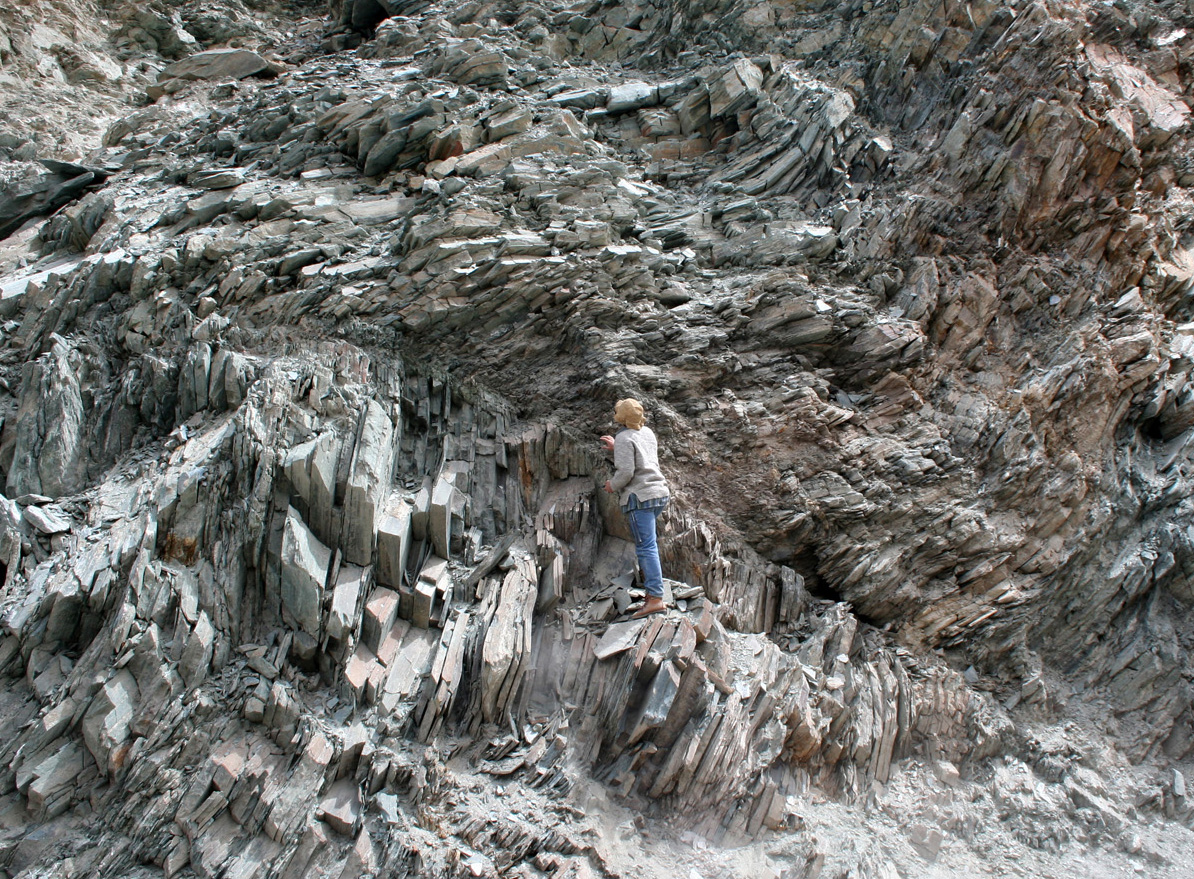
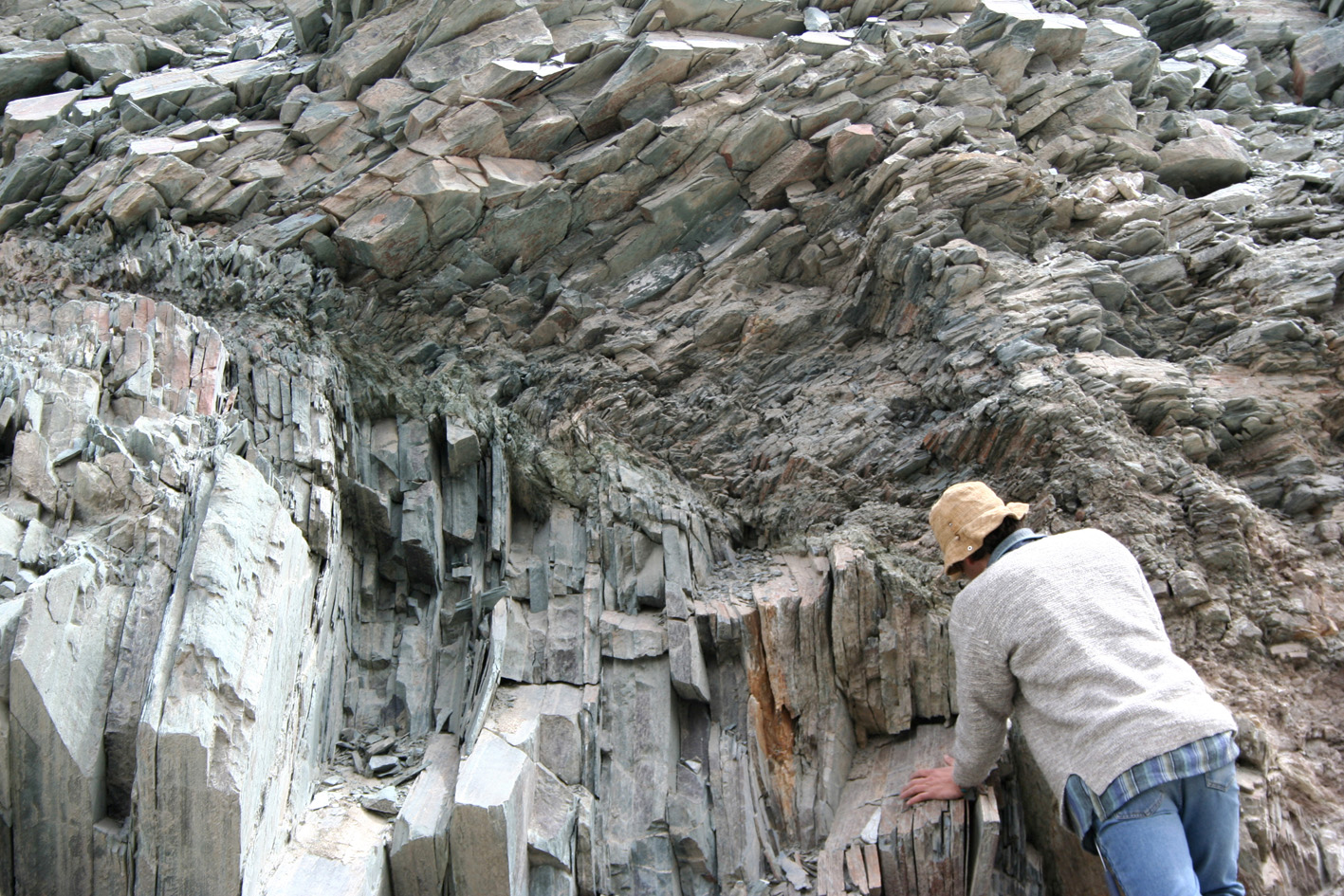
| Figure 1a) Thrusts in the vicinity of Agham: attitude of axial plane 100/20S. | Figure 1b) detail of a. |
 |
|
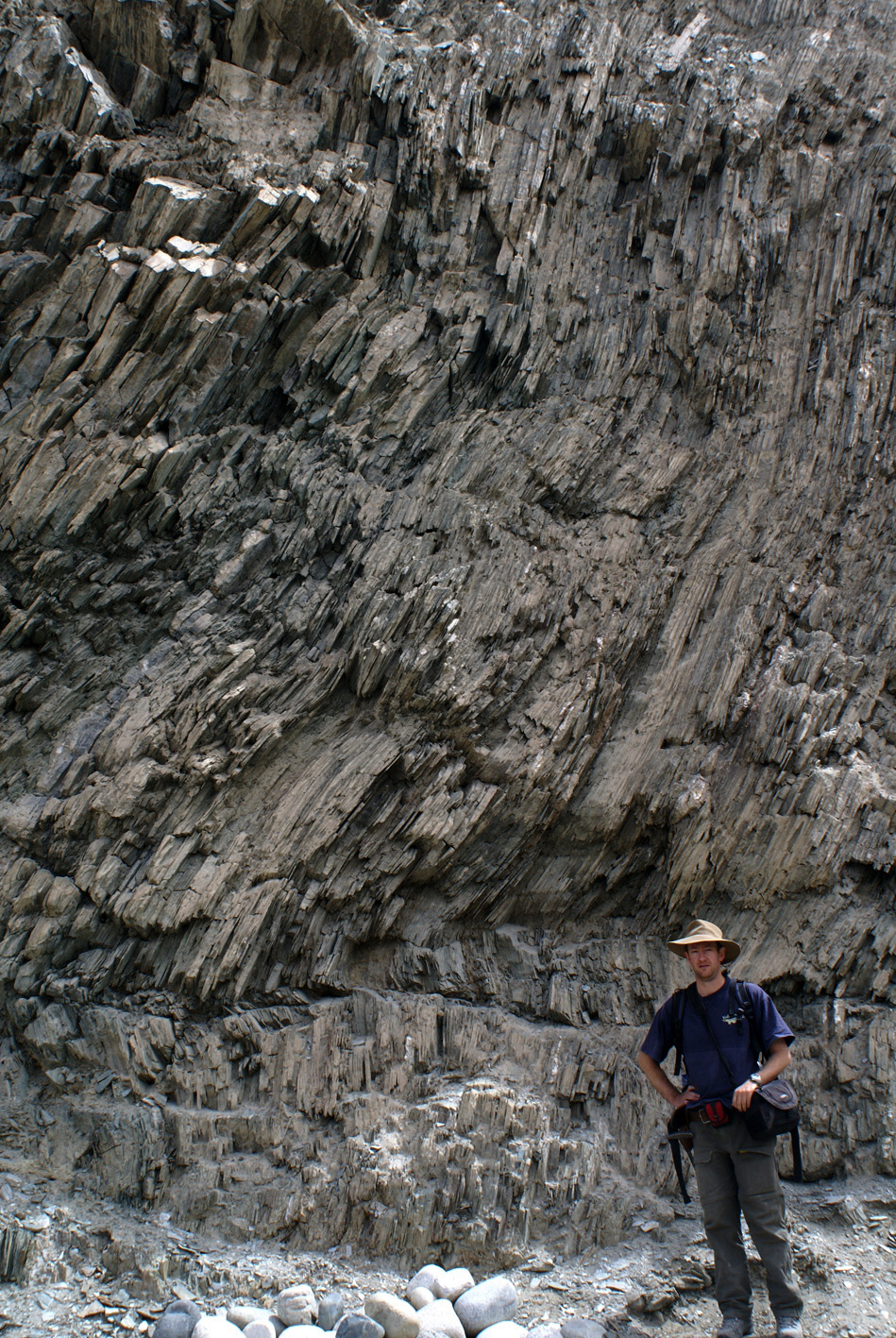
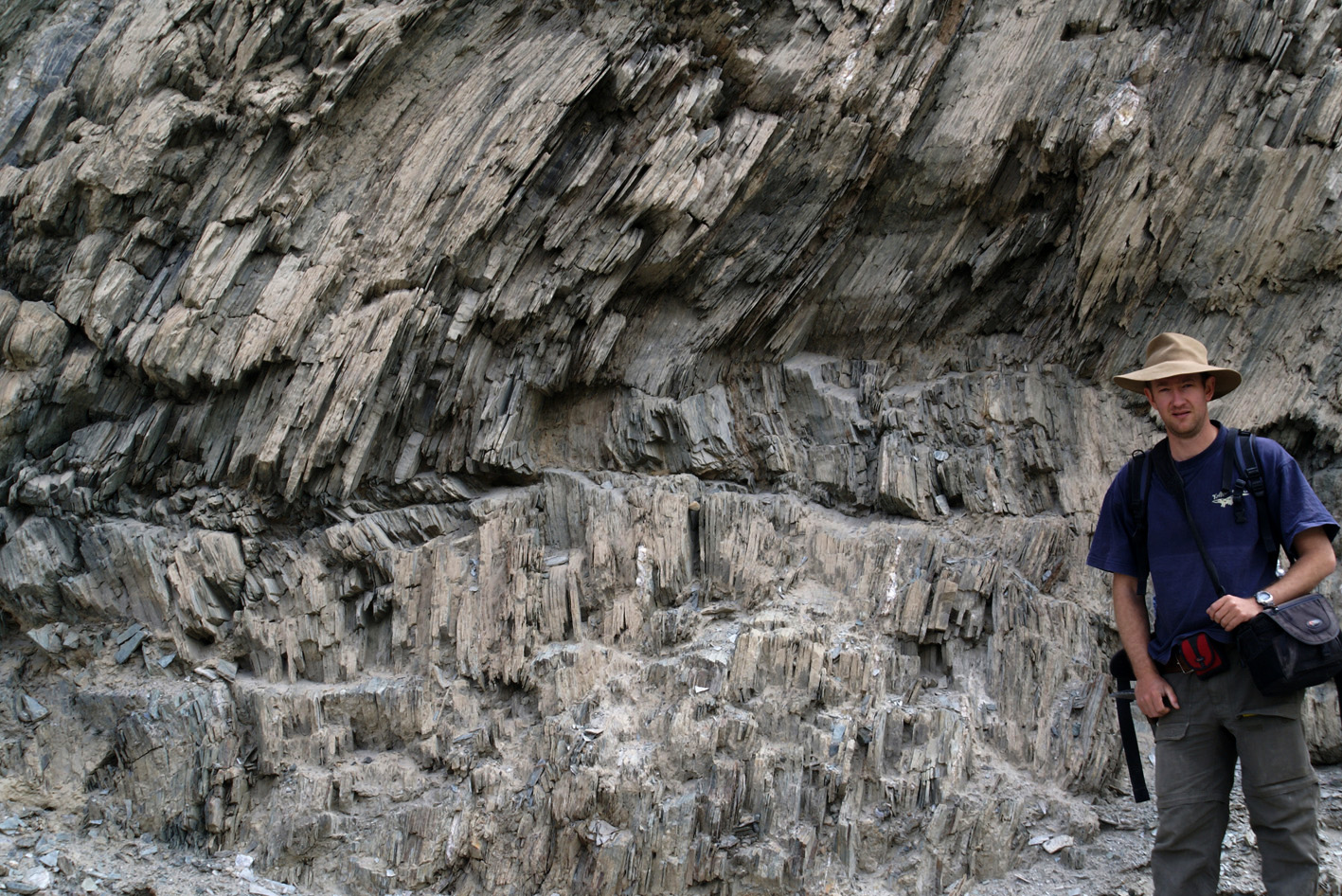
| Figure 2a) Thrusts in the vicinity of Agham: attitude. | Figure 2b) Detail of a. |
 |
|
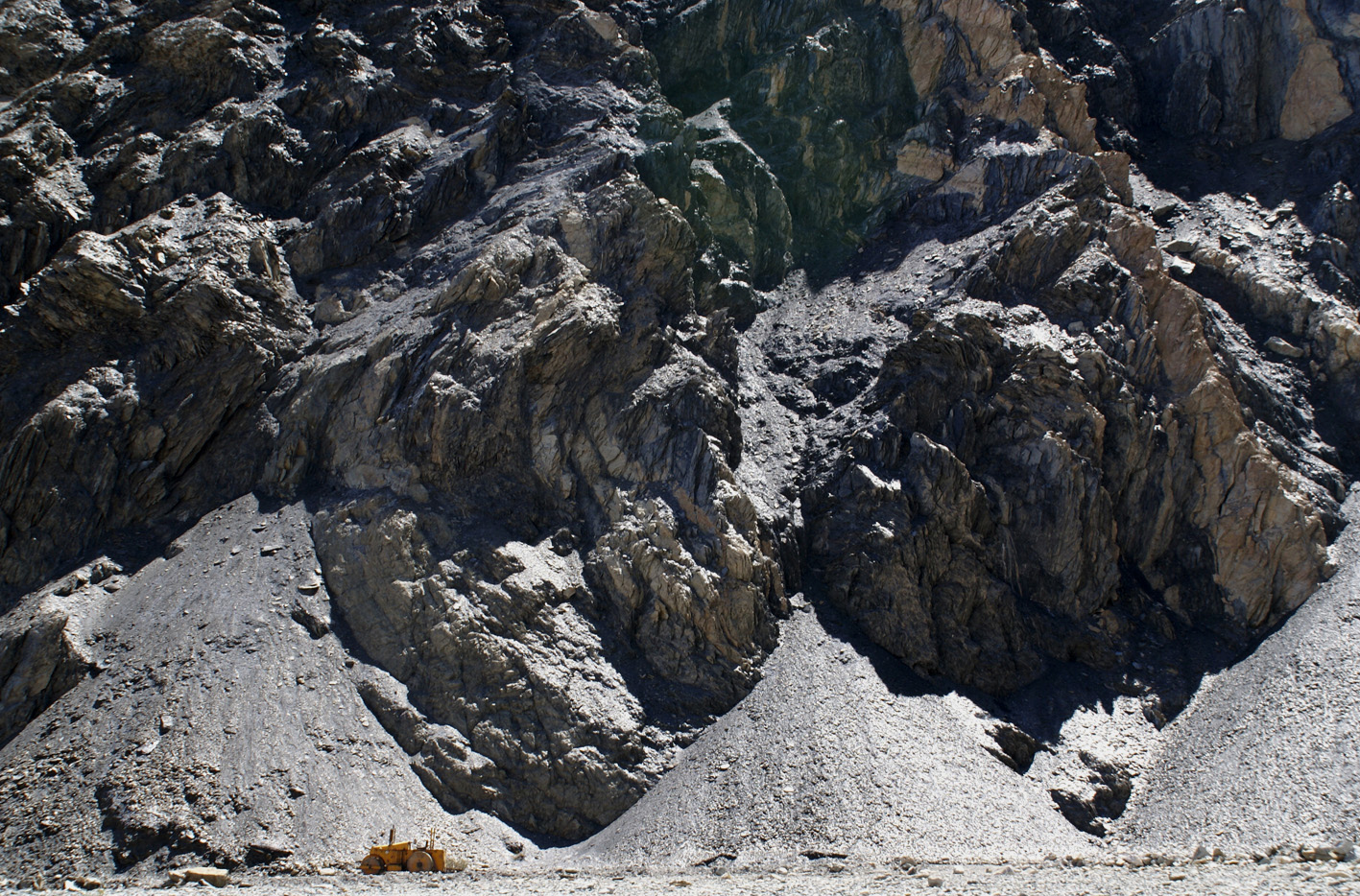
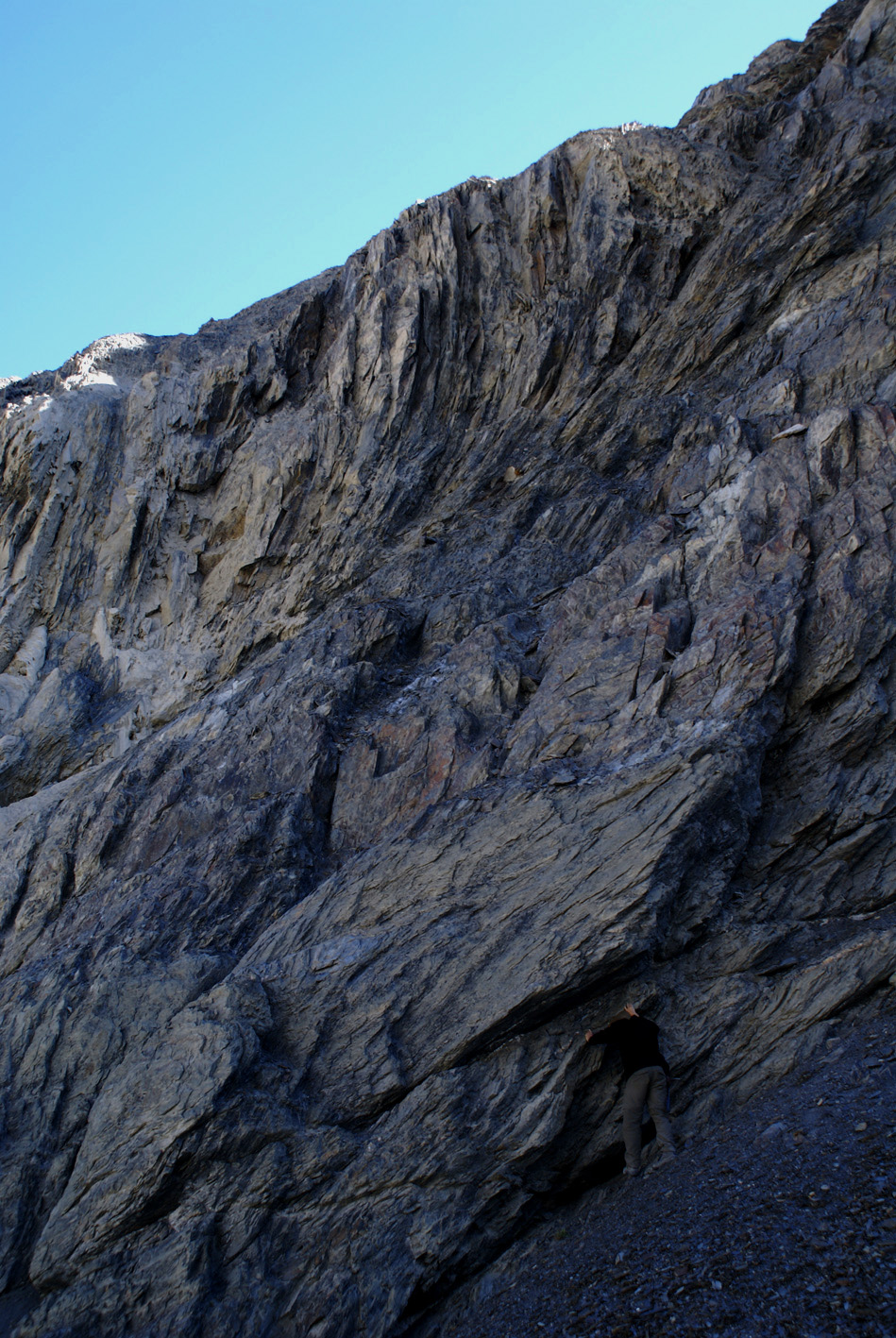
| Figure 3a) Thrust stack. Tractor at base for scale. Notice a steep granite dyke in light colours. | Figure 3b) Another thrust stack N34 19' 40.7 E77 50' 38.8". Bt schist 30 m from the contact with a gabbroic body (to the left on photo). Fault plane: 320-340 / 10-25 E, slickenline 24 towards 80 (thrusting toward W) associated with subhorizontal fold axis trending 130. |
 |
|
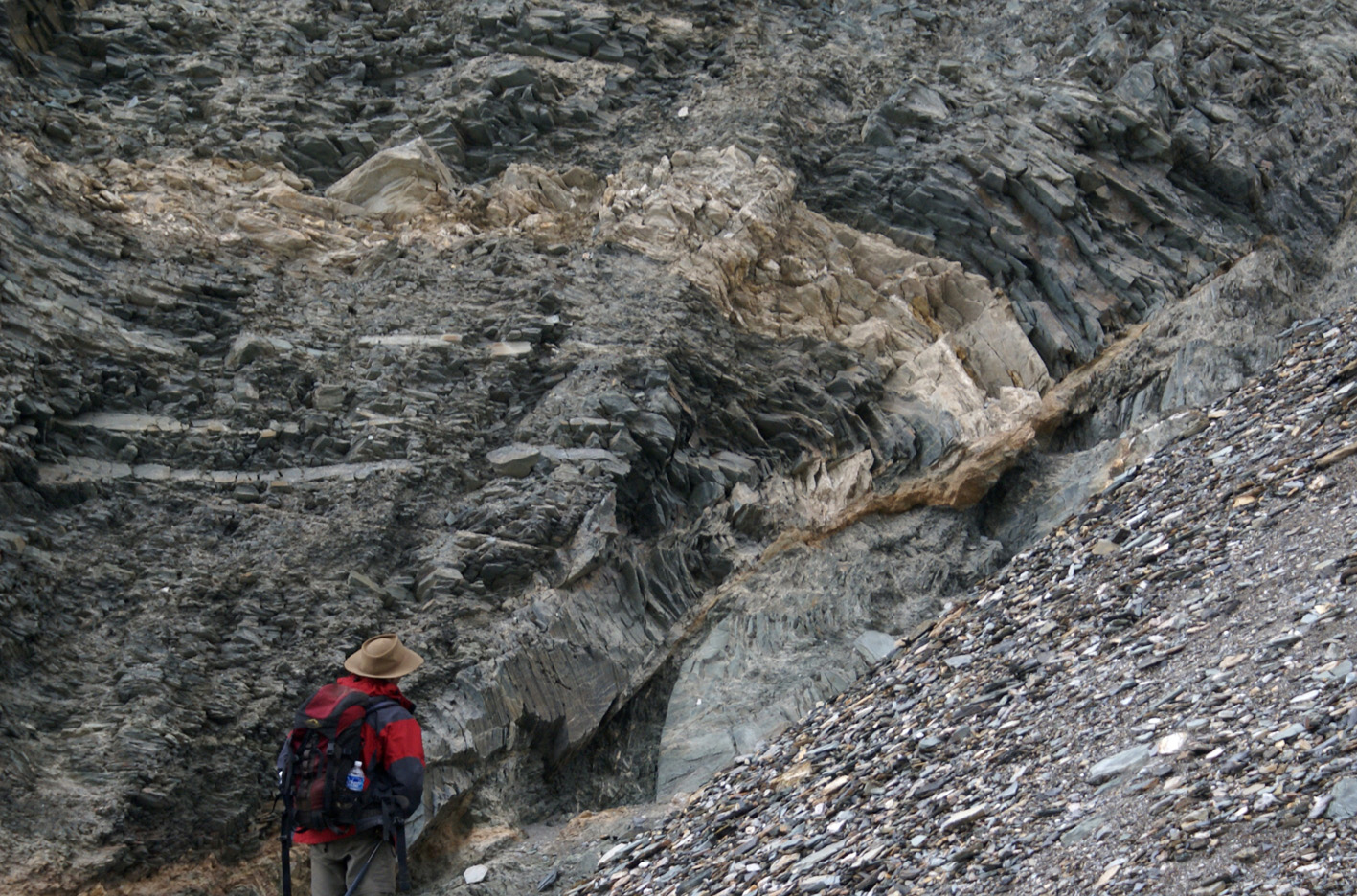
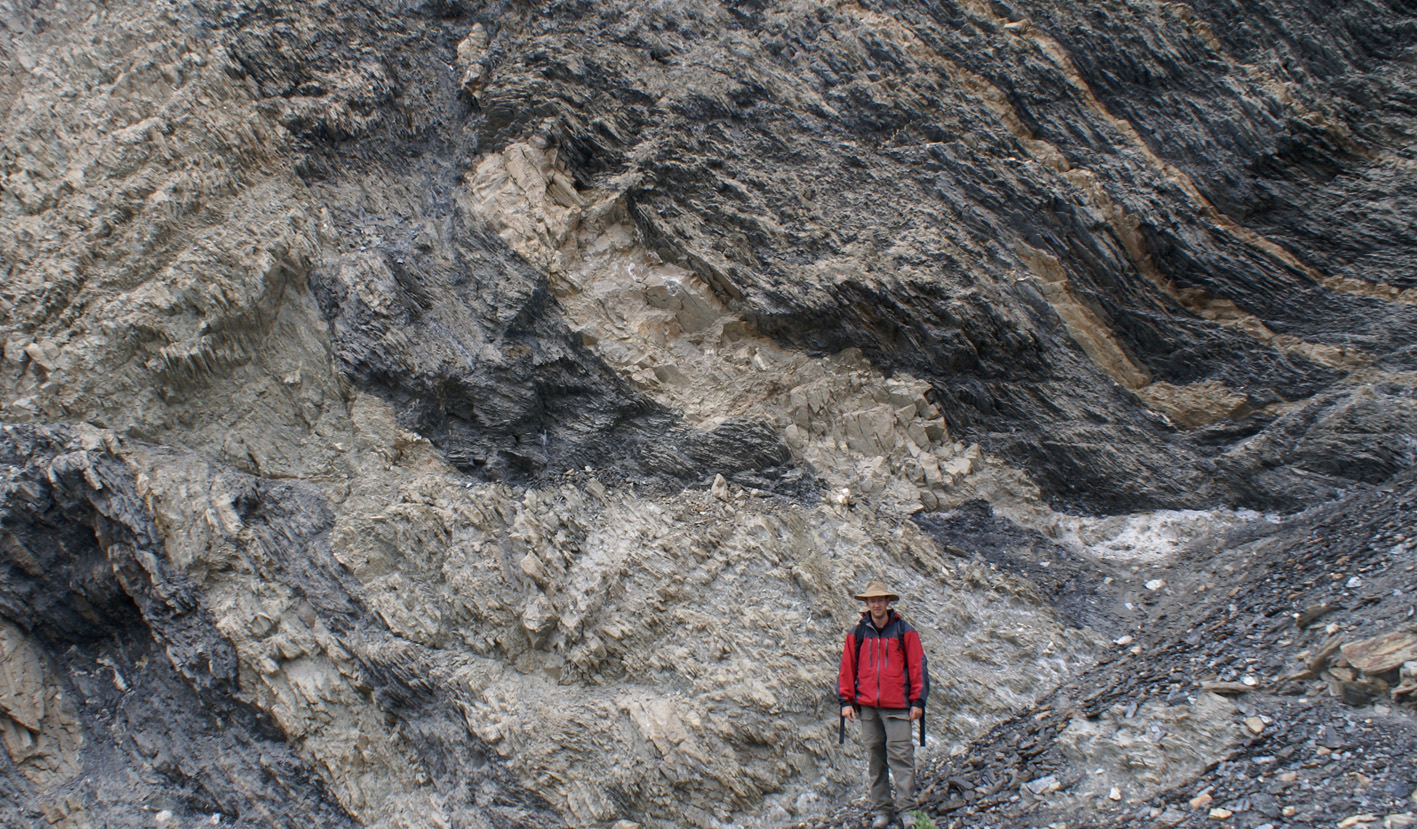
| Figure 4a) Thrust plane, 160-180/20E. | Figure 4b) Another thrust plane. |
 |
|
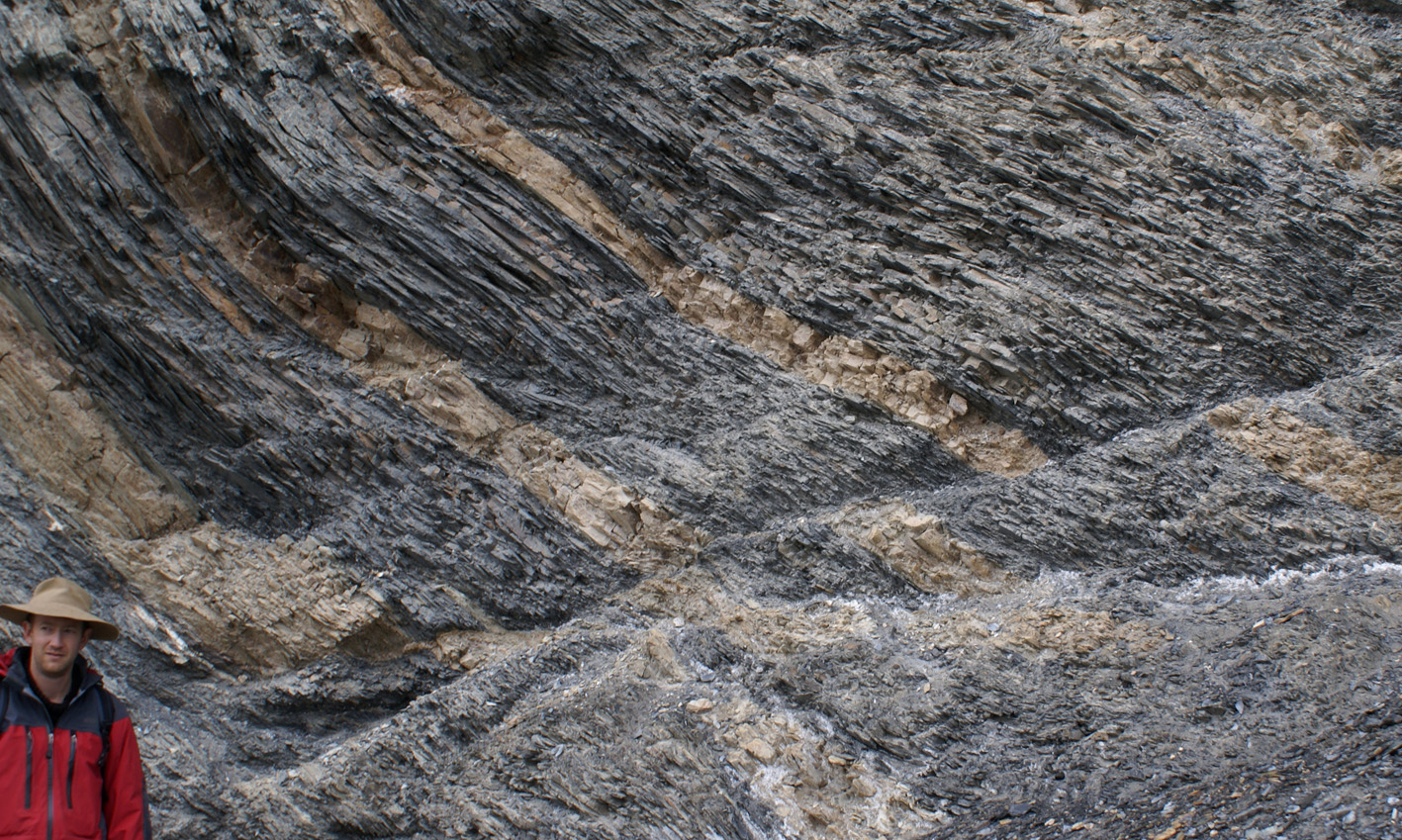
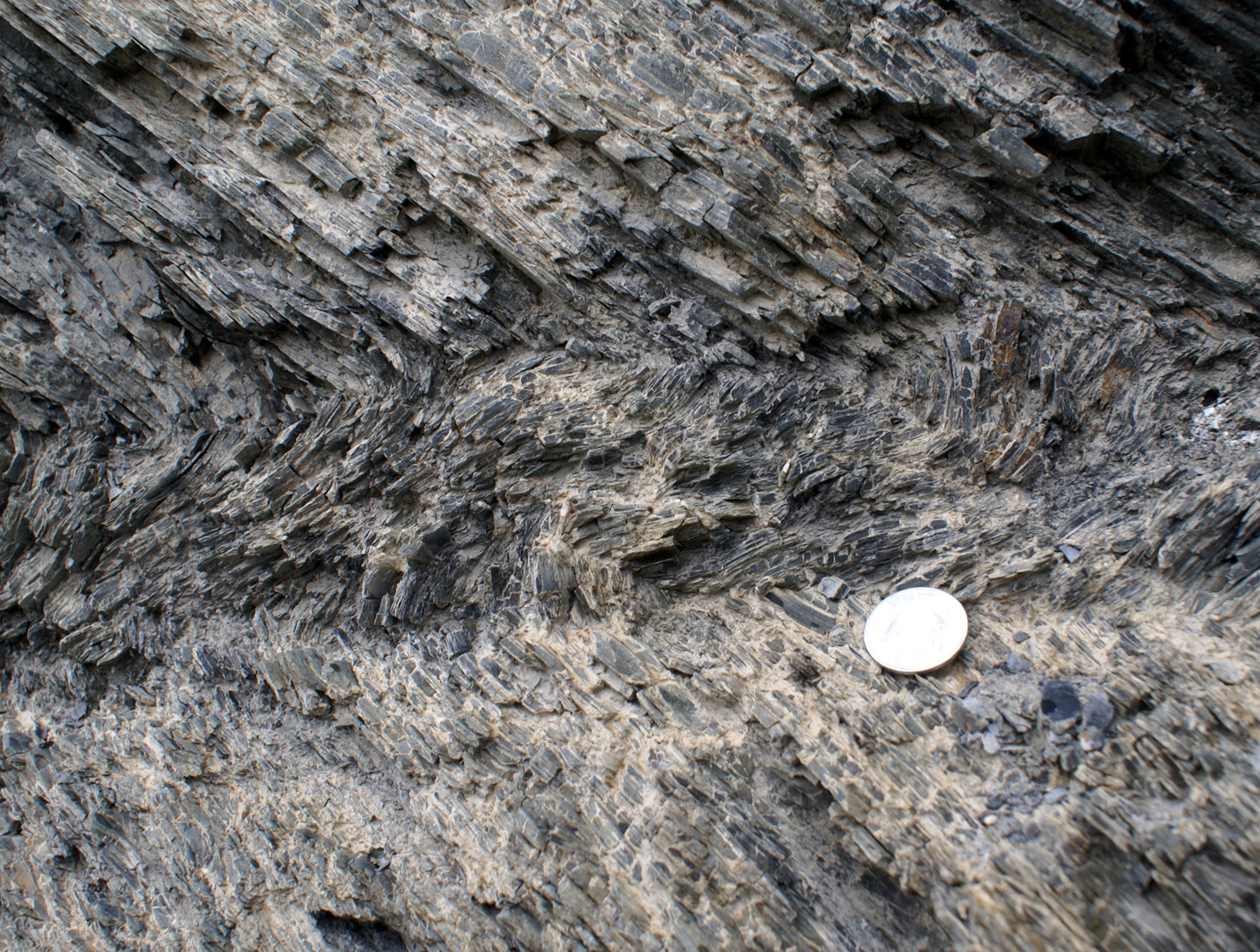
| Figure 5a) Thrust and drag fold. Ligher layer is a Ms-gneiss, representing a granite sheared at greenschist facies. | Figure 5b) Break up during folding and thrusting. |
 |
|
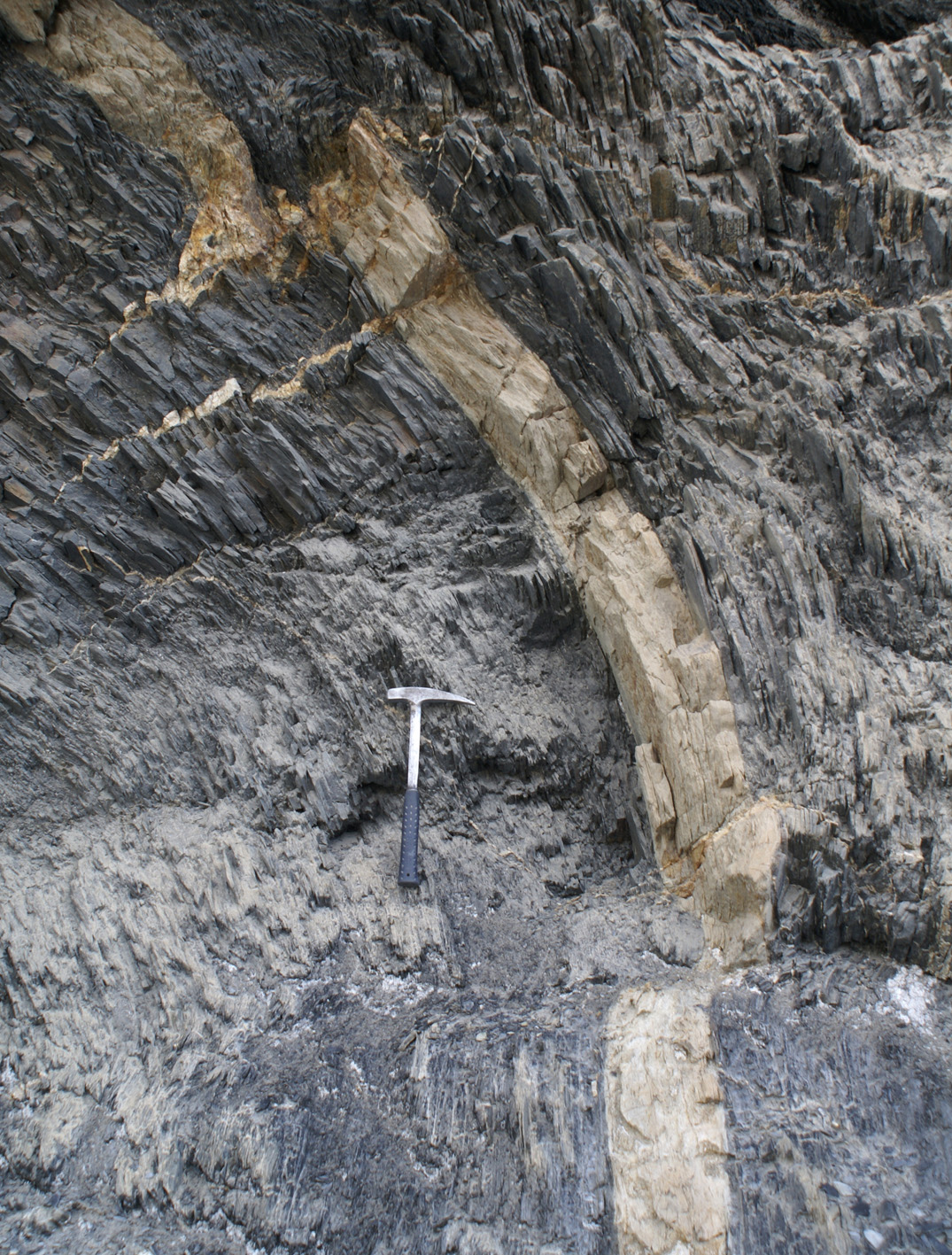
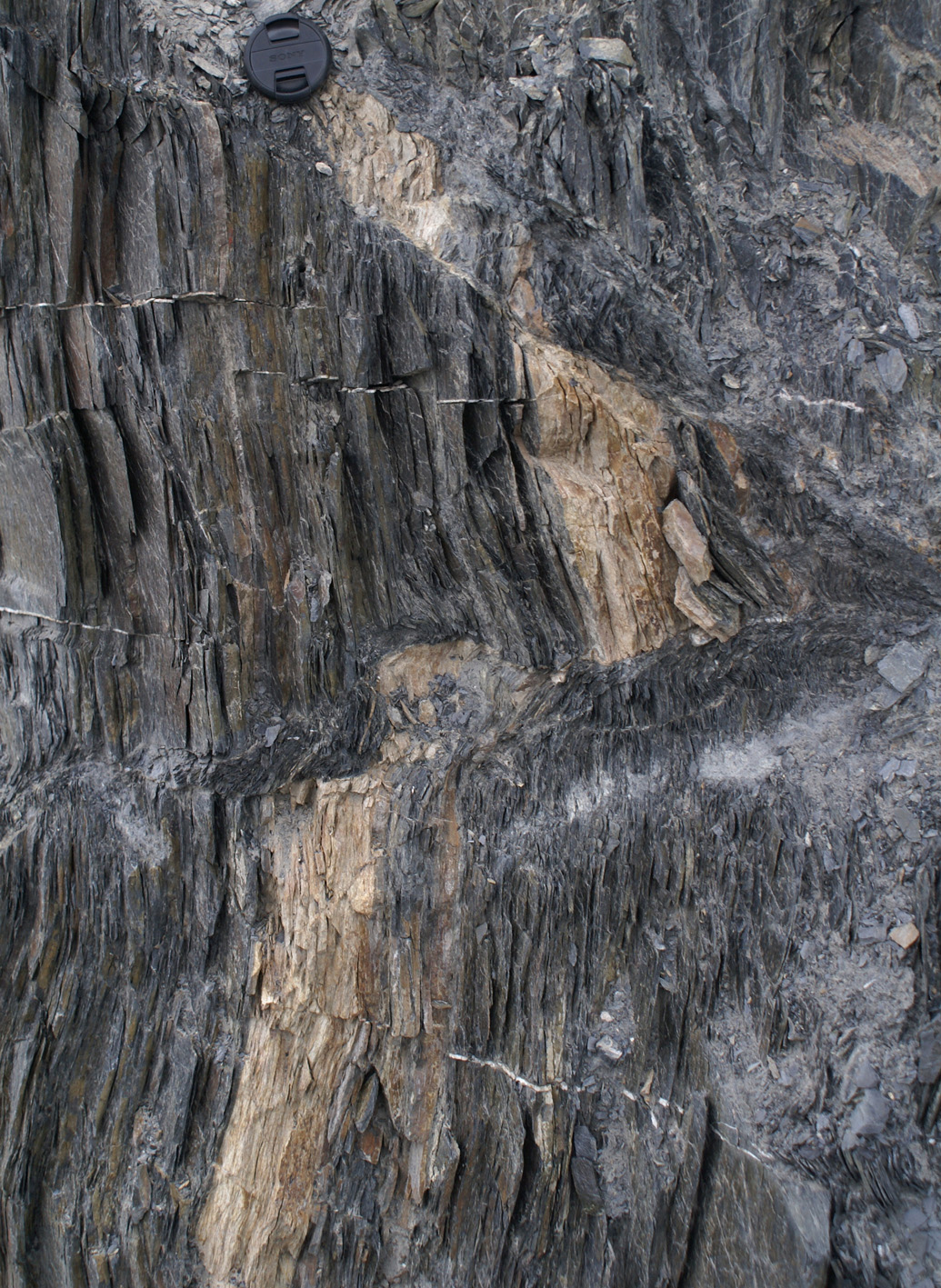
| Figure 6a) Thrusting breaking up a light-grey layer Ms-gneiss, representing a granite sheared at greenschist facies, inside a Bt-schist. | Figure 6b) Same as (a). |
 |
|
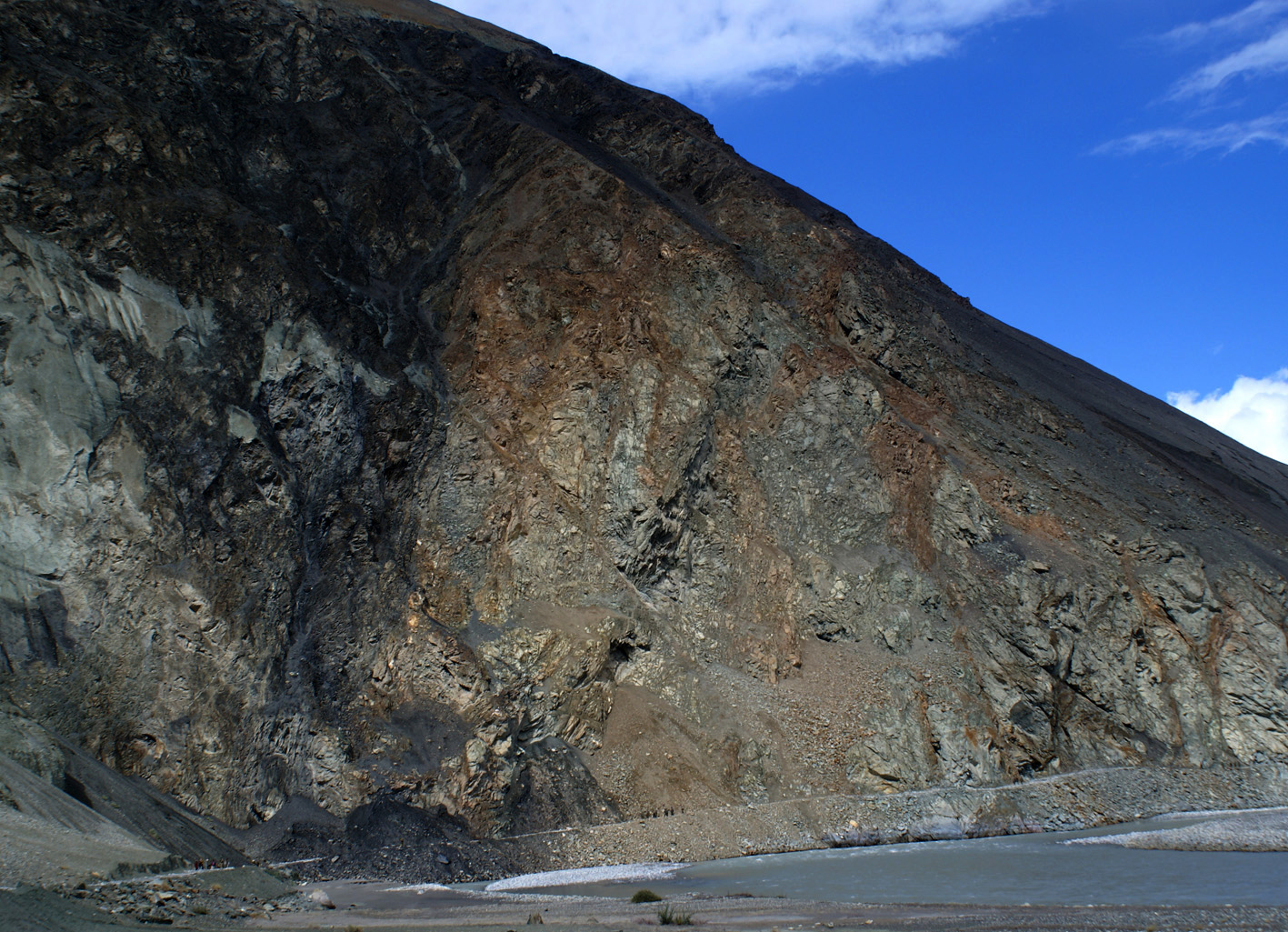
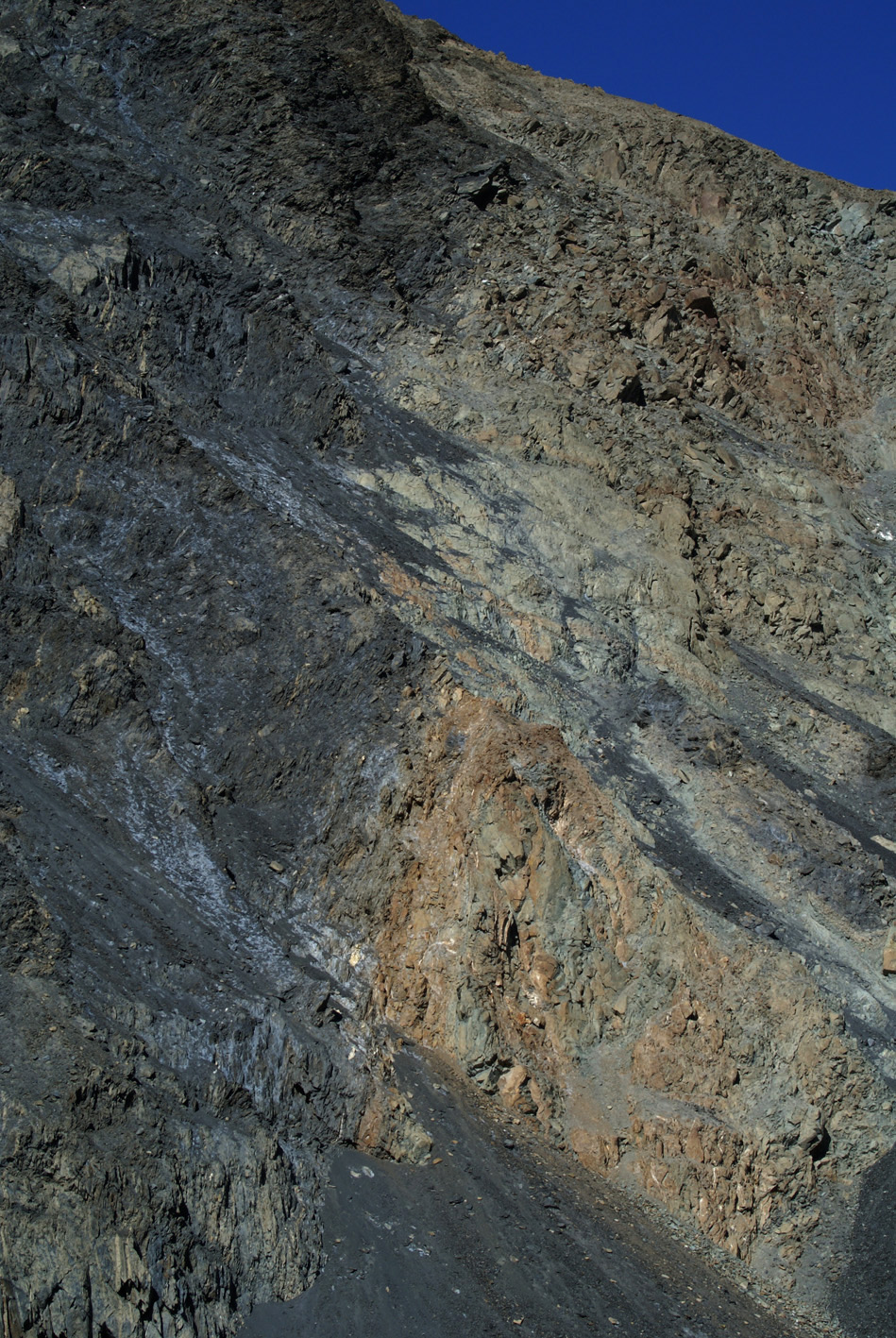
| Figure 7a) Large scale contact between gabbro body to the N (right) and Bt-schists to the south (left) with two crenulations. Contact trending 280. Photograph looking towards NW. Contact is at N34 19' 30.8" and E77 50' 59.2" | Figure 7b) Detail of contact, showing silicified gabbro to the right (fractured and sheared). |
 |
|
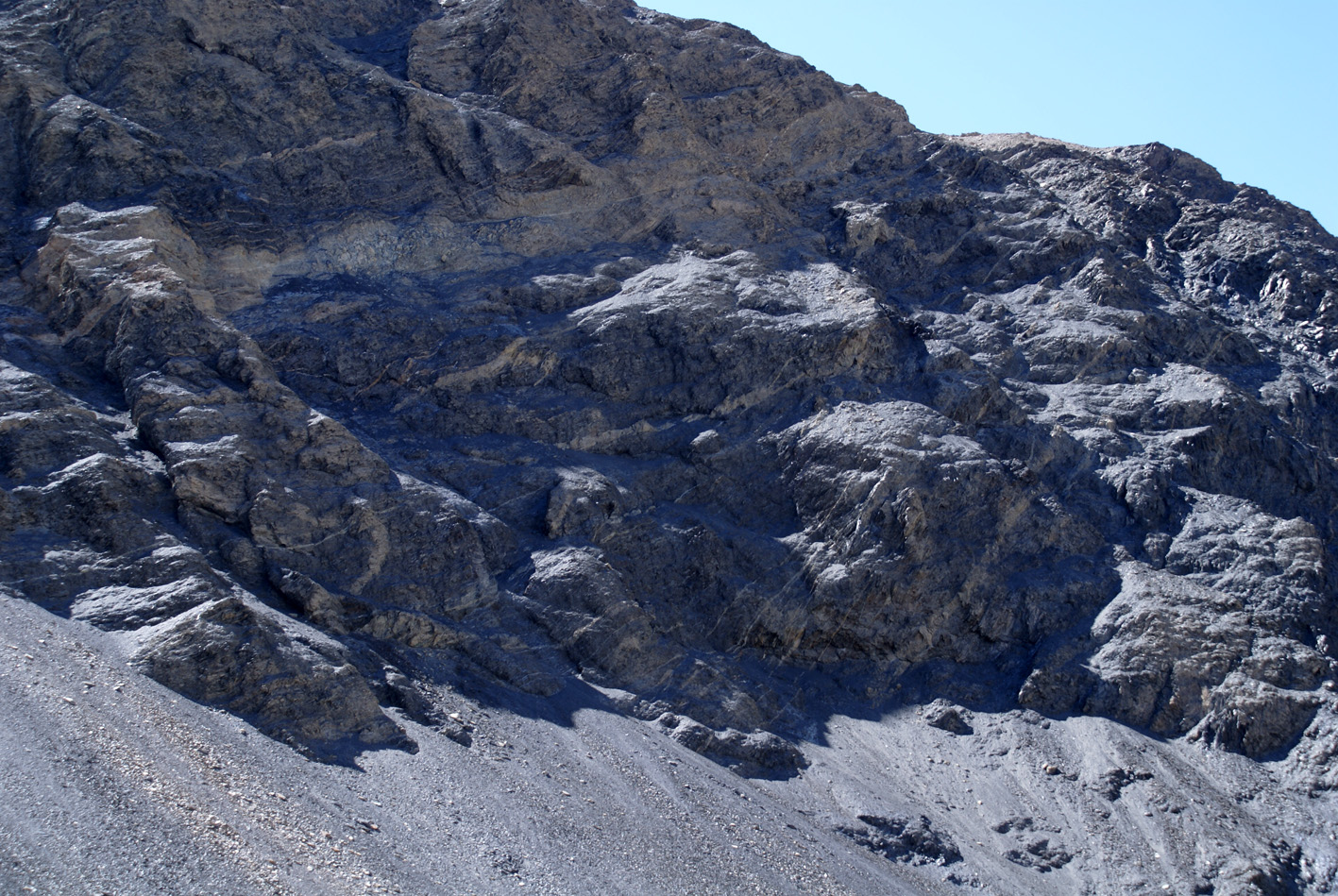
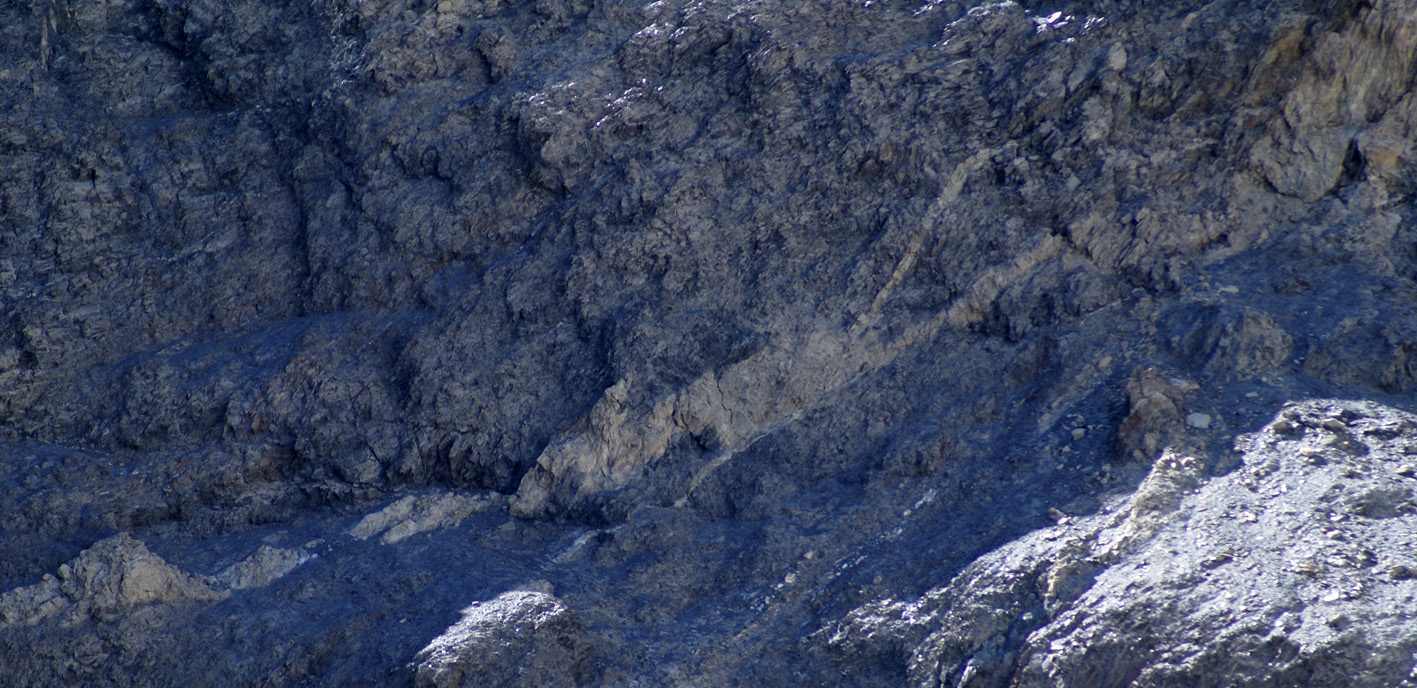
| Figure 8a) Granite dykes intruding supracrustal sequence (mostly biotite schist).South of the contact between gabbro and supracrustals at N34 19' 30.8" and E77 50' 59.2" | Figure 8b) Same wall as a, branching granite dykes. |
 |
|
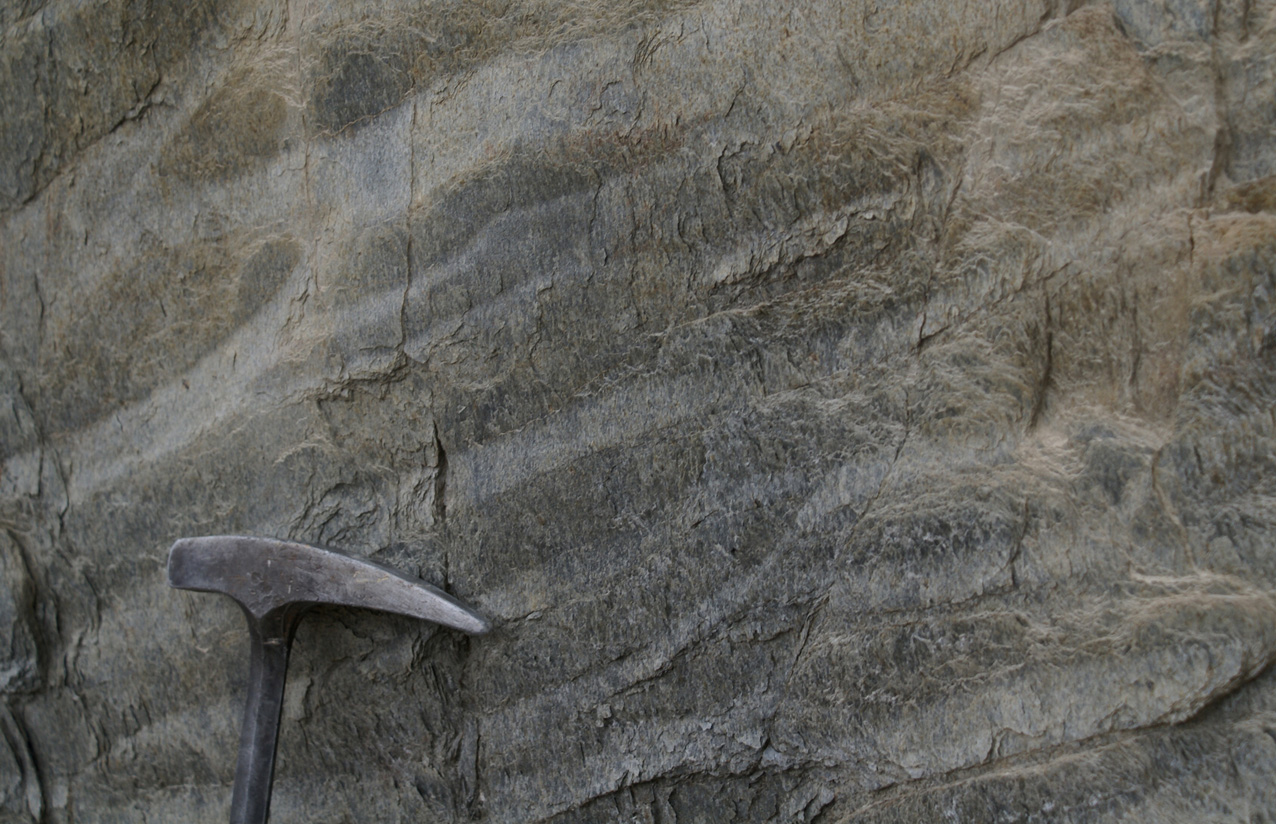
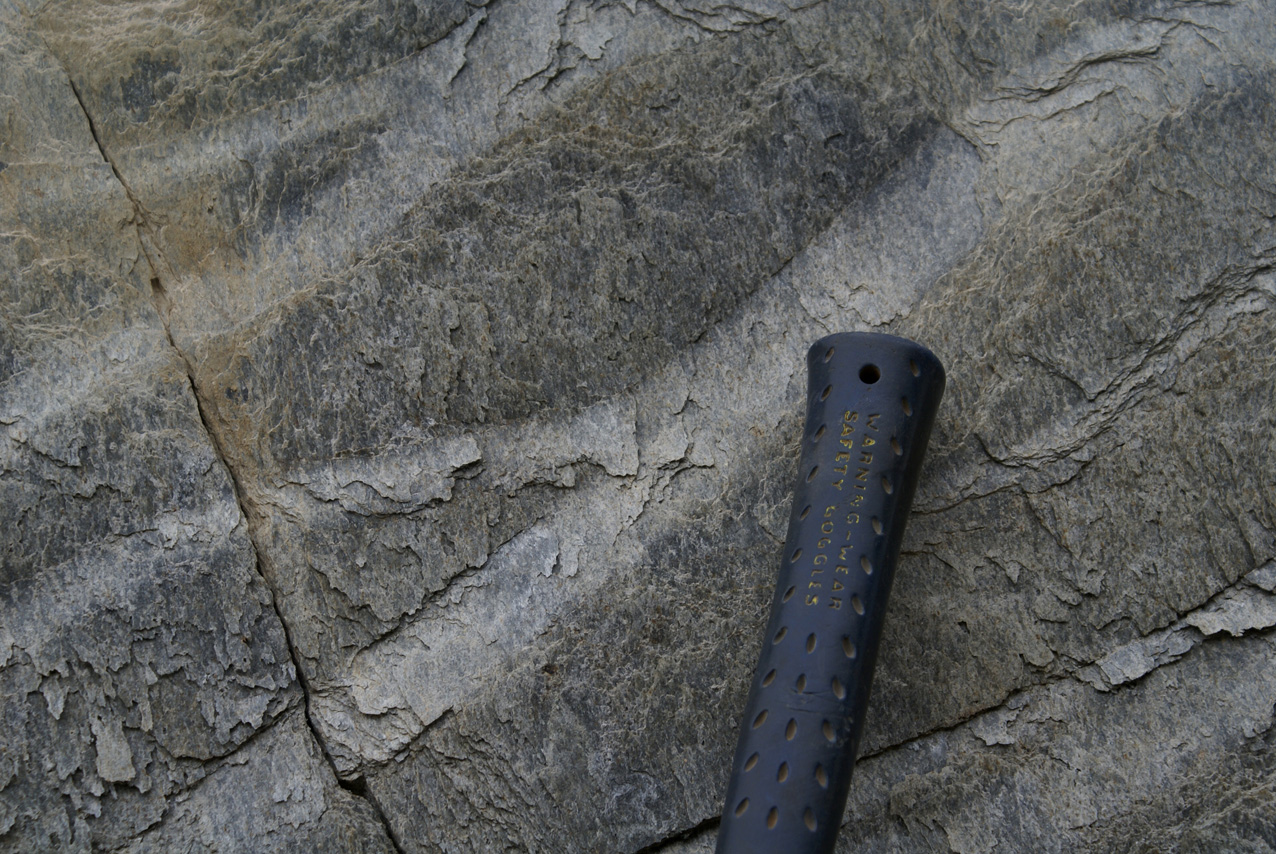
| Figure 6a) Two crenulation: an early, steep one, at mm scale visible as lines, and a broad, open one, plunging gently to the left. | Figure 6b) Detail of a. |
 |
|
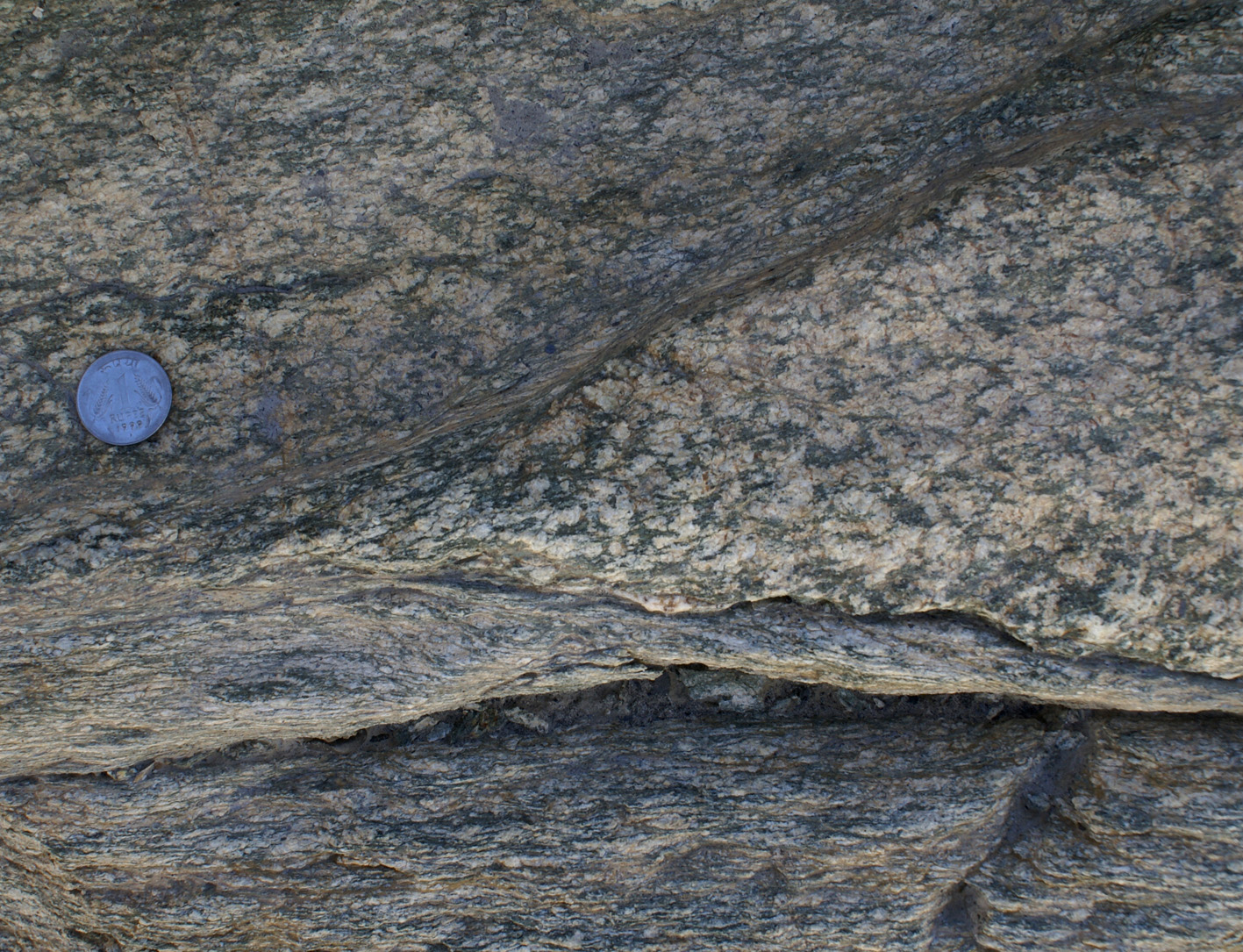
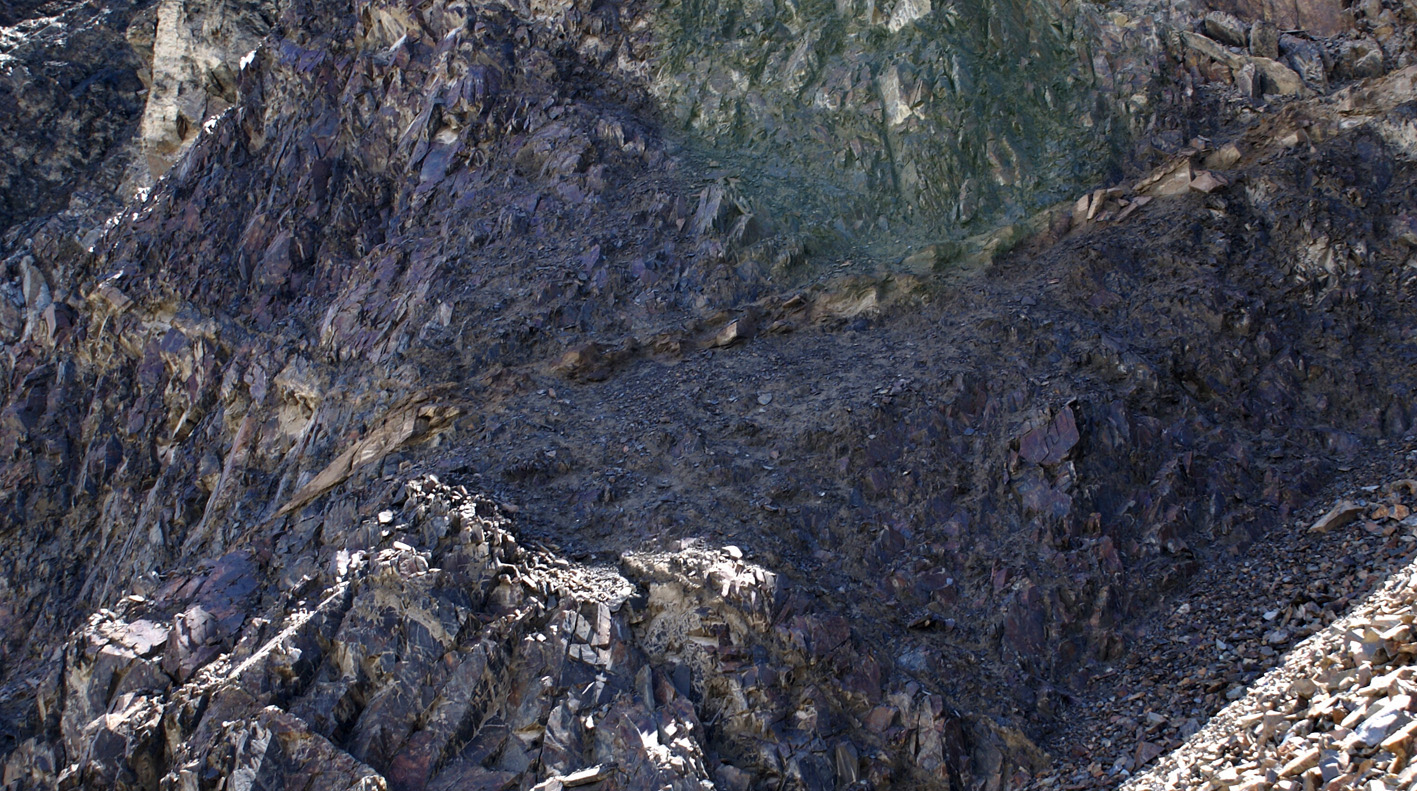
| Figure 7a) Different degrees of straining of coarse gabbro. The entire package is retrogressed to greenschist facies, but preserve locally original primary igneous texture despite shearing and retrogression. | Figure 7b) Lamprophyre (minette) dyke cross-cutting greenschist facies shear fabric. The dyke rocks are not sheared nor retrogressed. |