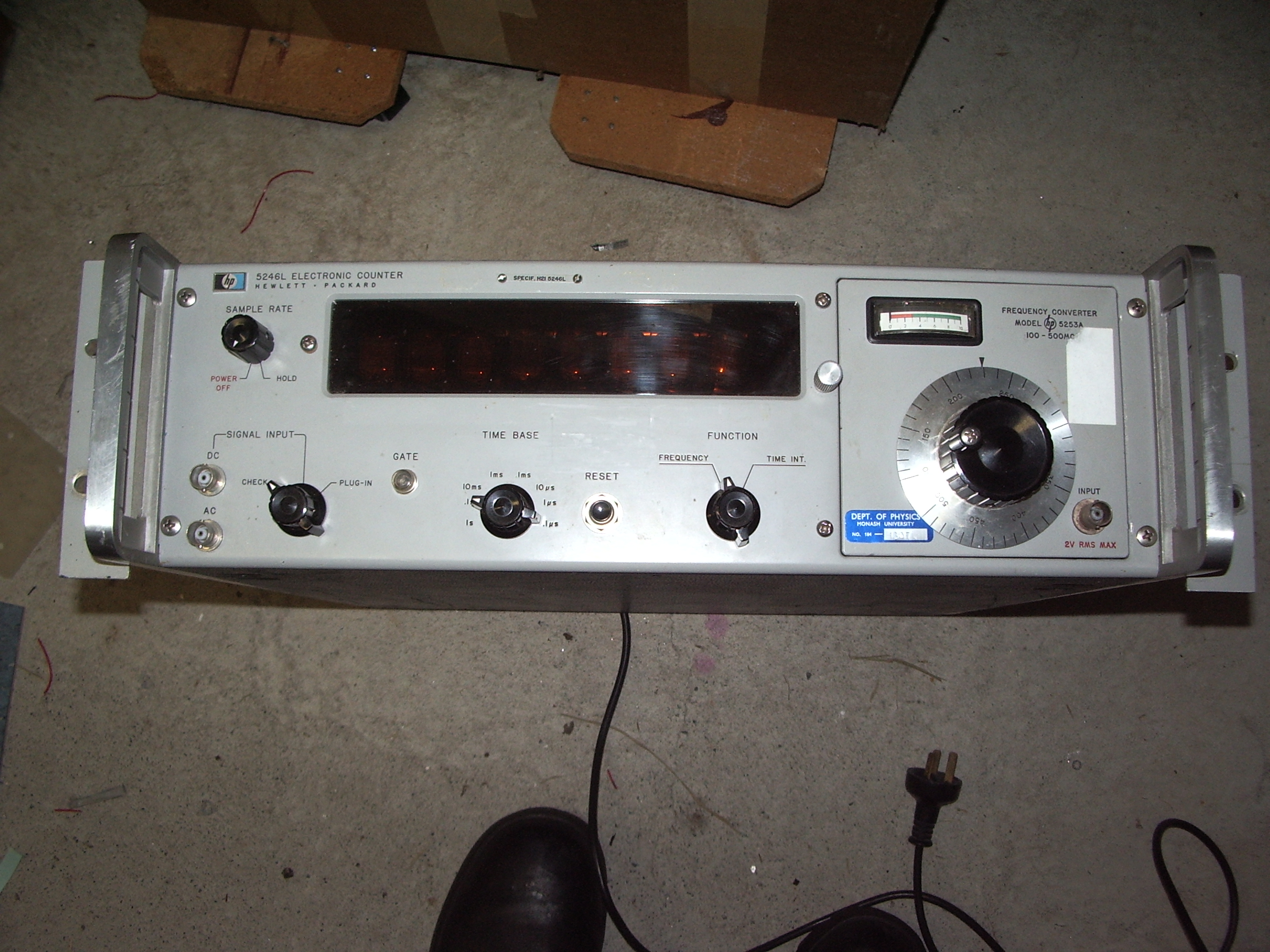
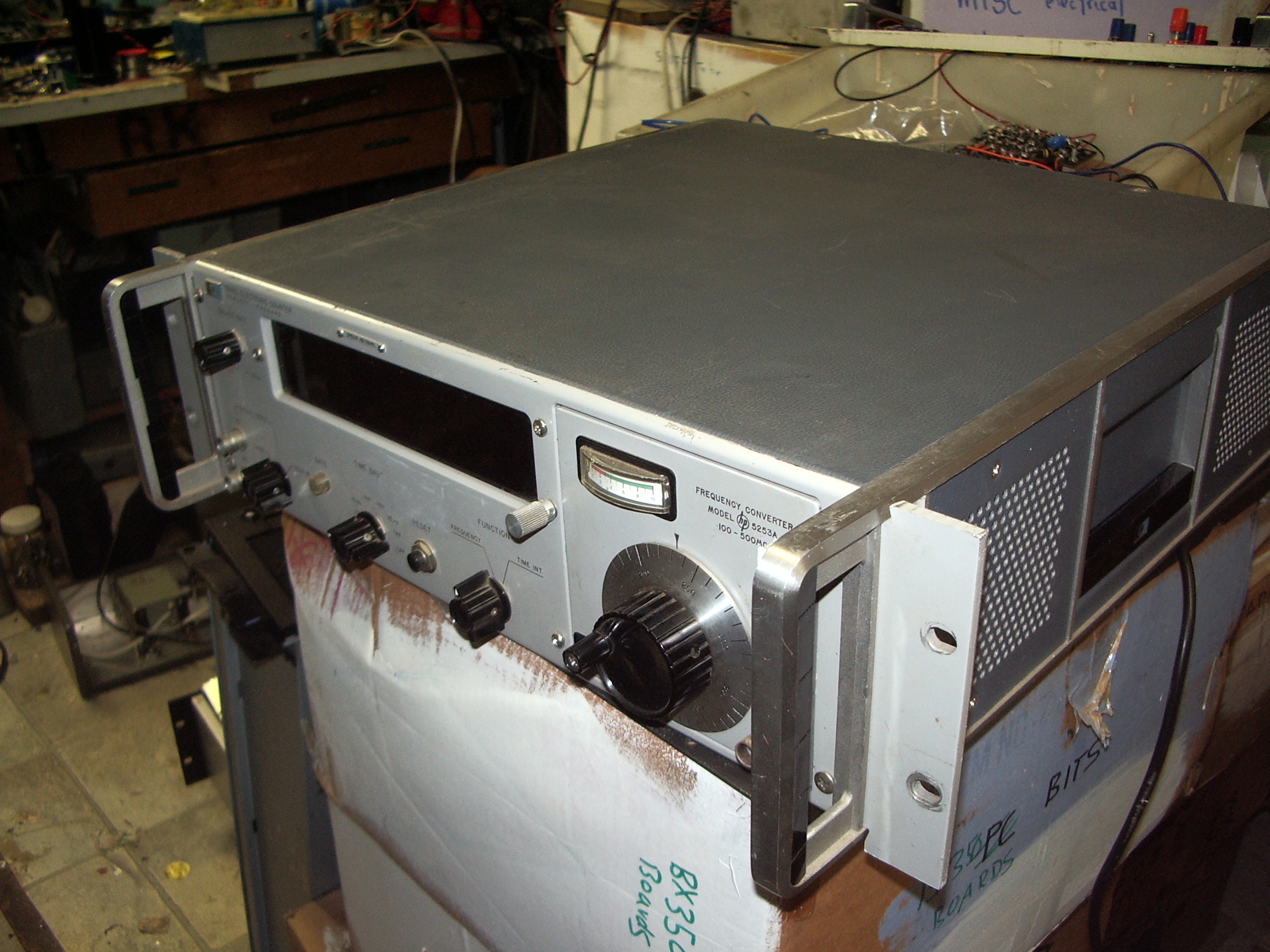
This
item was found in a heap of hard rubbish that had been discarded by the
chemistry department at Monash. When I chanced upon this junk heap
it had been raining solidly for about a week and this junk
heap
had got quite wet. Underneath some real rubbish I found this
HP
frequency counter. I do not need yet another counter, I
allready
have a
very nice homemade
unit and a nice
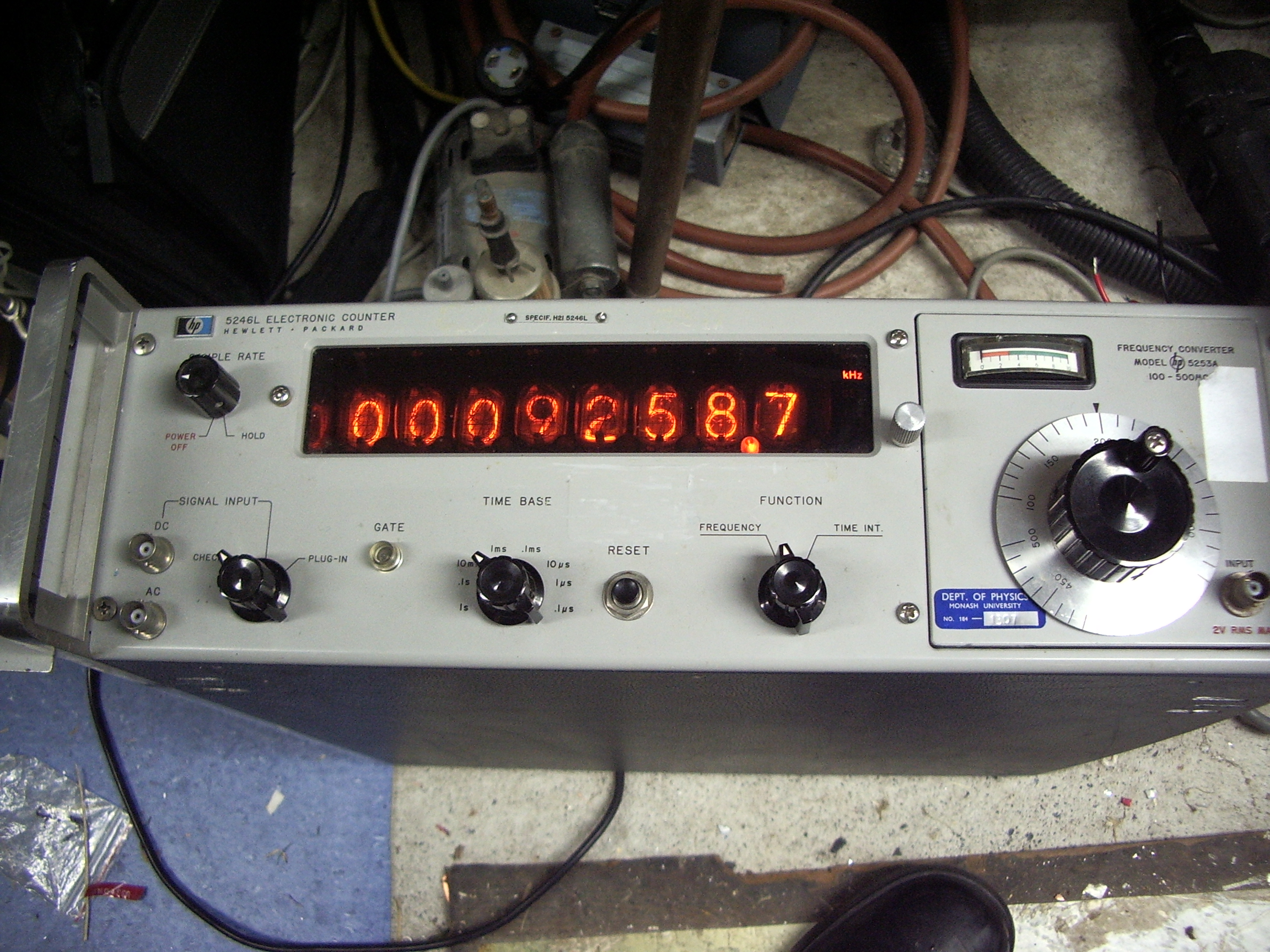
General Radio 7 digit counter with Nixie Tubes. Here was a
counter, a large rack mount device, but it had large Nixie tubes
and nothing looks more official than Nixie Tubes. I took it,
really for the display tubes. (I just want my ham shack to
look
like the Centre 0' Global Domination too)
The office here is
the usual dehumidified cube farm, and in one week, the dry atmosphere
here had removed all traces of water from the insides and at that point
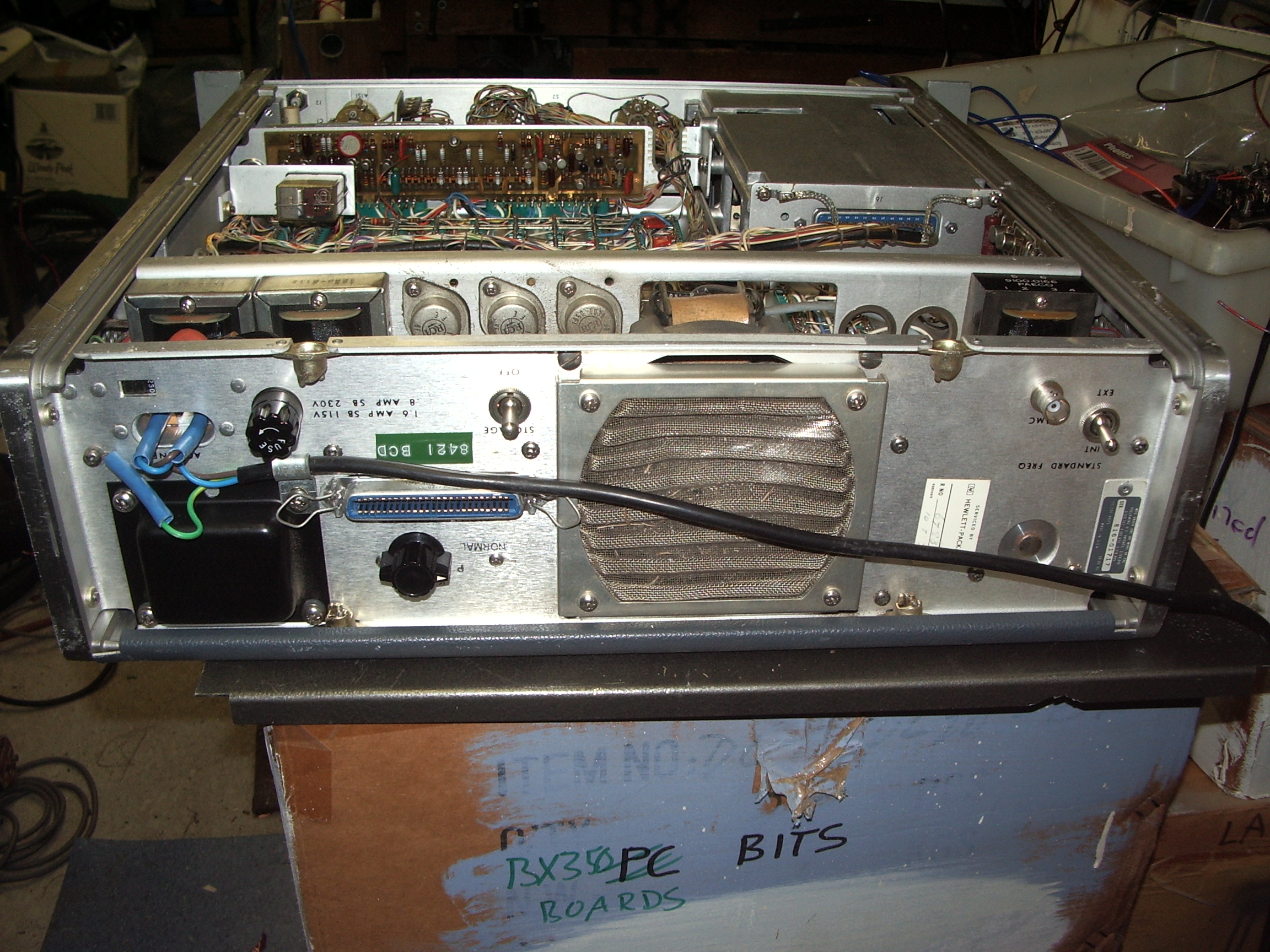
I took it home. I had to improvise a power connector, this
old
style of removeable power cord cannot now be found. I powered
it
on, not really expecting anything usefull to happen, but I powered it
on , at least so I could reassure myself that I had gone to at
least this small amount of trouble.
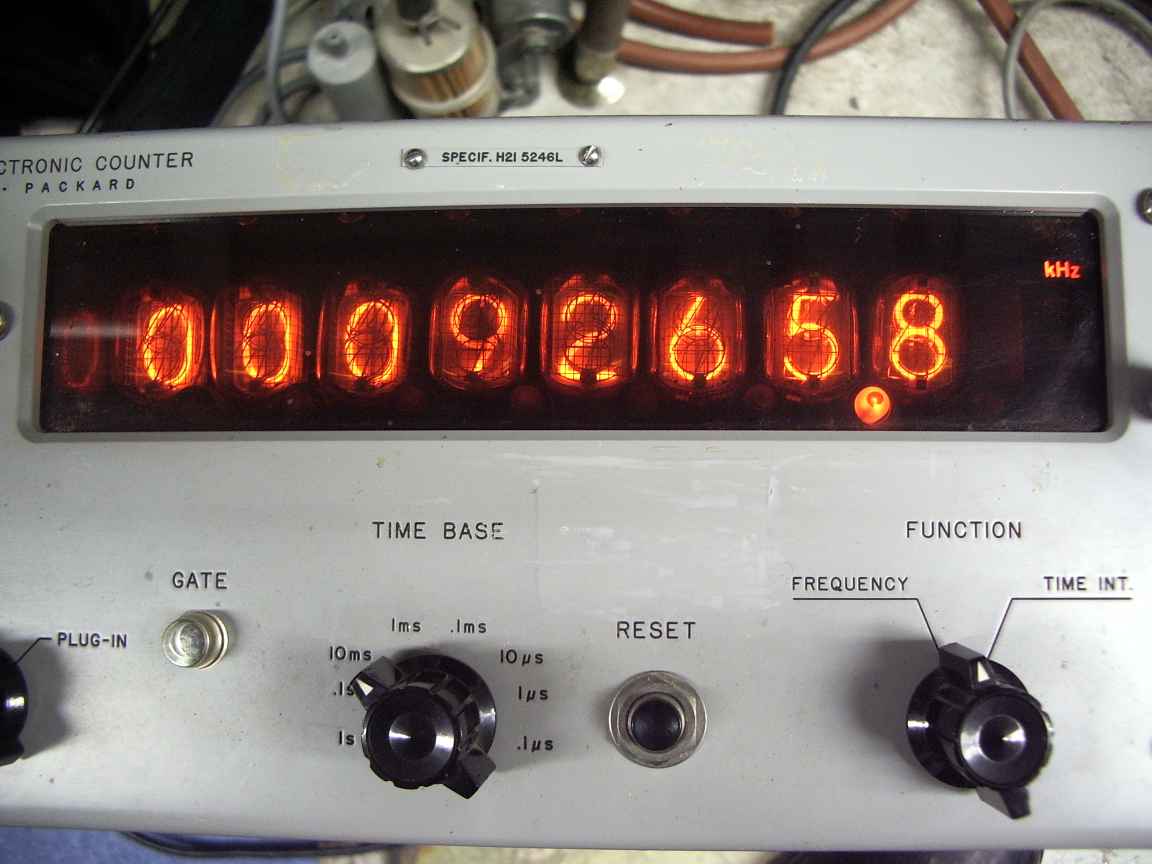
It worked
! Not only did it work, it worked
perfectly.
This equipment, from what I have been able to find out was
made
about 1963. A more advanced companion unit is
described in the Hewlett-Packard
Journal and has a price list as well. The list price
corresponded
to what would have been twice the cost of a suburban Melbourne house in
1963 and as such I stood as much chance of owning one as I
had of
becoming the King. It was the sort of thing that major
governments would purchase for weapons research and other such worthy
causes.
There you have it, biult in 1963 (I was in kinder,
watching grainy newsreals of Project Mercury with this thing in the
background!) it had seen years of service at Monash, and been
left
exposed to public abuse and the rain....and it just worked.
Thats nearly 50 years.
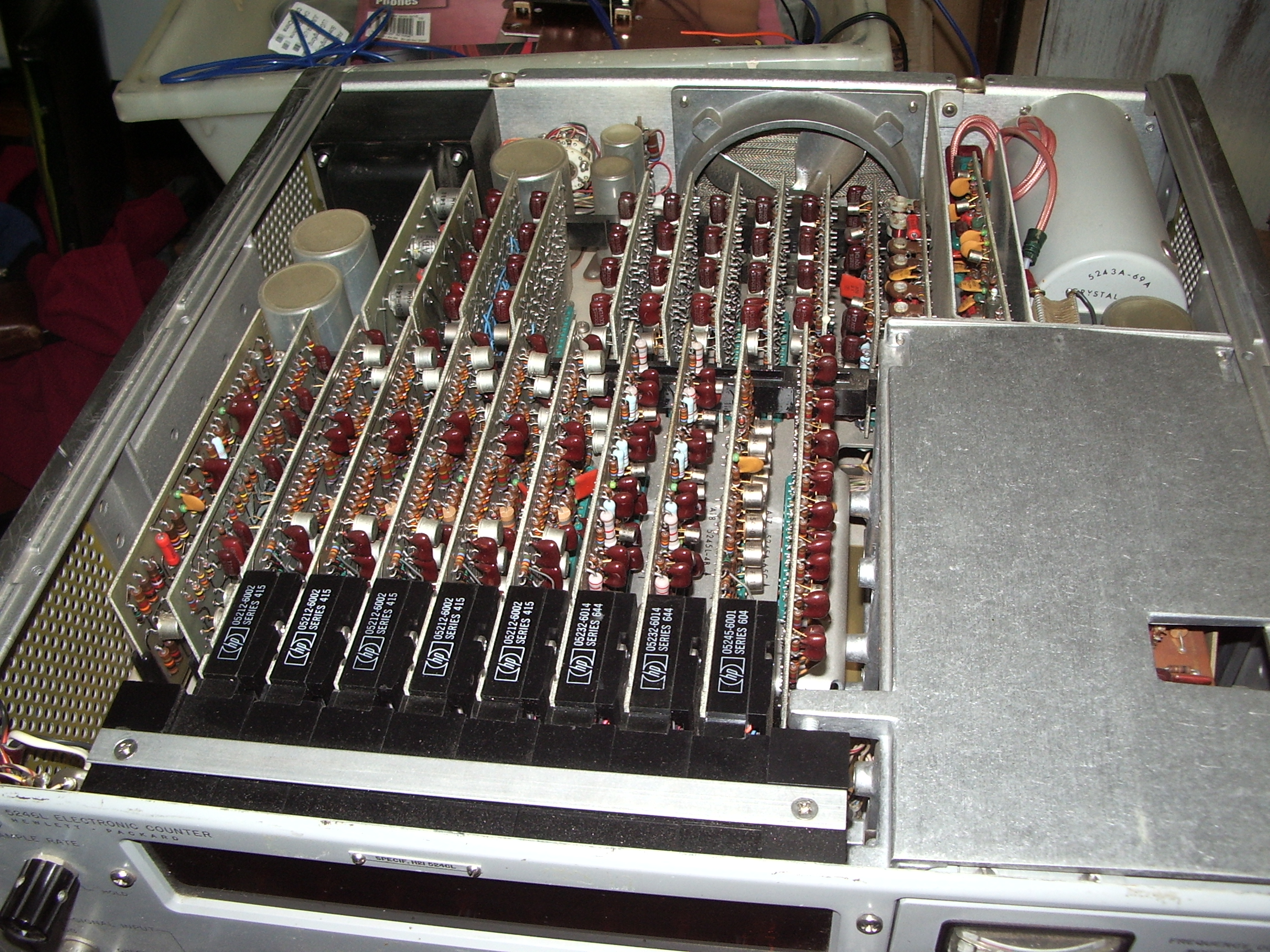
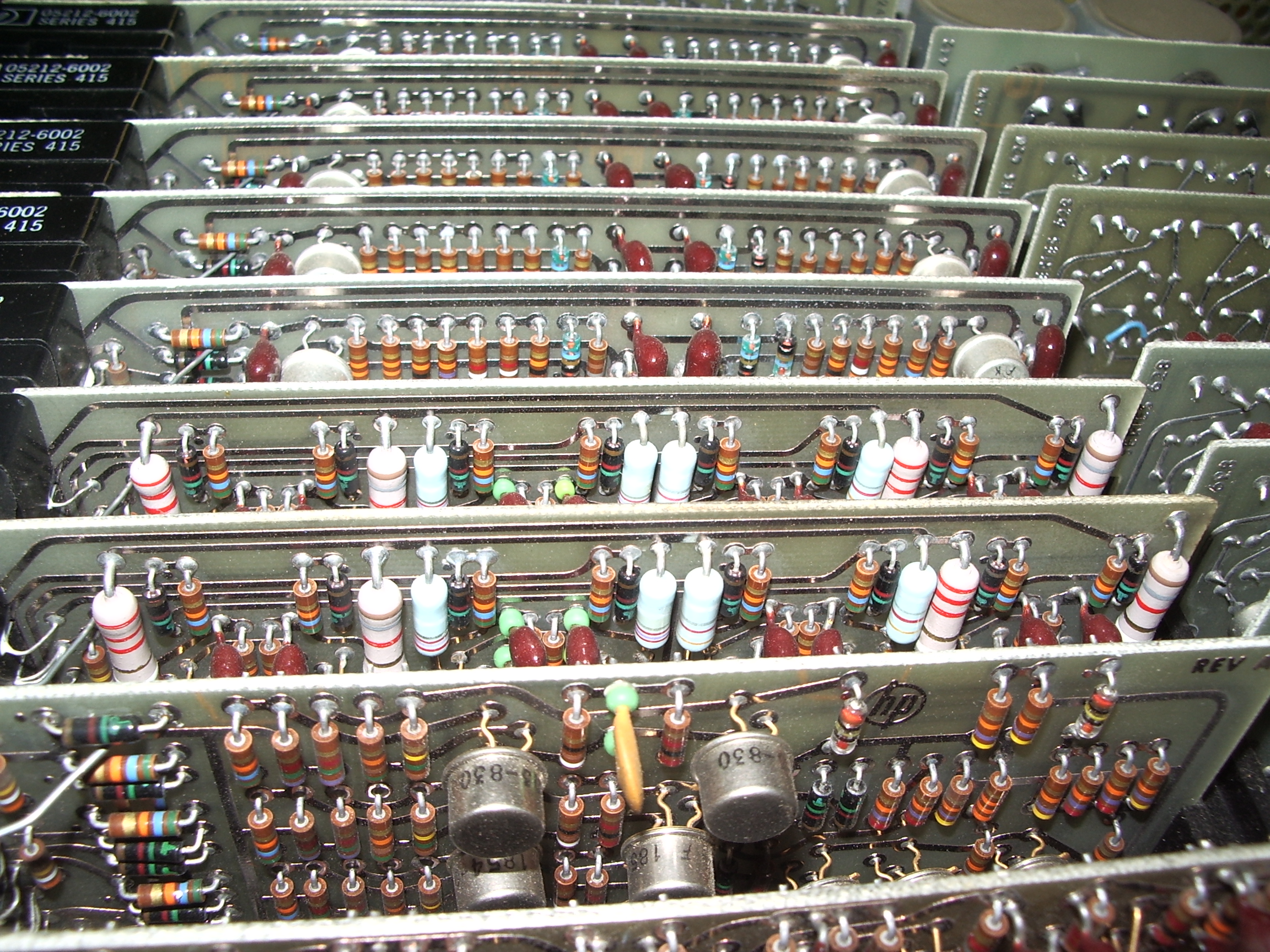
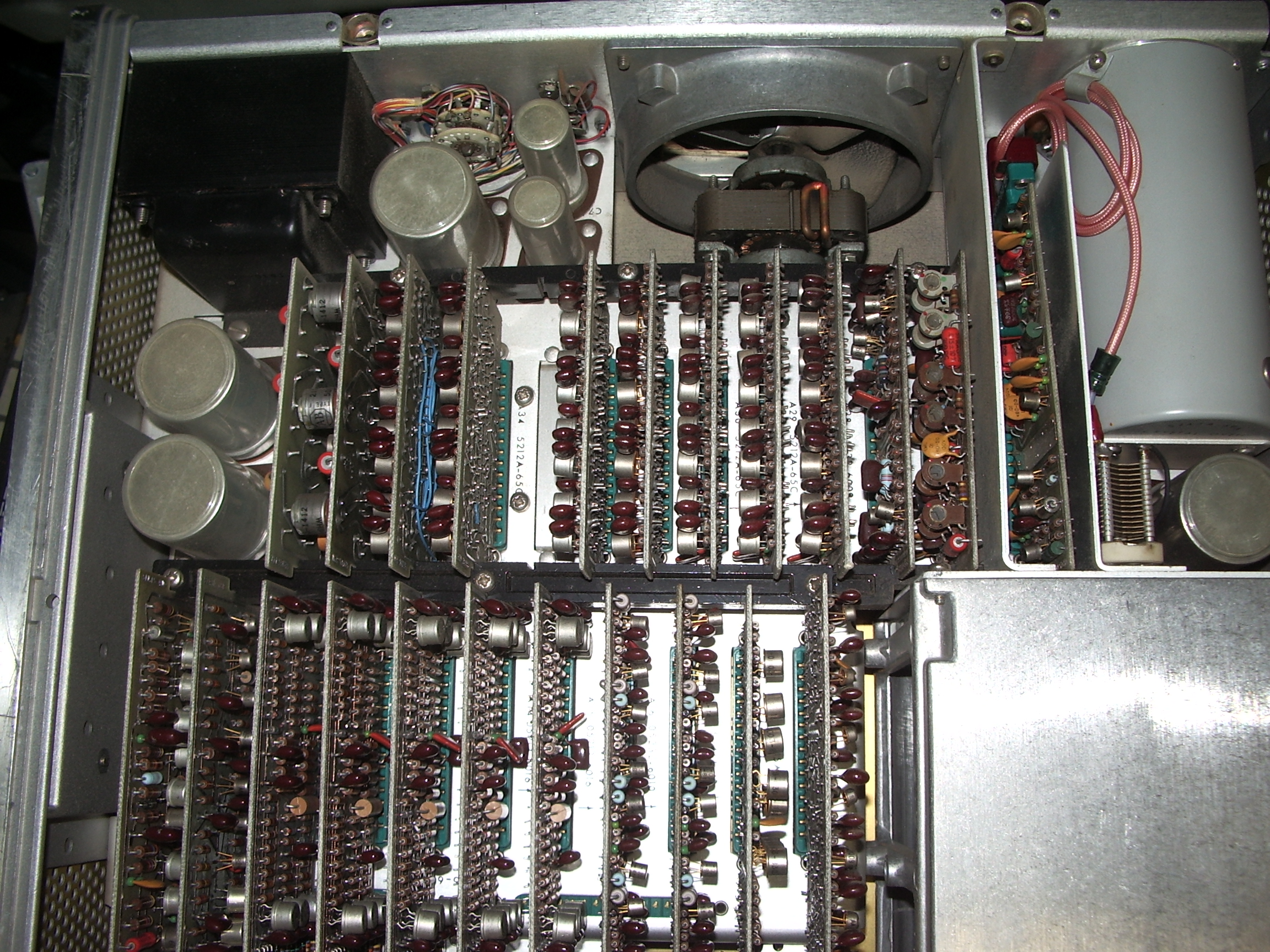
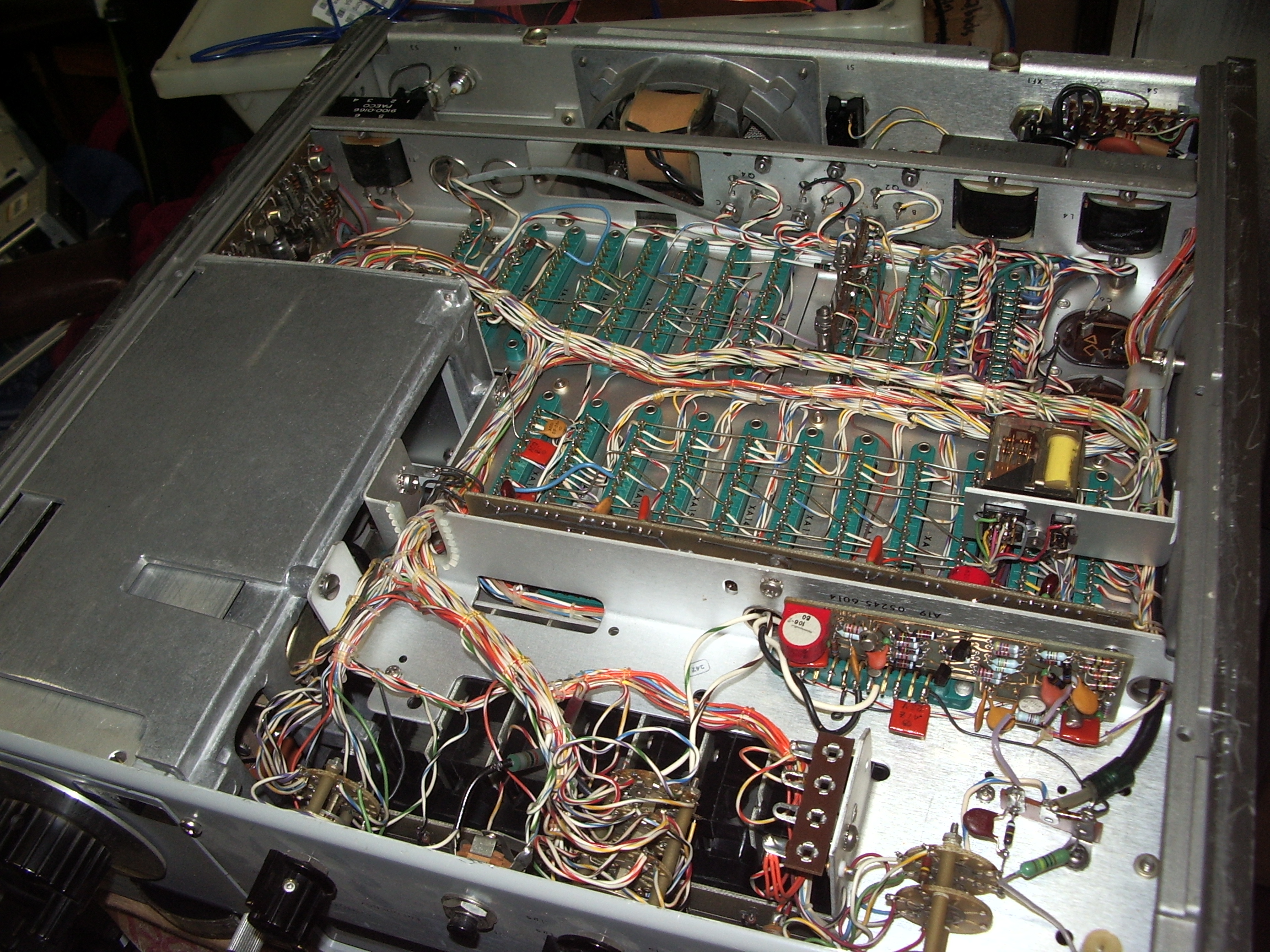
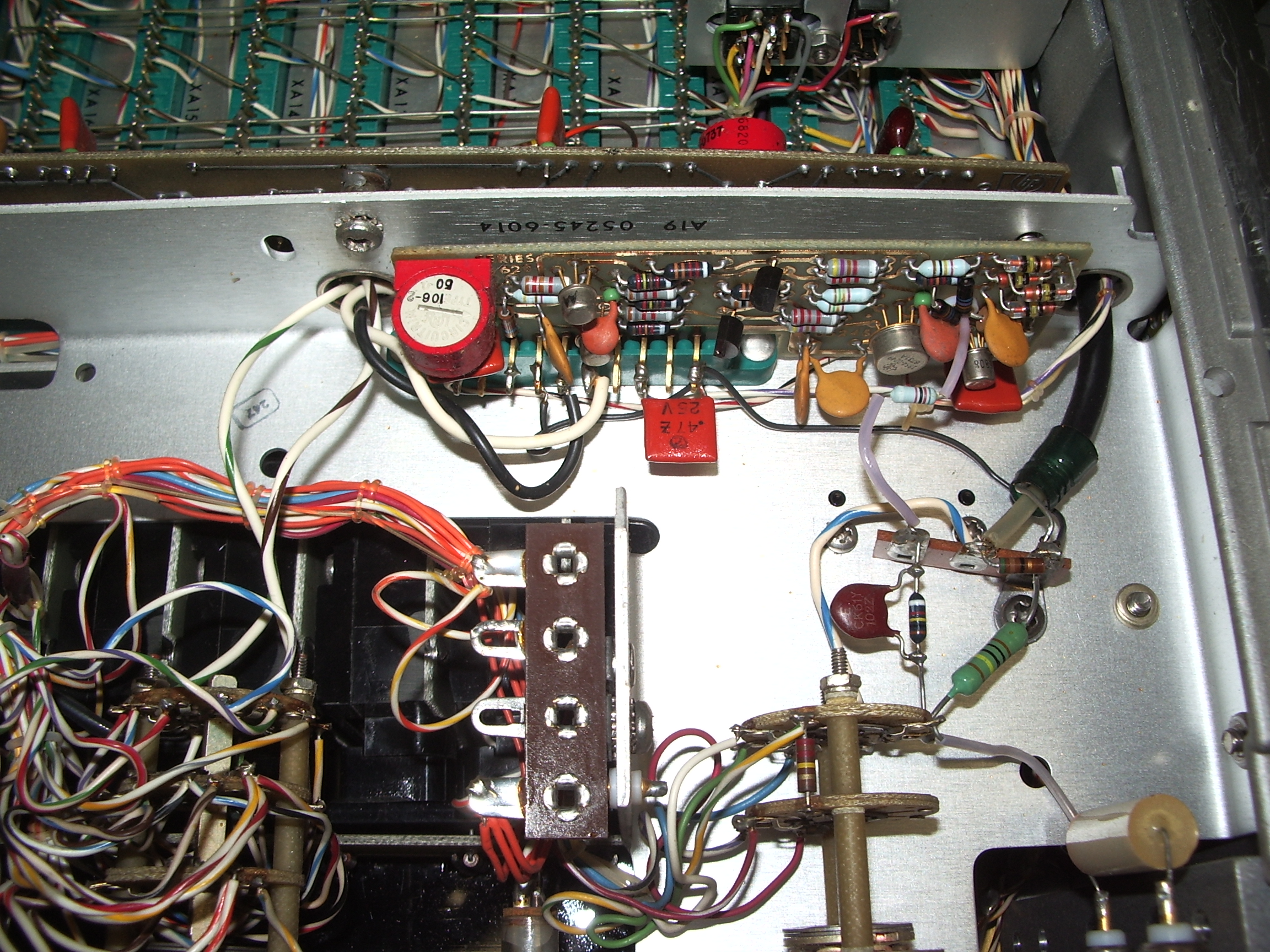
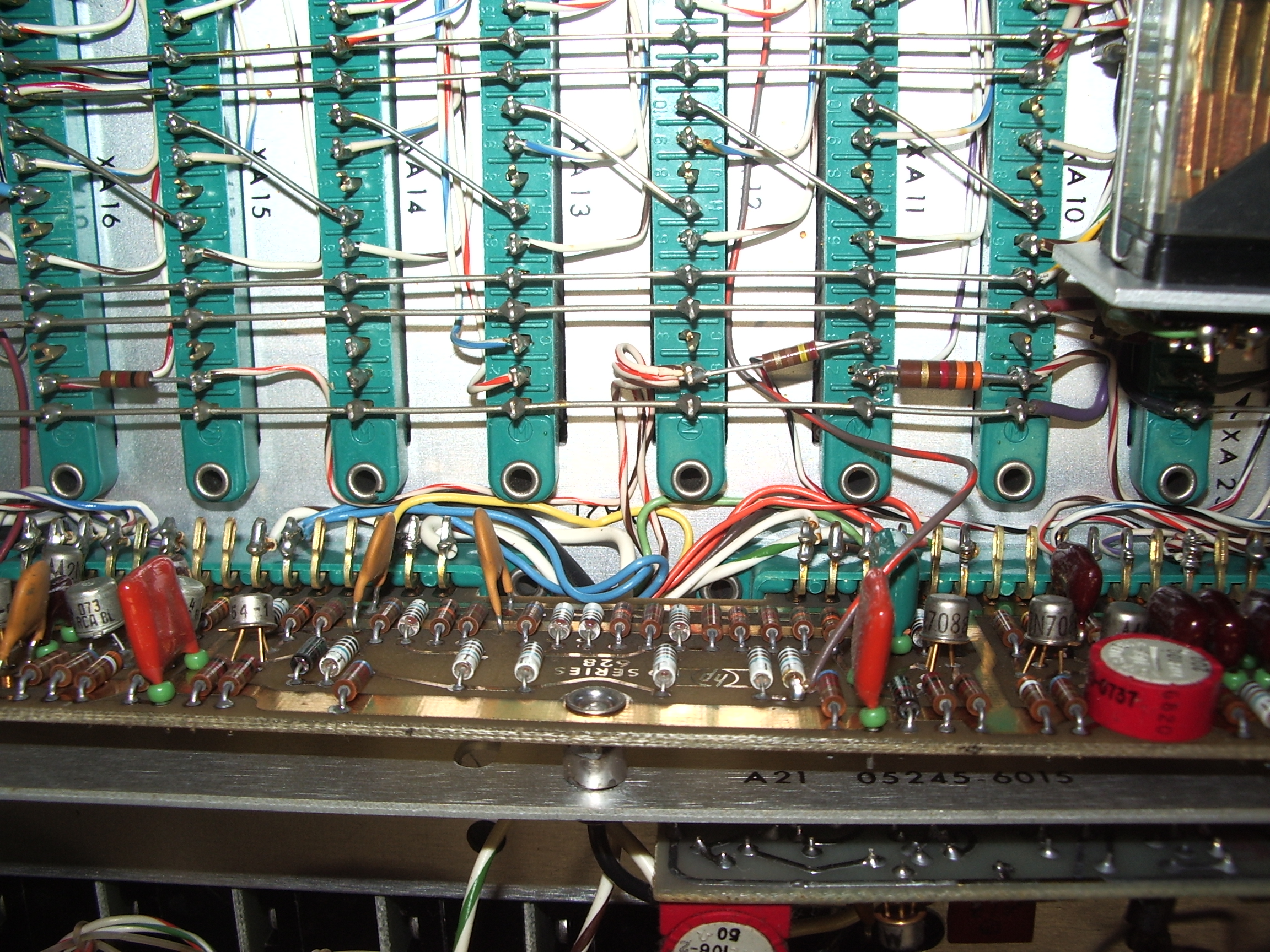
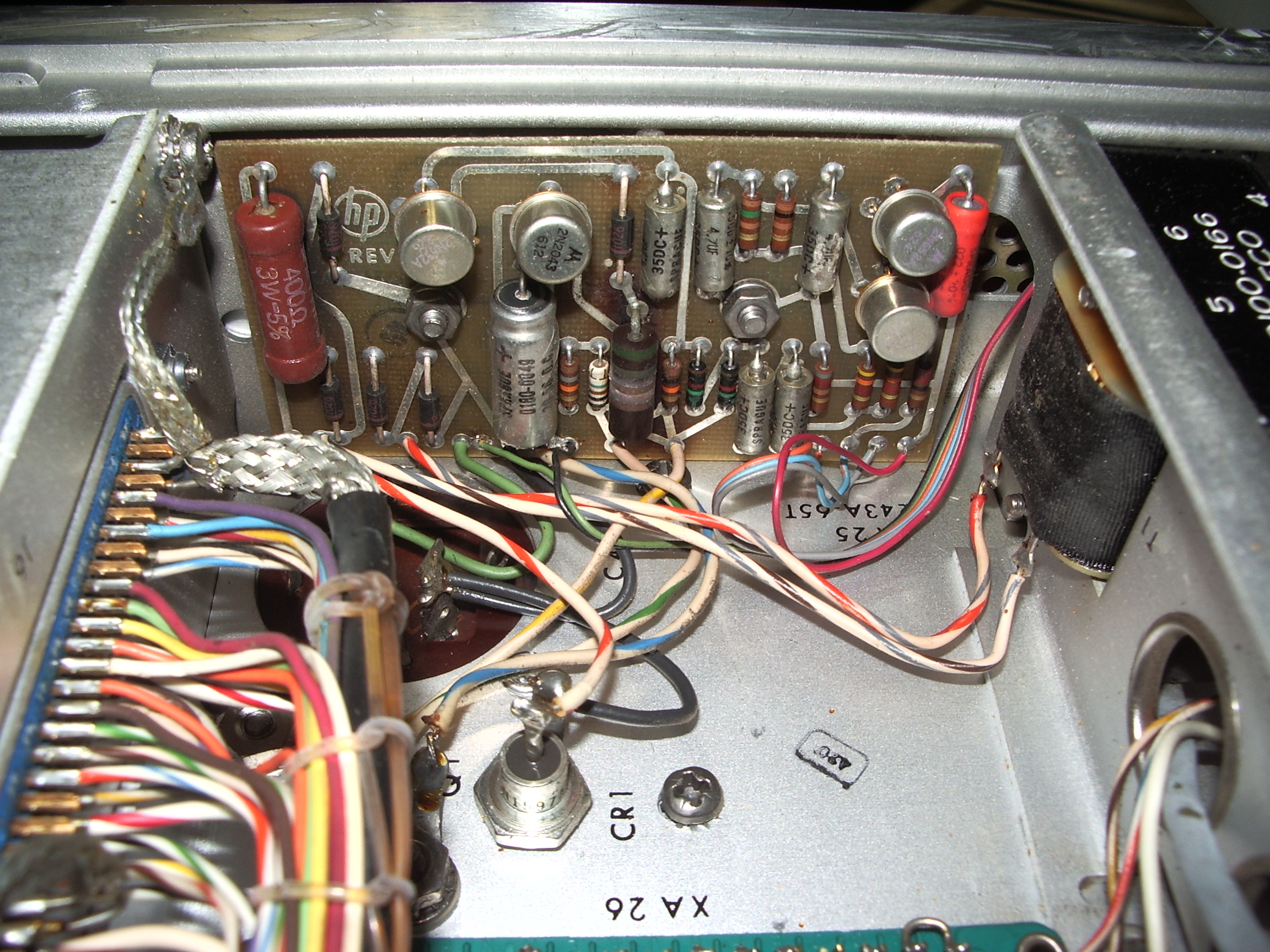
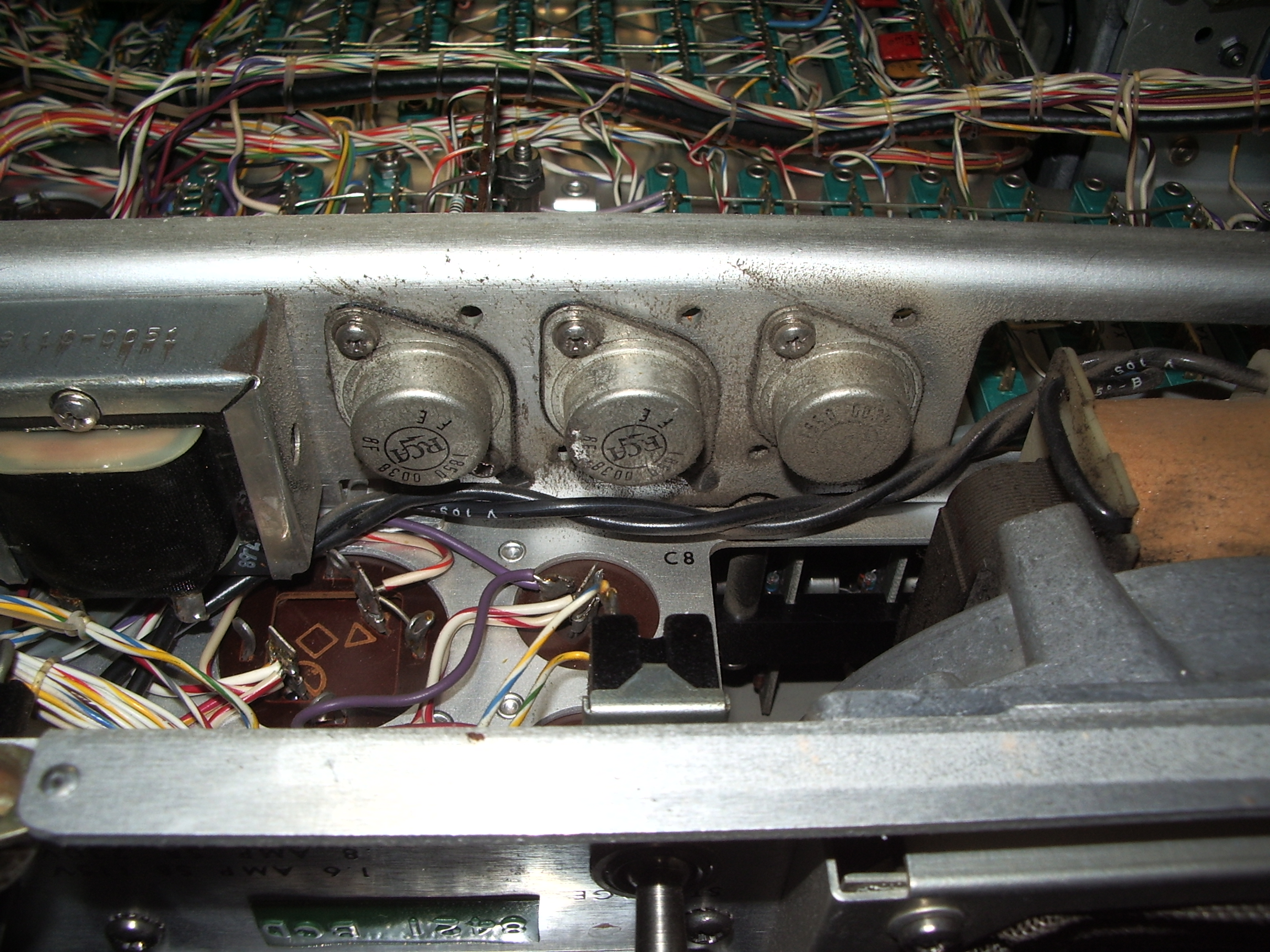
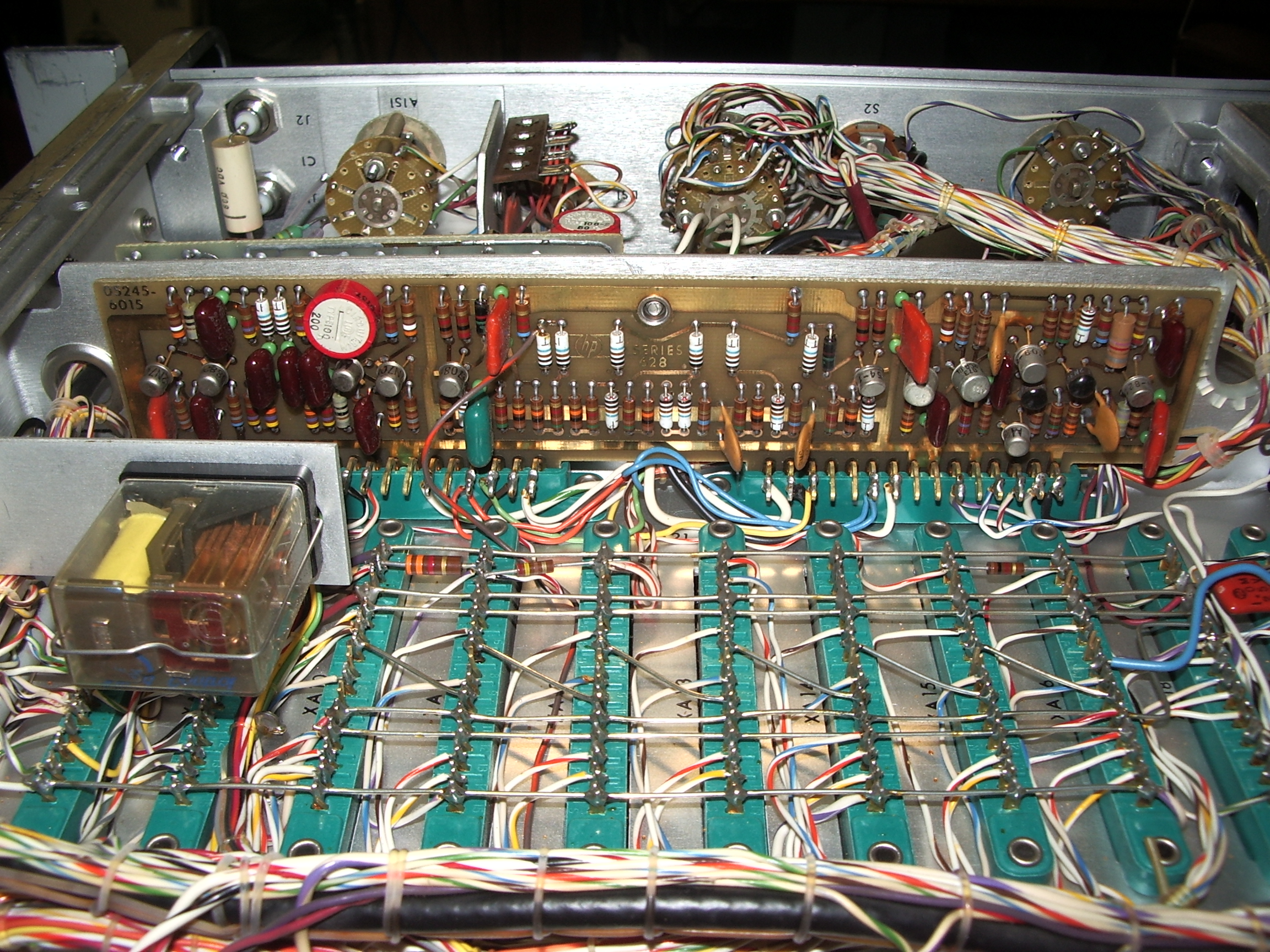
There
were no integrated circuits back at the time this equipment would have
been designed. It is all discrete silicon and germanium
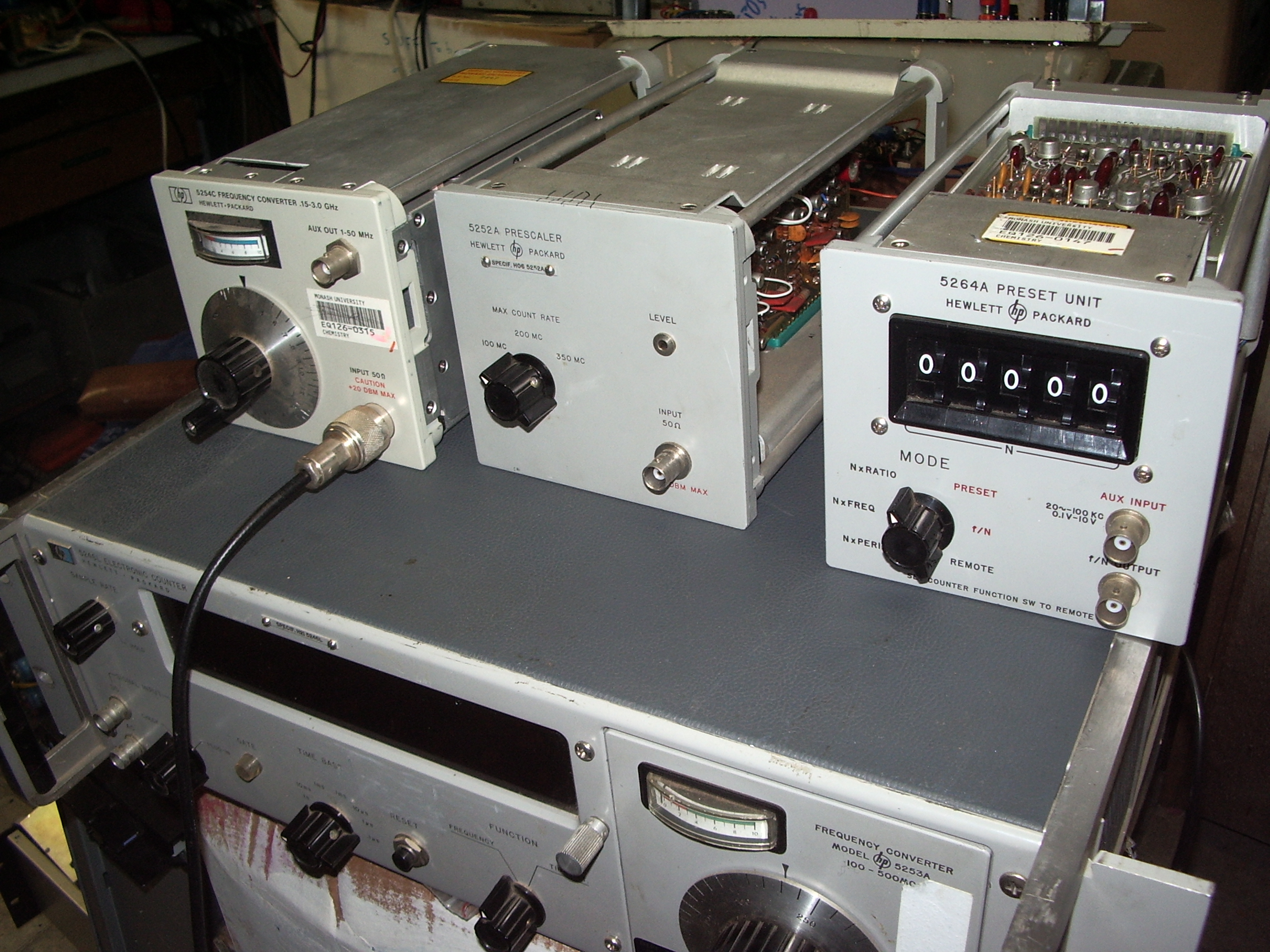
transistors. It can count natively to 50Mhz. It can
count
to 3Ghz with the appropriate plug-in, which by good fortune was also
found underneath some banana peels and ash tray contents in the
dumpster. The BCD
counters drive an most amazing BCD to decimal nixies tube driver that
consists of neon bulbs over a special array of cadmium sulphide
photoresistive cells that perform the logical operation of converting a
BCD pattern of Neons into a UNARY signal for driving the appropriate
anodes in the Nixie tube.
There is one and only one integrated
circuit in this unit. It is on the input preamplifier board and I can
only conclude that it is a differential amplier, probably on of the
very first ones. The VHF/UHF prescaler plugins work on the
principal of downconversion to something below 50Mhz which can be
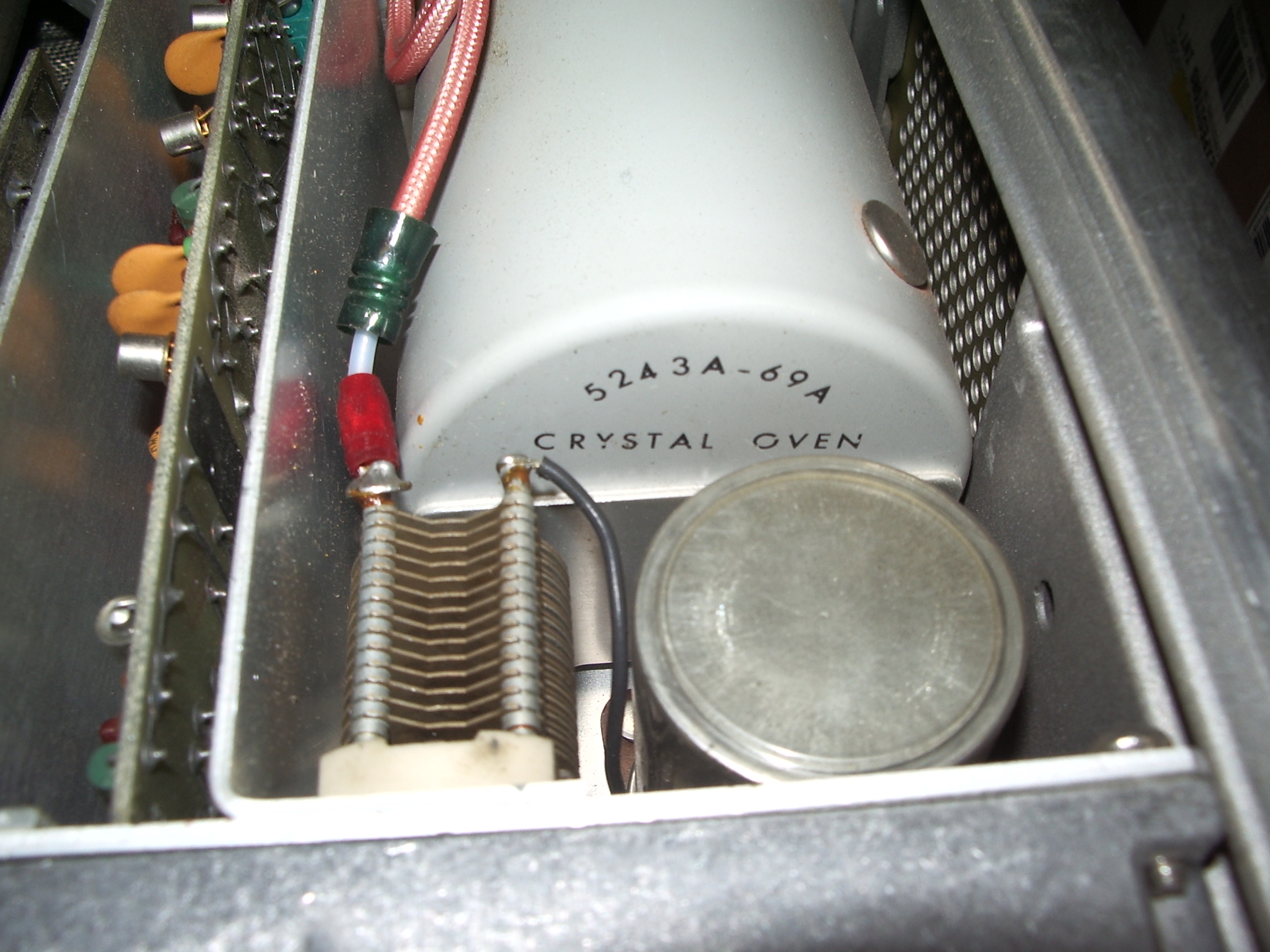
counted. The internal 10Mhz timebase is fed to a
step-recovery
diode which generates a good harmonic comb. A tuneable cavity selects
the required harmonic which is mixed with the input signal, the
differance being counted. A step recovery diode
cost only
$USD115 back then, a couple of months average wages.