The
LUX AETERNA
a small quest for perpetual light
copyleft
2007 by Ralph Klimek .
Make many copies
My quest for light began
in 1965. It was Christmas Eve, Good Saint
Nicholas had dropped by. He left behind a little science kit for this 6
year old wannabe physicist. It contained some
batteries, a
functional and annoyingly loud electric bell, some switches,
miscellaneous hardware and a handfull of small edison screw light
bulbs. I was about midnight, my parents and guests
has
adjourned to another room leaving me alone with my batteries and light
bulbs and the dark. The light had been extinguished to encourage me to
leave and join the others for an evening Christmas Eve supper but I
didnt care. Not only had Saint Nicholas visited that evening but the
God Prometheus, the ancient giver of light, had also visited. In the
dark I admired the small light from my battery and light bulb. It was
was the most compelling and beautiful thing that I had then seen. I
think I know how the amazing Edison must have felt some eighty years
earlier. An ancient tyranny, the monster from realm of darkness had
been temporarily conquered.
A perpetual light it wasnt, and by the next day the glorious little
light was extinguished. The battery drain from even this little light
killed it in only one night. The Lord of Darkness had returned, beaten
but not vanquished.
But all that was allmost
fifty years ago. Saint Nicholas returned only
once more and Gods only visit you once. The incandescent light has
served us well, it is extremely simple in principal and practice. Its
ability to convert electrical energy to light was only bettered 70
years after its invention by the flourescent mecury arc lamp and
finally in the seventies Monsanto released to the public the very first
red light emitting diodes. I saved up my pocket money and ventured into
town to the electronic parts place and purchased one red light emitting
diode. Wow, only took 20 milliamps and put out this feeble deep red
glow, just barely visible in daylight. Thirty years
later
again I go to town to buy one of these new fangled white LEDS. White
indeed! What a load of cobblers! And EFFICIENT too! This I had to see
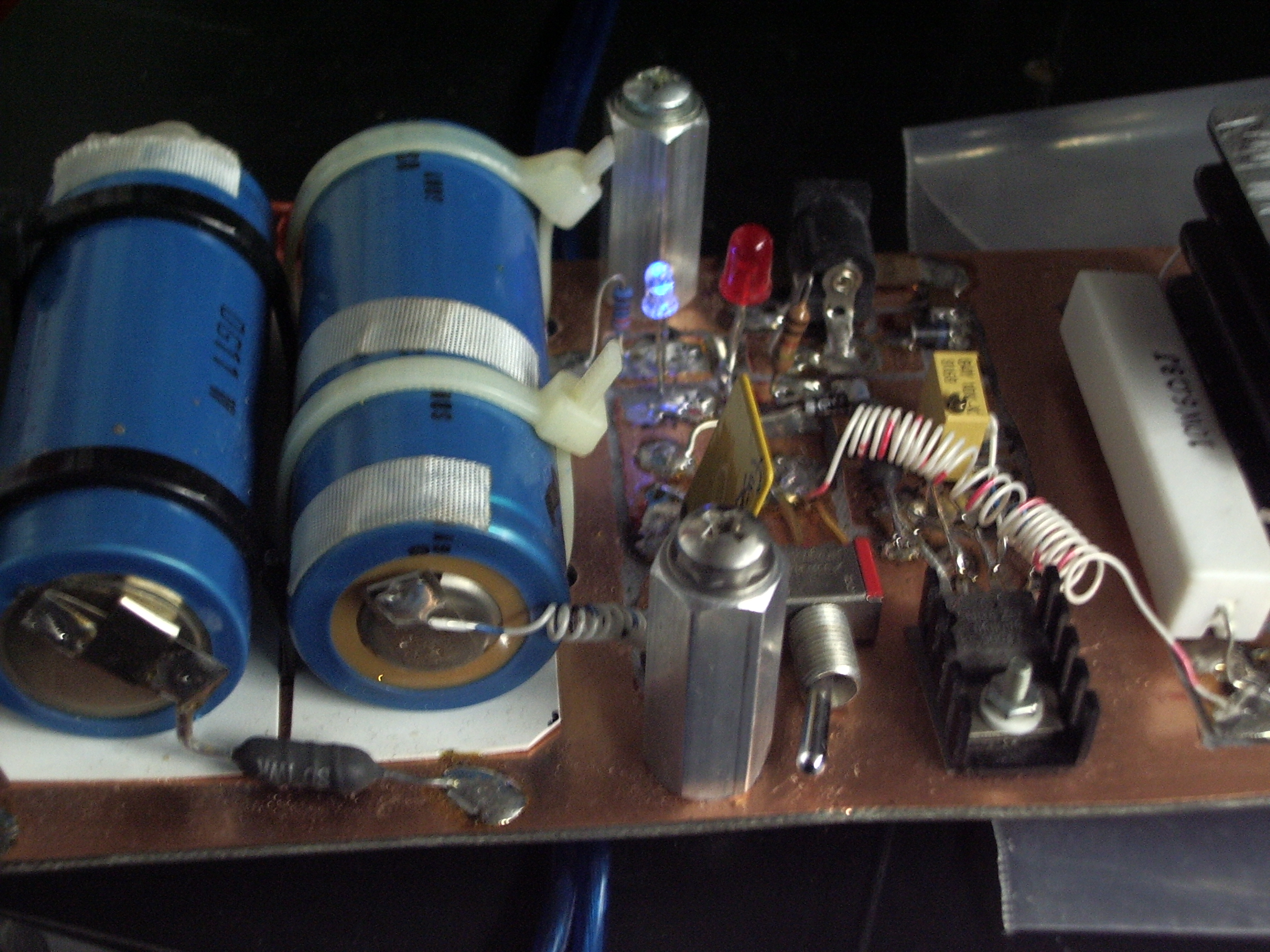
to believe. Prometheus has been back. The result was the small hand
held LED torch in this image. There are three nickle hydride batteries
recovered from some long forgotten mobile phone, a switch and ballast
resitors. It was an very serviceable torch. Then one day, the
inevitable occured. I needed it, and in my dark toolkit was the drained
LED torch. Emitting the obligatory expletive I managed
without
it. A little later I paused to observe that allthough the batteries
were well and trully drained the marvelleous little LED was
still
producing light. I had not attended my toolkit for about 7 days and it
had been left on that long. How much light was it producing?
With
dark adapted eyes in a dark room enough to read by. Then the
God
spoke. (Just a metaphor mind you!) Measure the current, it said, so
measure the current I did. About 50 microamps. Hmmmm.
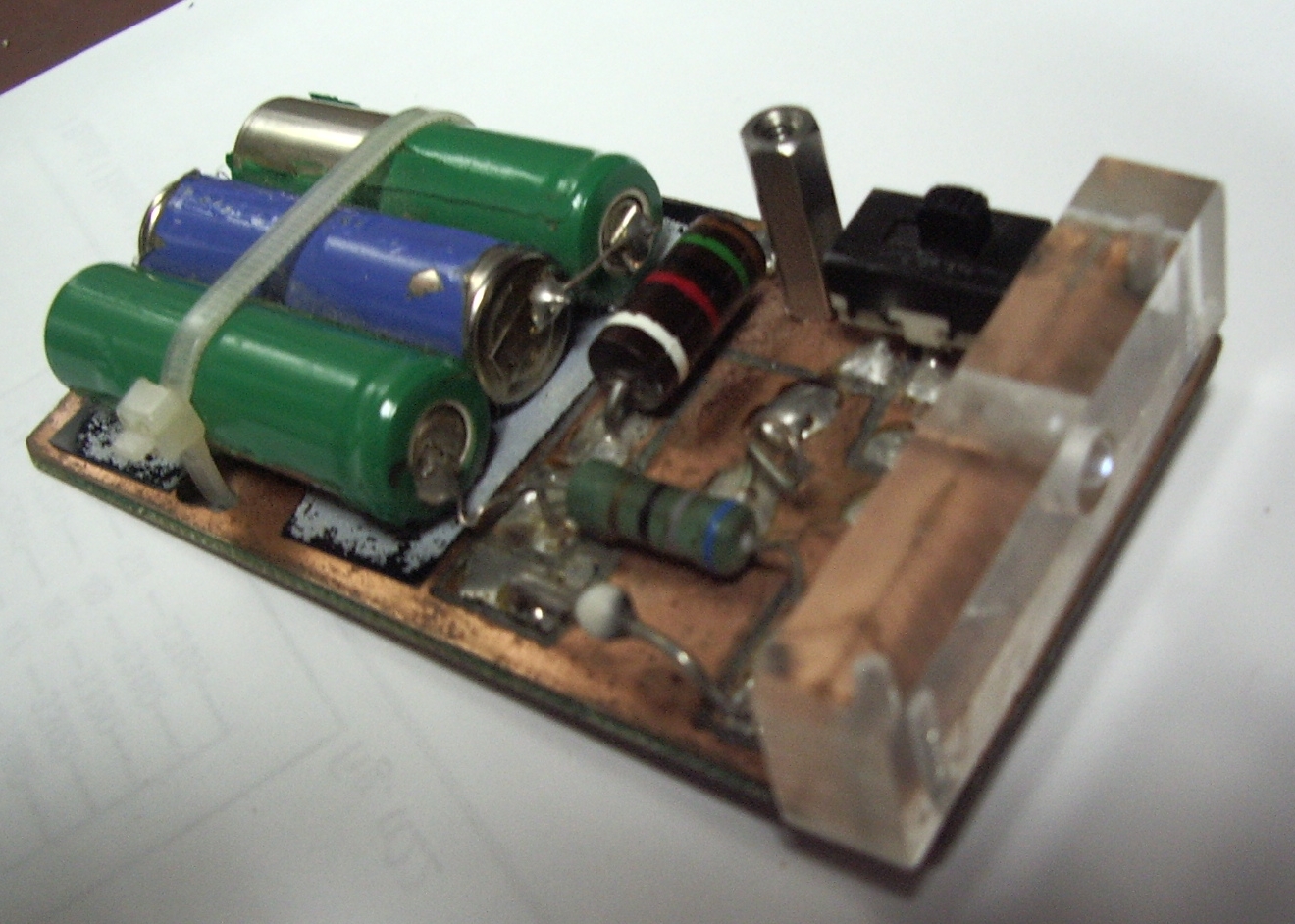
Think about that ! I added a shunt resistor to the
power switch on my torch to let it have a steady drain of 100 microamps
to produce a light source that cannot be put out. Its cheerfull little
beacon allways beckons in the dark and produces enough light to read
by. A fresh charge in the batteries gives it a full on time of over 7
days. The image here just shows the glow of the pilot in broad daylight.
Another LED torch I made to amuse the children and to show
them
that white light can be synthesized from red green and blue light. Try
this at home. It never ceases to amaze me that the reflected light from
this torch appears to contain all colors in the correct hues. Once
again the power switches are shunted with 100Kohm resistors. This
produces a very serviceable night light for children as well as a
usefull source of light.
| RGB 3
color recombination demonstration |
with
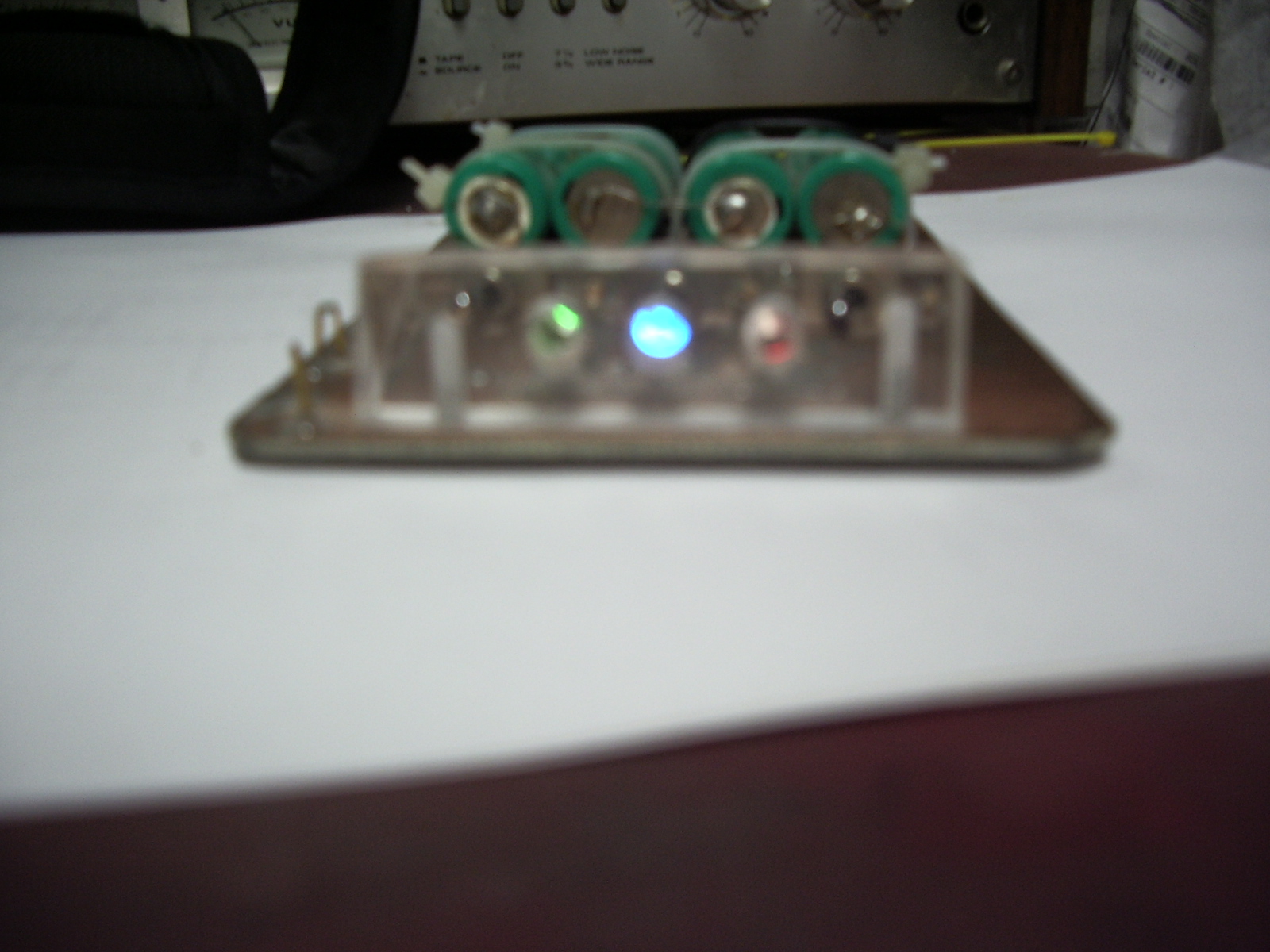
100Kohm switch shunts the light is still clearly visible in daylight |
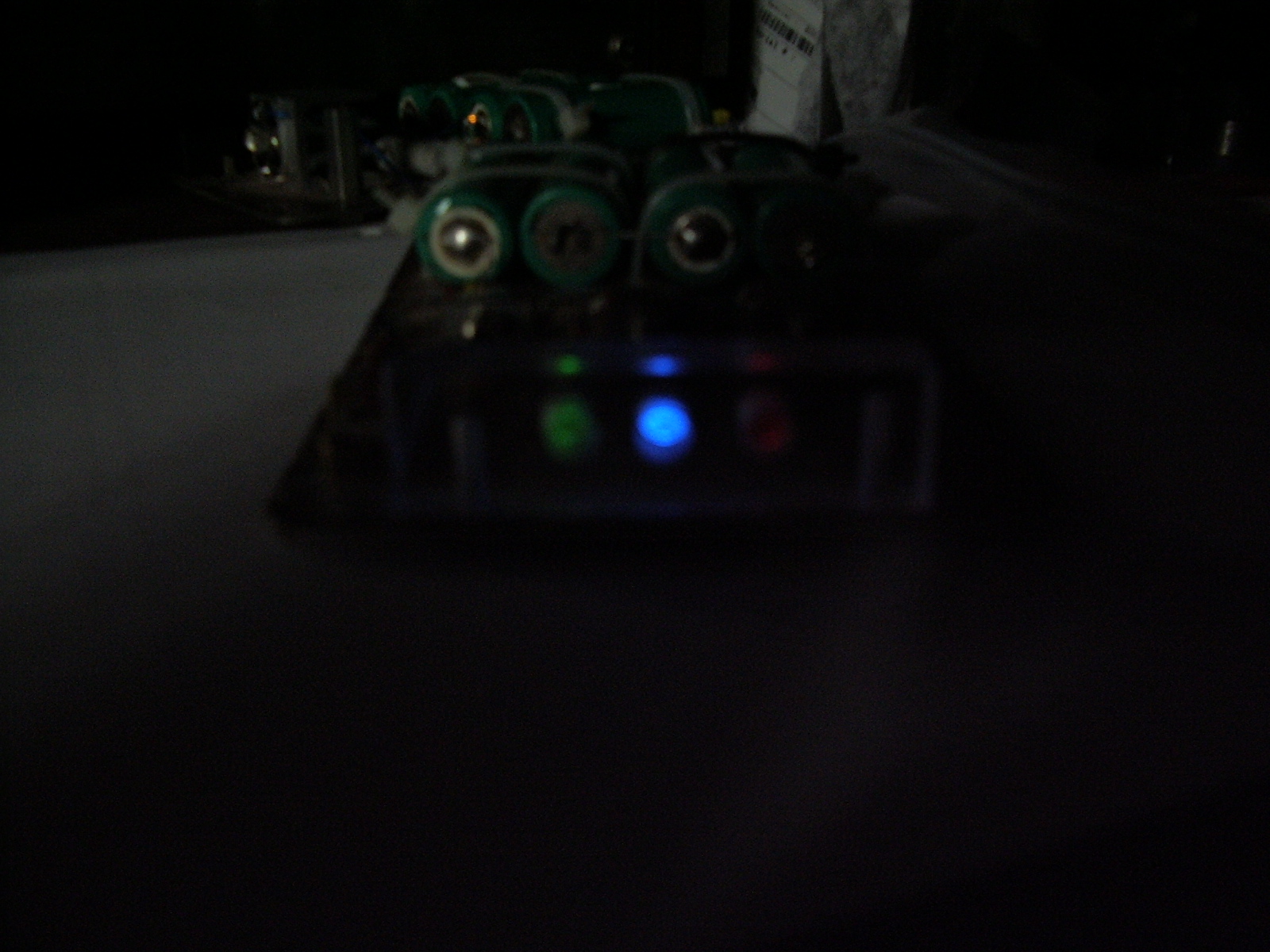
at night |
 |
 |
 |
|
one charge
lasts over 12 months at this level |
allways
welcome in a dark room |
After a power blackout,
my elderly mother tripped and breaks her hip.
Just a few years ago this would have been considered the end of ones
life. She recovered thanks to private health cover and a metal
prosthesis. I made my parents a gift of light that they had made to me
all those many Christmases ago. It is allways on, they now never fumble
for a candle and matches when the power chooses to depart. It is so
bright that they cannot abide it in their bedroom at night but its
perpetual beacon lights the corridor nearby. A set of cheap AA batteries lasts about one year in this class of service.
This torchs now reflects my growing ambition and lust for power
. Only a couple of years
ago
a company called Luxeon releases LEDS of assorted colors with input
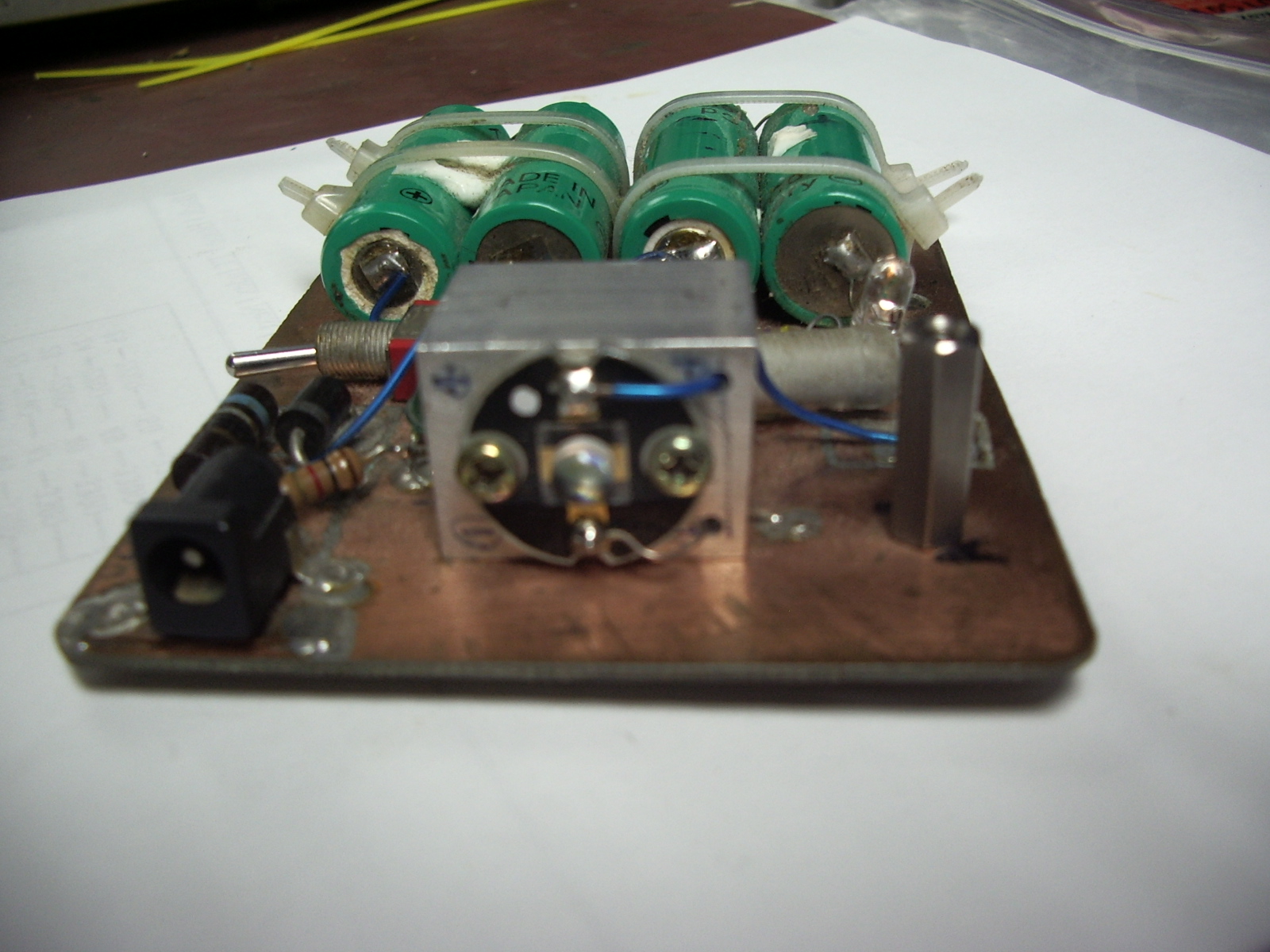
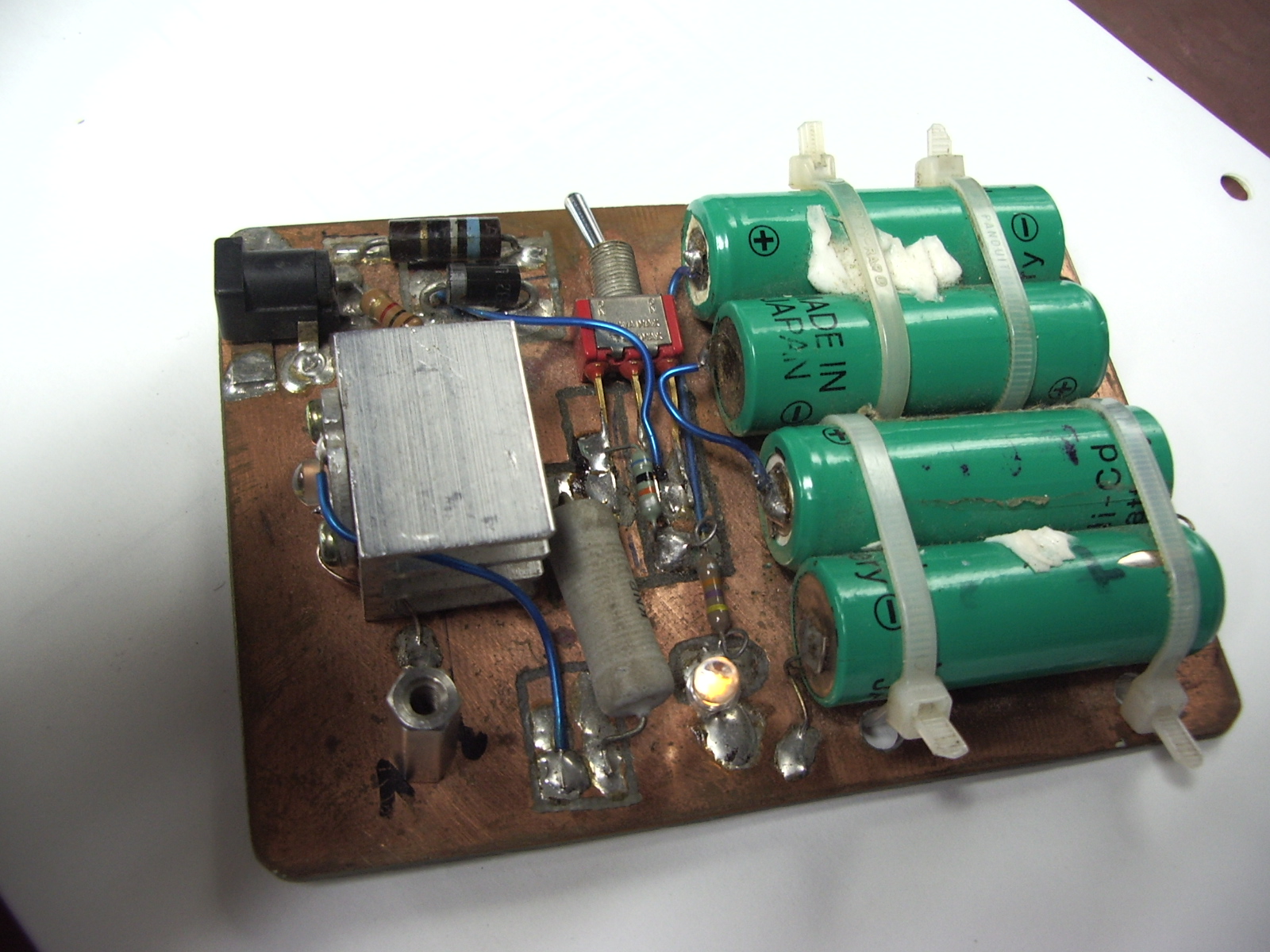
power ratings of up to 3 watts. This torch is based on a one watt white
LED and some old laptop nickel cadmium batteries. I produces a dazzling
output with only 100 milliamps and a fully charged battery gives a
usefull burn time over 8 hours. Naturally the power switch is shunted
with a large value resistor so that I can find it in the dark. Next to
do a switch mode current regulator. The 5.6ohm resistor that acts as a
current ballast gets quite warm in normal operation. A significant gain
in battery life could be achieved by improving this with a switchmode
regulator. The next version of this power torch will have a lithium ion
cell and switcher. The goal is to produce a lantern that can burn at
full intensity for over a day on one charge. A solar cell on the back
to keep the battery topped up would add a nice touch. This
lantern has been extensively used for general purpose portable lighting
and after maybe 300 hours on time the led luminous output has dropped
noticeably. The blue white conversion phosphors are meant to do
this over time but I was not expecting the degradation so quickly. The
lamp was not being overdriven, allthough being a clone led, and just
following the specification for it, still resulted in it being actually overdriven. The lesson here is, as usual, except no imitations.
| Luxeon
clone 1 watt white LED |
these old cells give about 8 hours burn time |
 |
 |
| the clone 1W luxeon |
a high
gain yellow LED provides an allways on pilot light |
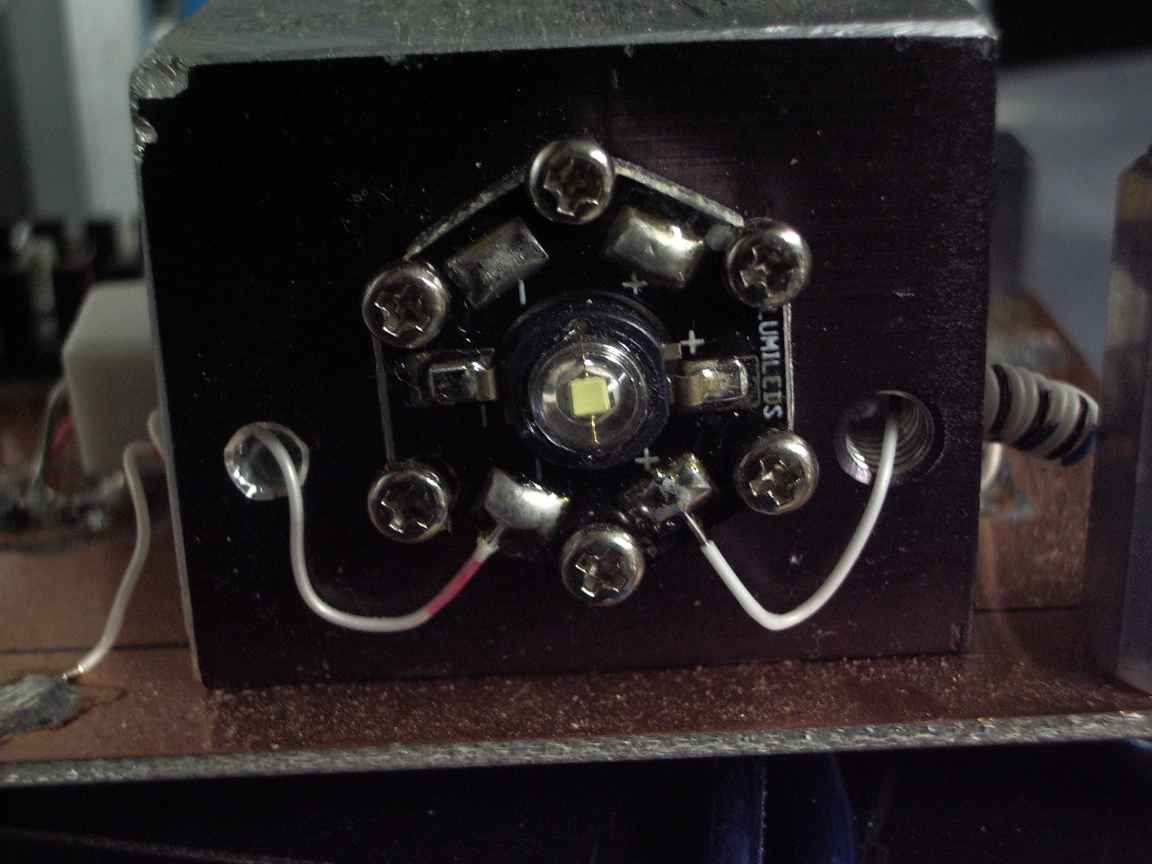
Using a genuine Luxeon 3W white led and hight capacity LION cells, for the second last word in portable lighting!
 |  | 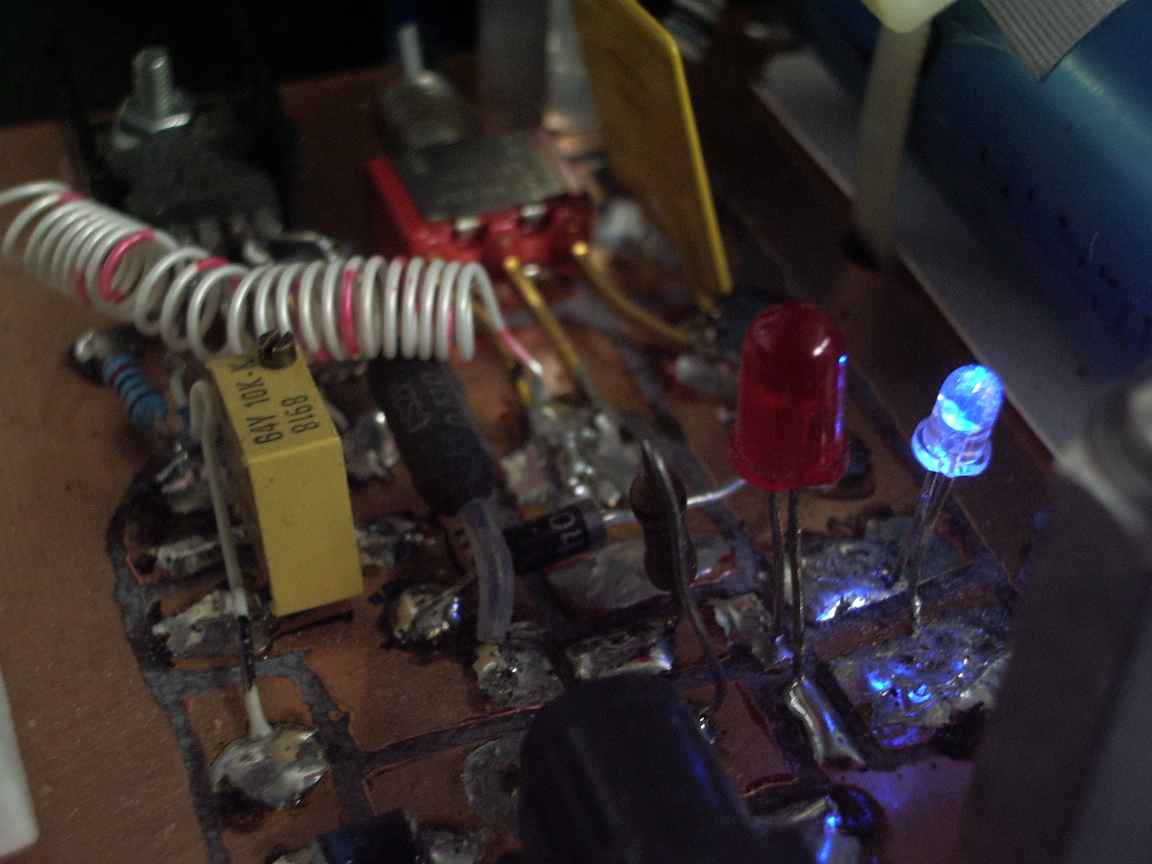 |
| the led requires a generous heatsink | 3Watt Luxeon led | blue led is allways on |
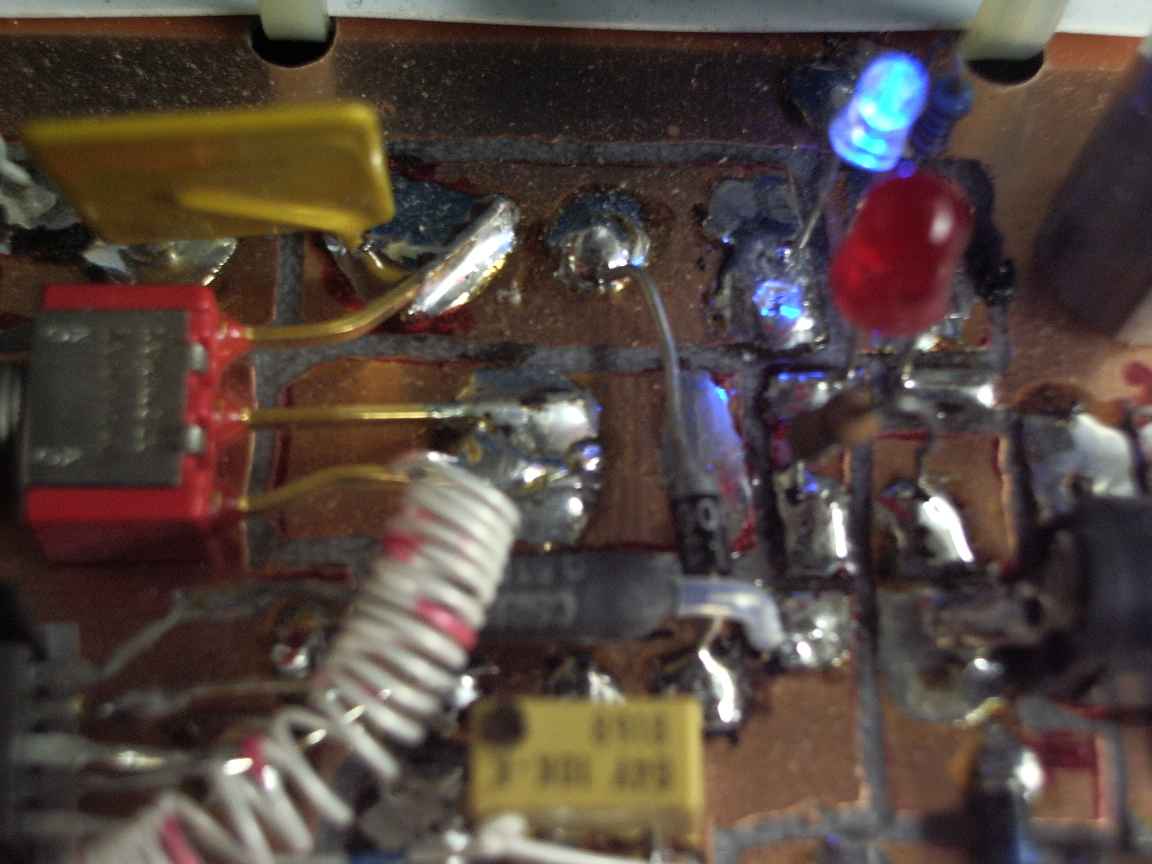 | 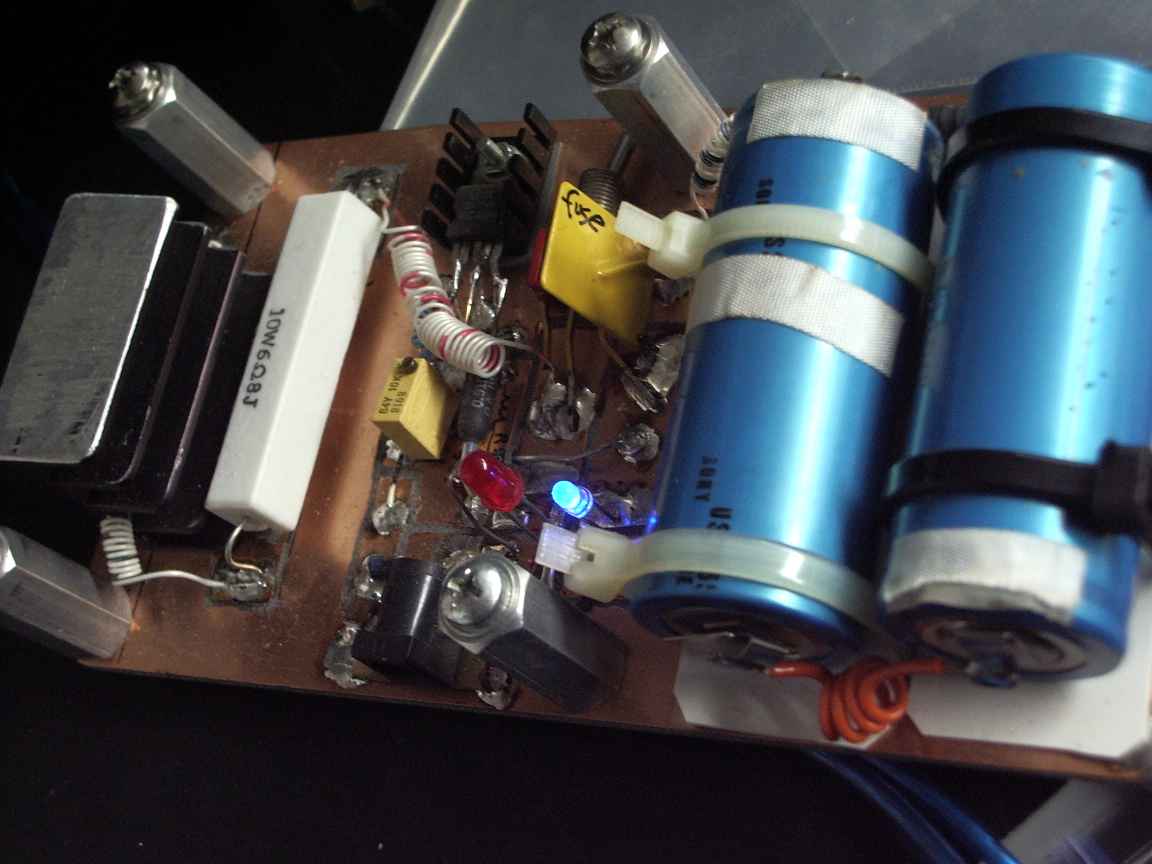 | 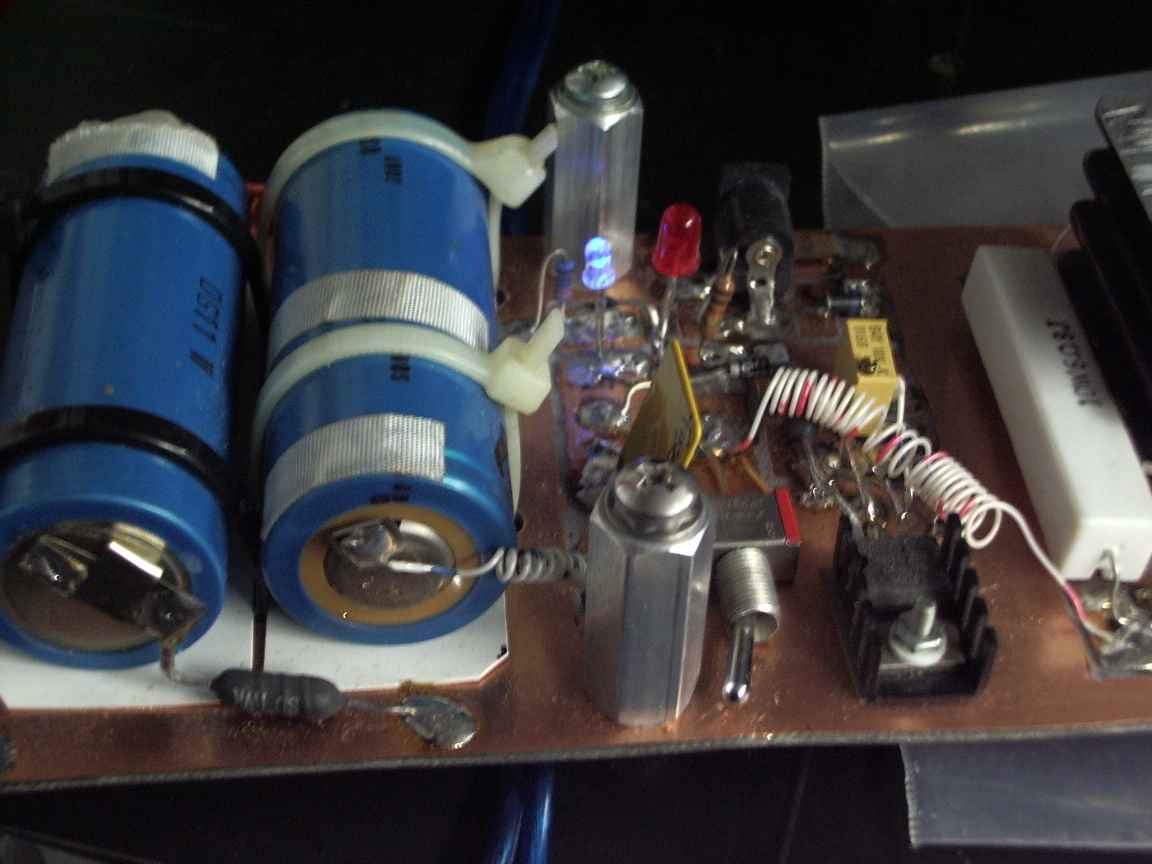 |
| red led shows charging voltage ready | | |
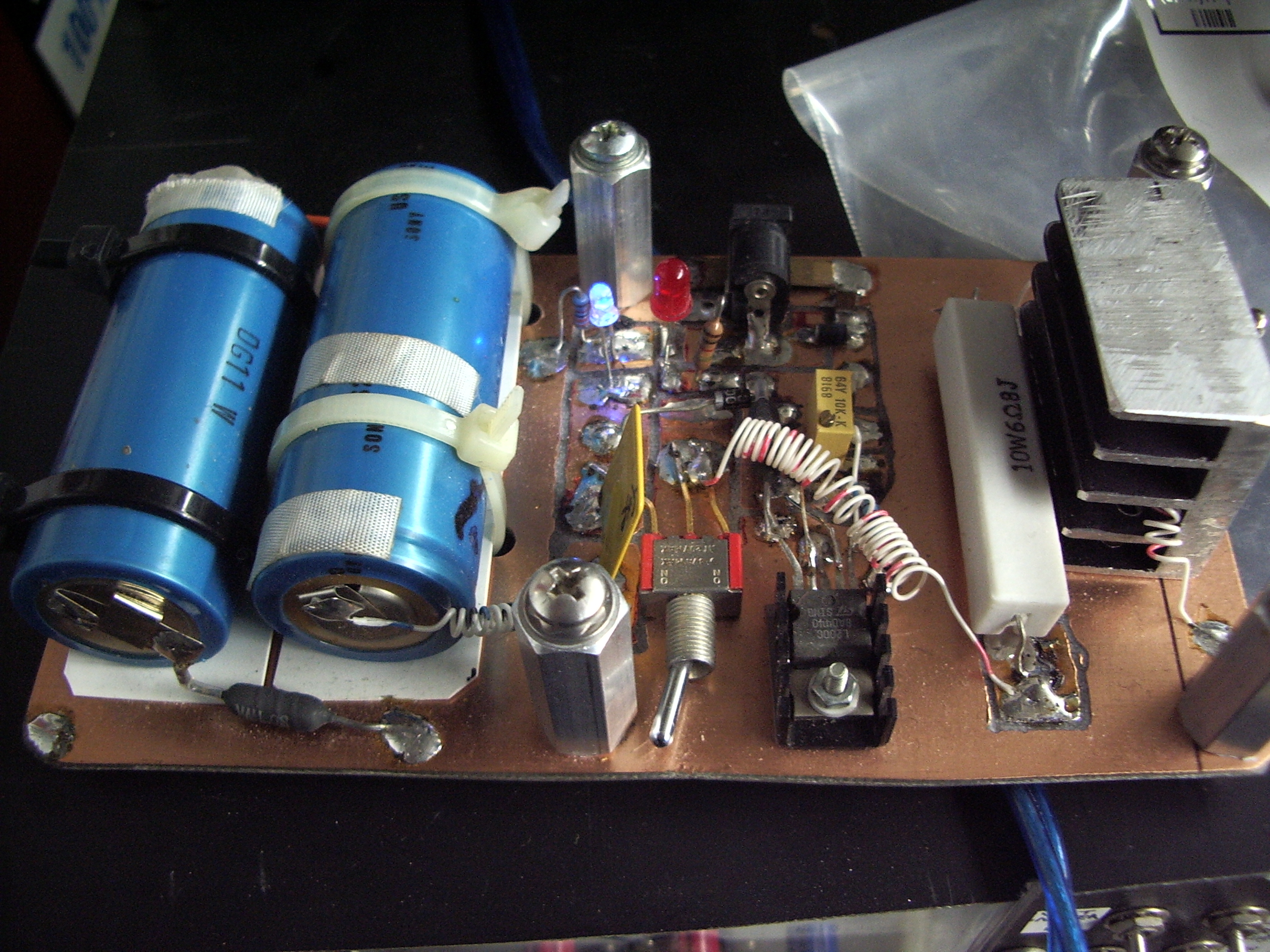
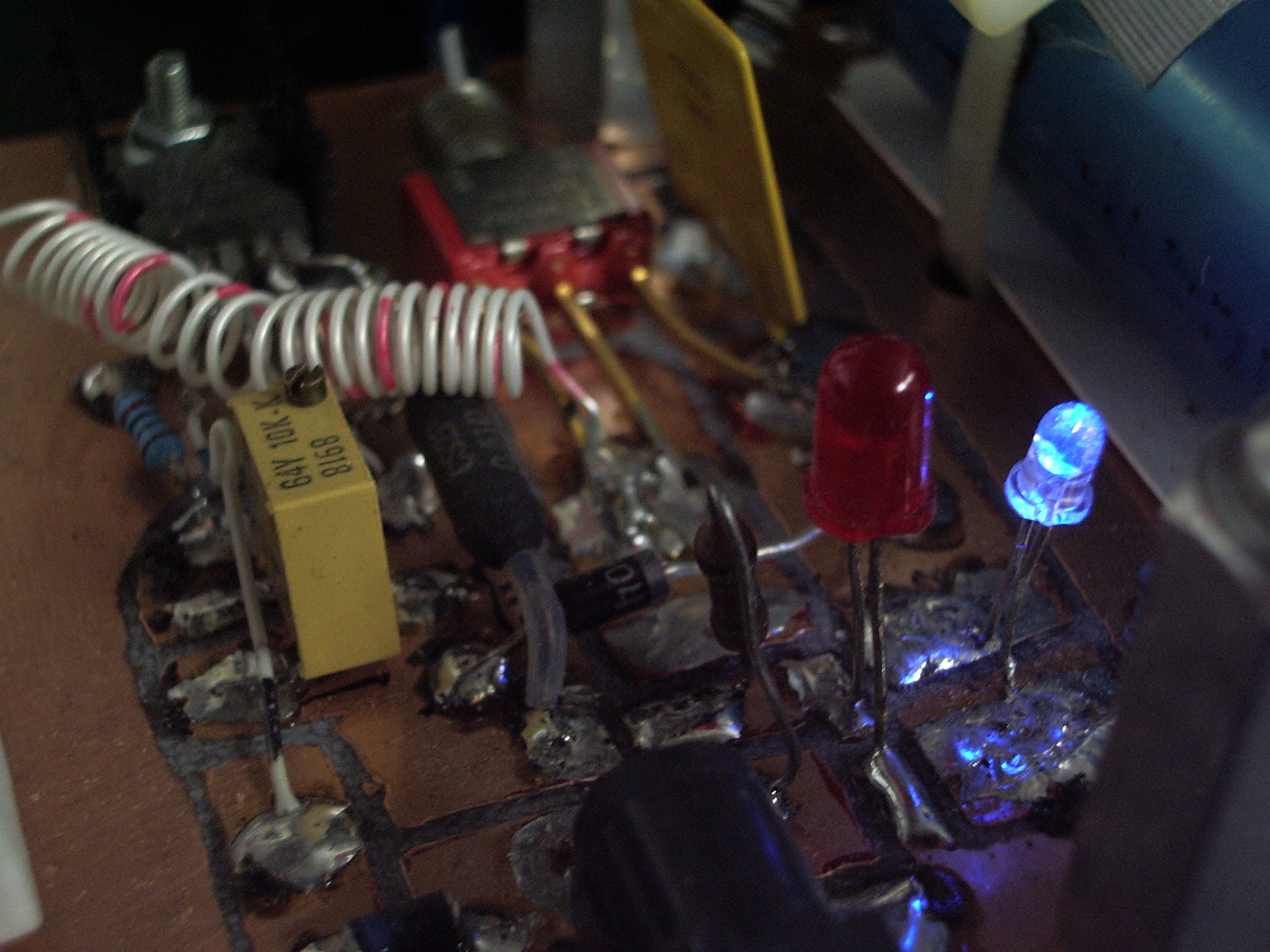
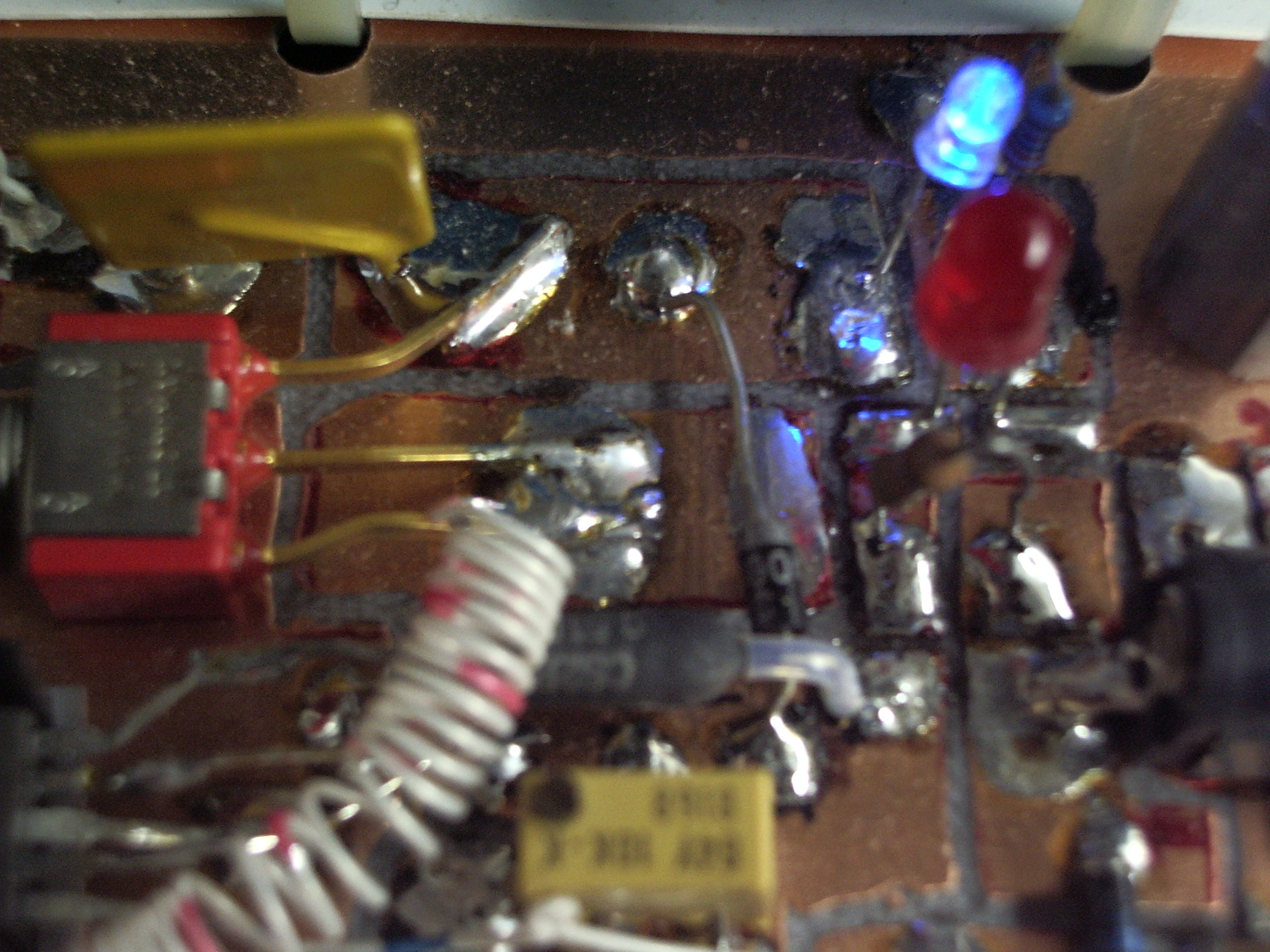
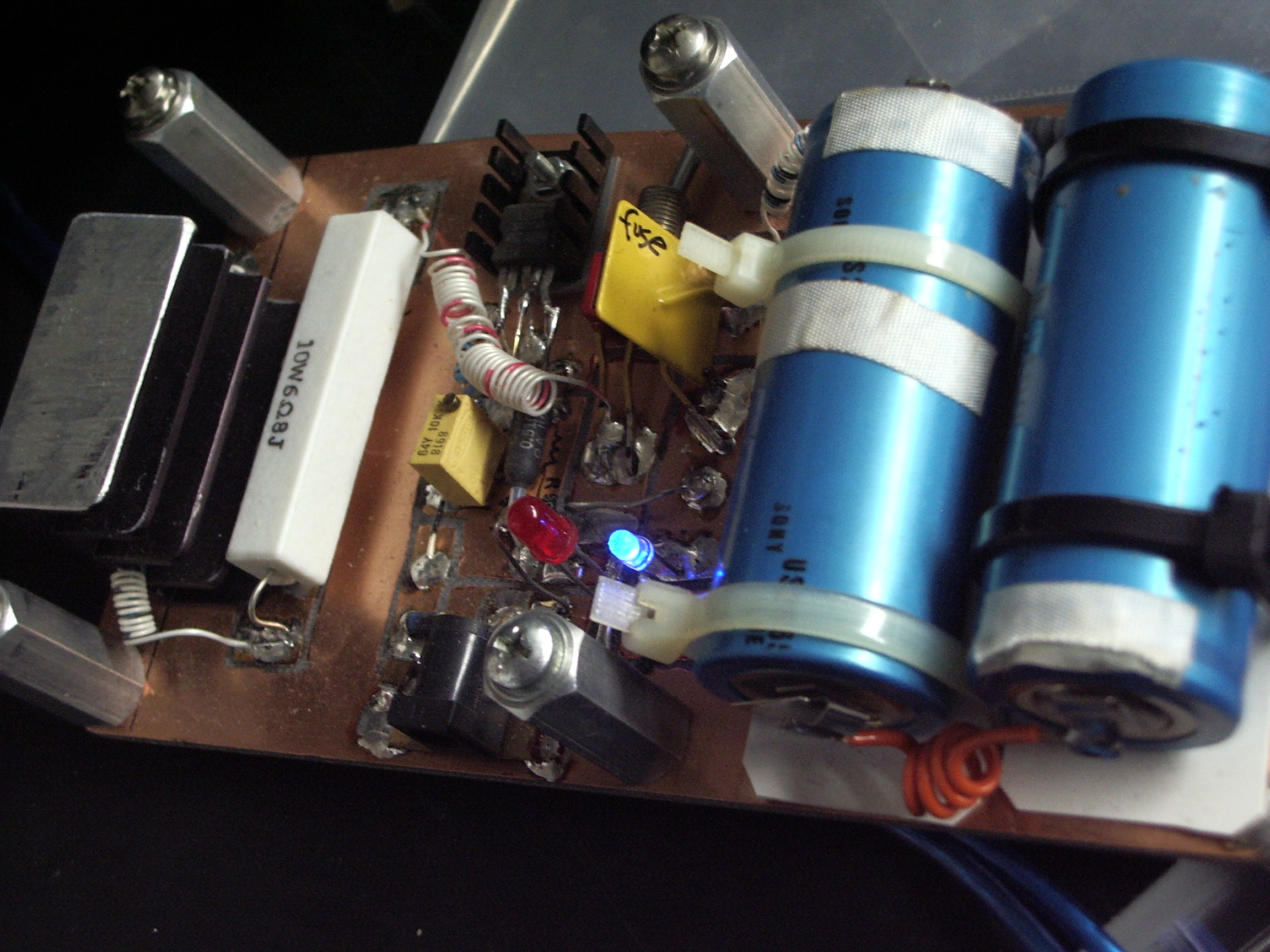
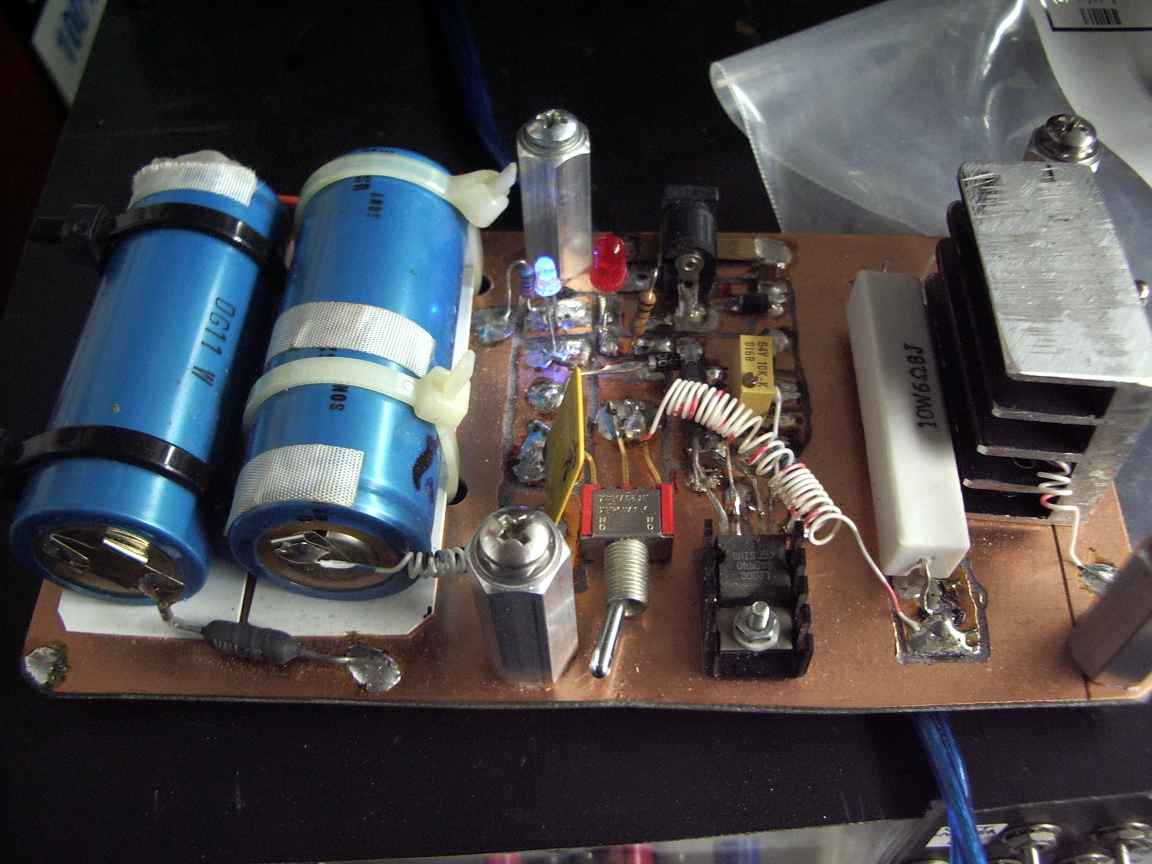
This
lantern, so bright that I will not call it a mere torch, uses a 3Watt
genuine Luxeon led. The energy source is a pair of large format
Sony lithium ion batteries. The 5 terminal regulator is
provided to perform charge management of the Lion cells.
LED current management is provided, somewhat wastefully, with the
10W ballast resistor. It gets very hot in operation. The Mark 2 version
will have a switchmode constant current regulator. With a
full charge on the cells, there is about 8 hours worth of useable
light, which with a switchmode regulator should improve to about 18
hours continuous operation on one charge.
The 3W LED is a
miracle, at least by my estimation. There are better leds
available now, made by Cree , however I cannot source these in
retail quantities in Australia yet. The big Luxeon led cost me
all of AU$6 , manufacturers' seconds stock, normally retail for
about AU$30 each.
Lion cells are dangerous beasties, they must
be handled with care and respect. Short circuits will result in fires,
poor handling will result in degradation of the cell capacity.
The Lion cell is a remarkable and new technology using
unconventional electrochemistry. These cells were recovered from a
discarded notebook computer nearly ten years ago. They have
either been in storage or active use in that time and they still retain
at least 70% of their factory amp-hour capacity.
My
electrical safety features a resetable solid state fuse, ballast
resistor and simple charge manager. The charging regime for
Lion cells of the LiCo04 type (cobalt oxide) is
constant current charging at 1Amp for a couple of hours or untill the
cell open circuit emf reaches 4.2V whereupon charging MUST cease.
A Lion cell MUST NEVER be float charged, a Lithium fire will
result if you persist in this folly. I never leave mine charging
unsupervised, even though the 5 terminal regulator will cease charging
at the specified voltage I still charge under the controll of a timer.
The charge managers inside the battery module of modern notebook
computer cell modules contain a small microprocessor and analog
electrics that monitor , measure and record the ingoing charge and
outgoing charge and begin and terminate the charge cycle based on this
measurement. As the cells mature, their actual and published
performance charge and voltage specification diverges. The cell
module controller's view of the internal state of charge no longer
reflects reality and it will declare the cell to be defective.
This is why new battery modules only seem to last about 1 year.
There is generally speaking, nothing wrong with the cells, it is
the module manufacturers erring on the the side of caution in a
litigious society. I have opened many discarded Lion cell packs are
only once found some genuinely defective Lion cells.
I have
elected to use a pair of Lion cells in series, this gives me up to 9
volts at open circuit after a recharge. Two cells in series still
affords some measure of cell charging safety, dont put more than two in
series. There is a risk that one or more cells in a series string could
become fully charged whilst others are still accepting charge. You MUST
NOT attempt to charge to a fully charge LION cell. It will result in
the formation of internal Lithium metal dendrites that will short
circuit the cell internally.
I allways monitor the cells
condition with a voltmeter to ensure that they both have a similar open
circuit voltage before commencing a charge. These Lions are
considered fully charged when their open circuit emf is 4.2Volts
and completely discharged at 2.5Volts. Never discharge a Lion cell
below this or irreversible internal structural damage will occur. The
constant current source emf during the constant current mode charge
should be limited to 4.5Volts per cell and the knee point set to about
4.1Volts.
My advice to the curious is do not futz around with
Lion cells unless you accept and mitigate the risks. Do ,
however, play with 3Watt leds; they are dazzling ....amazing in
fact. If you are just playing around use NiMH cells, they have
high capacity and pose no safety issues.
The Next Step in perpetual lighting.
The next led torch of mine will be closer to the ideal of the perpetual
light. Consider the series resistor in line with the led, the resistor
only lets through the required 10 to 100 microamps required for a pilot
light, nightlight. Given that from real world AA batteries we
may
drain nearly 100 microamps and get allmost the the shelf life of the
battery anyway .What if the LED was pulse modulated to 30mA peak but
100 microamp average current. The apparent light output would provide a
very usefull lantern that gives nearly the shelf life of a standard
battery. Tests of mine support this theory. What I havent solved yet is
a suitable pulse driver that in itself does not consume more than 50
microamps. My current circuit using a 74HC14 cmos hex trigger/inverter
comes close. I used a cmos hex schmitt trigger basically to make the
oscillator simple allthough this stage draws the most current because
the first gate is self biased into a linear mode because of negative
feedback. The other stages operating as saturated cmos switches draw
essentially no static current. It produces a very acceptable flashlight
beam and draws about 1mA . (Do not try this with a 74HCT14
they
draw nearly a milliamp just sitting there) Next to try CD4093.
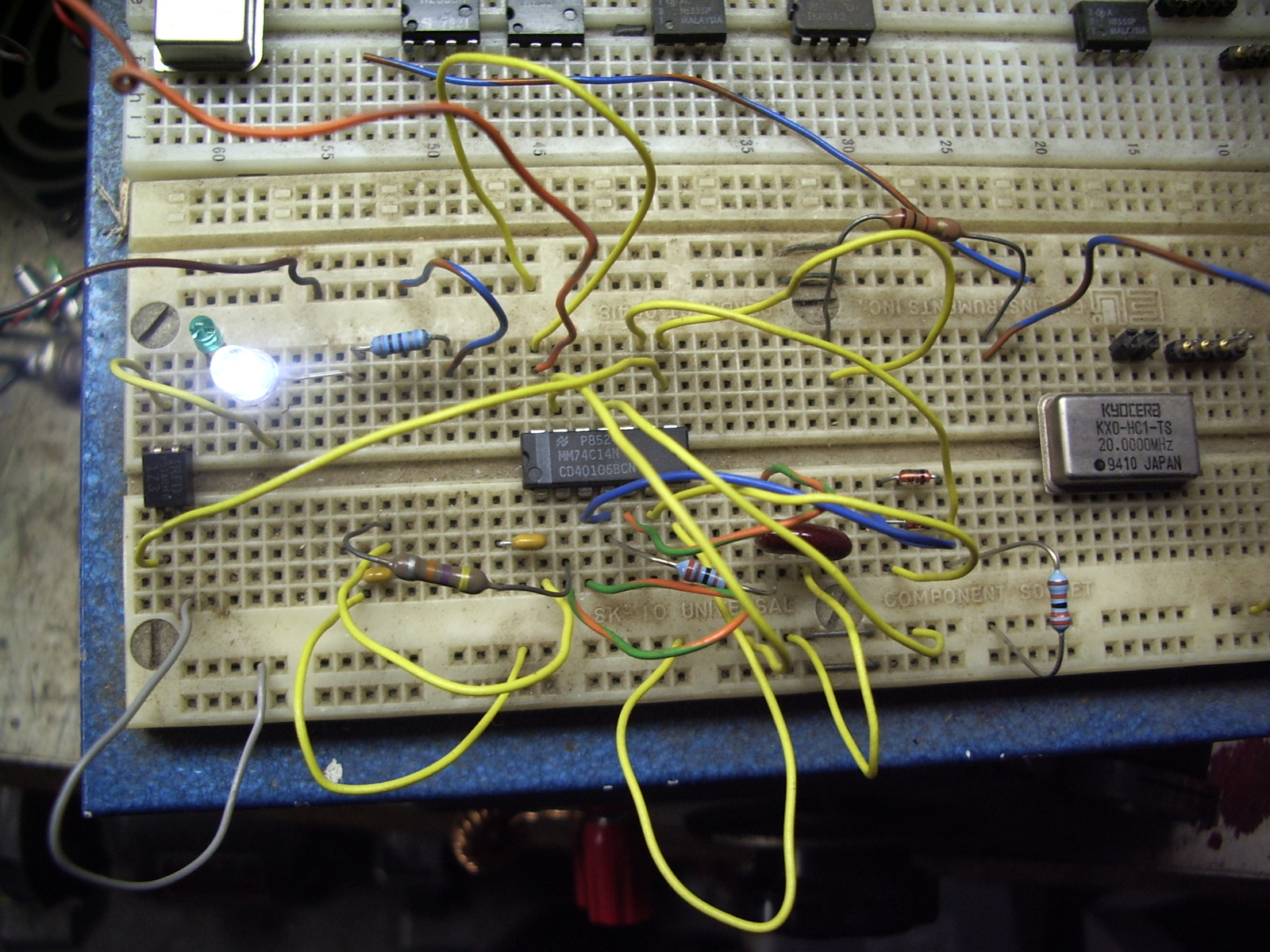
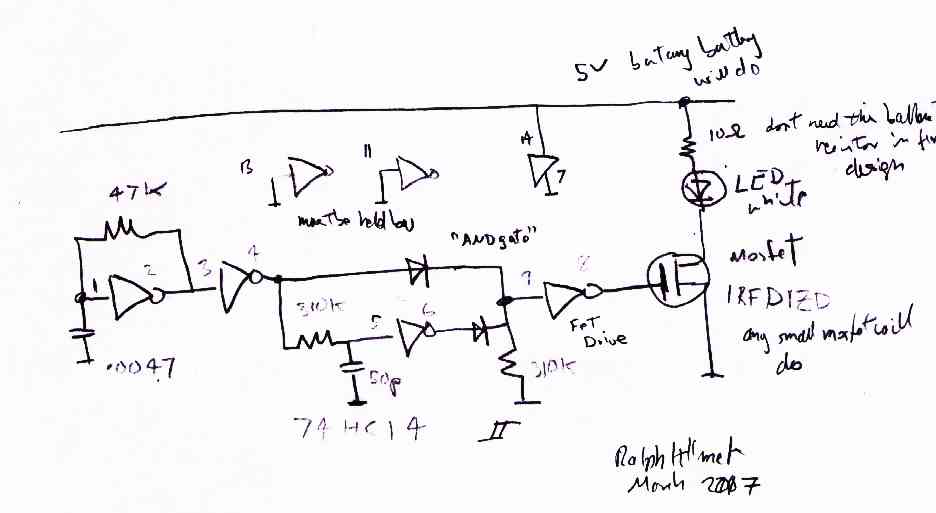
theory.
gate 12 is a simple schmitt trigger oscillator, buffered
by gate
34. the high value resistor and low value capacitor provide a slight
pulse delay. The 2 diodes form an equivalent OR gate resulting
in
a narrow pulse thats buffered by gate 98. This gate can directly drive
the LED but for max optical output it drives any small power mosfet
directly. The led series resister can be dispensed with after testing
and design is comleted. Unused gates must be held low else the total
chip quiescent current drain is higher than it might otherwise be.
With these component values I measure a total average current
drain of about 1mA and this results in a very bright light source.
My target is to obtain a "useable" source of light that draws
an
average of 100 microamps which would give essentially the shelf life of
a commercial disposable dry cell. The output transistor must be a
mosfet, zero gate drive current and essentially zero drain source
offset voltage.
And
on a completely differant tangent, I do well remember the long Saturday
afternoons in the sixties watching "Epic Theatre" , the old "sweat and
sandles" epics. It would allways amuse me to see the heroes venturing
into forgotten ancient and abondoned catacombs and sewers. How
did they see ? There were allways flaming torches on the walls! I
think in the the "mummy" series of B grade horror flicks, the about to
be cursed archaeologist ventures into the ancient tomb. There are
flaming torches lining the ancient unused corridors. What a
marvellous ancient technology! A flaming torch that burns without
attendance for 3000 years and completely fails to fill the ancient tomb
with soot and carbon monoxide! Maybe the "curse of the mummy" was
actually cabon monoxide poisoning from all those ancient flaming
torches!
added lion cell lantern notes and images Wed Feb 17 18:46:41 EST 2010