|
|
|

|
|

|
SPLASH - A visualisation tool for smoothed particle hydrodynamics
About:
SPLASH is a free and open source visualisation tool for Smoothed Particle Hydrodynamics (SPH) simulations in one, two and three dimensions, developed mainly for astrophysics. It uses a command-line menu but data can be manipulated interactively in the plotting window.
Data is read *directly* from the code dump format giving rapid access to results and the visualisation is advanced forwards and backwards through timesteps by single keystrokes.
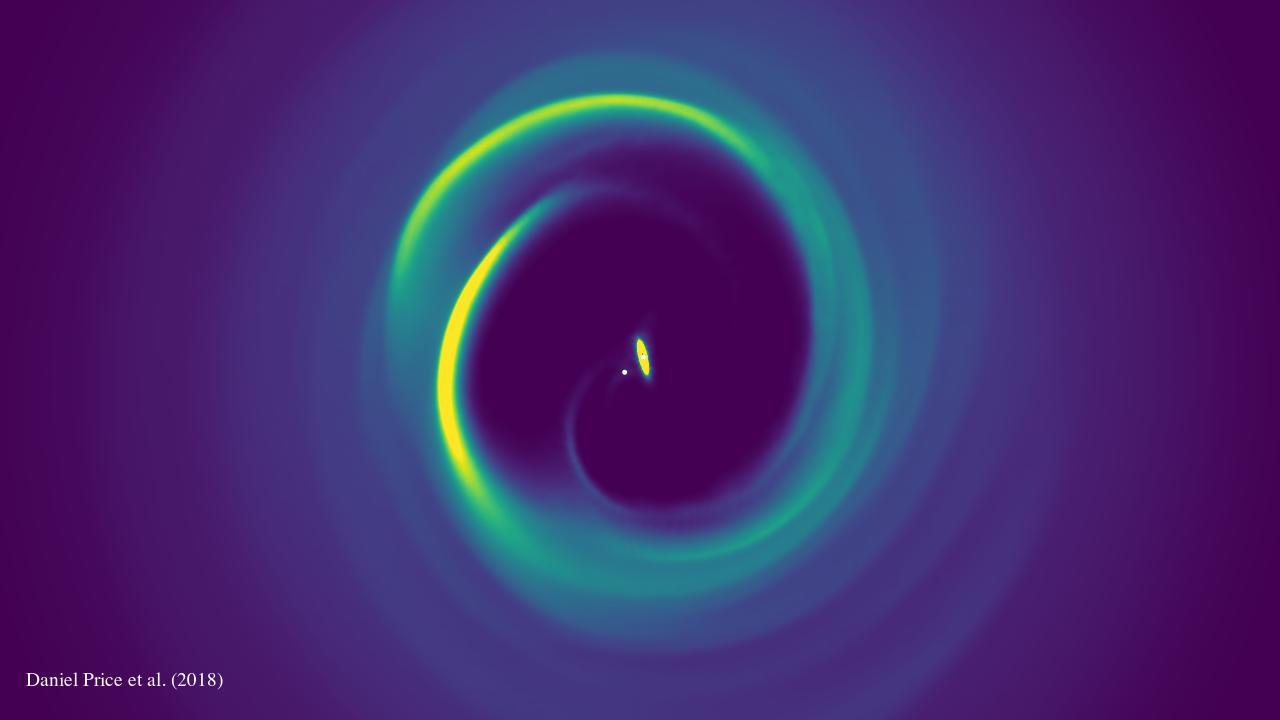
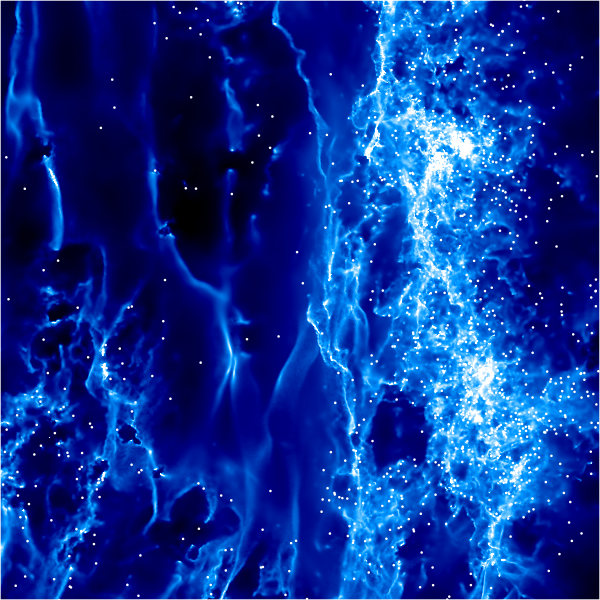
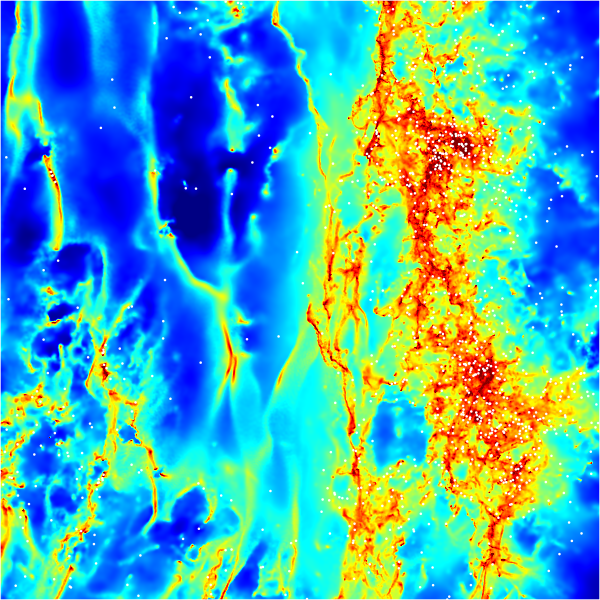
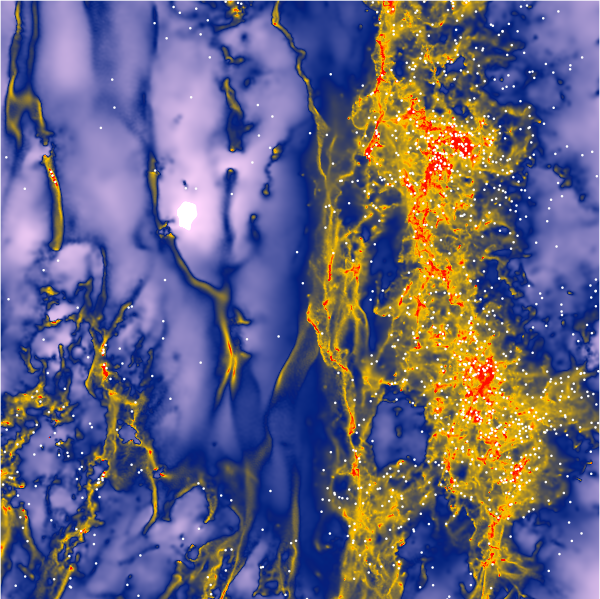
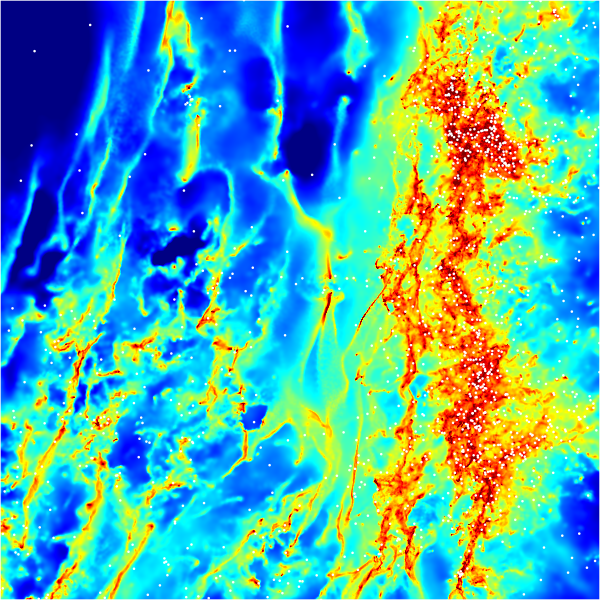
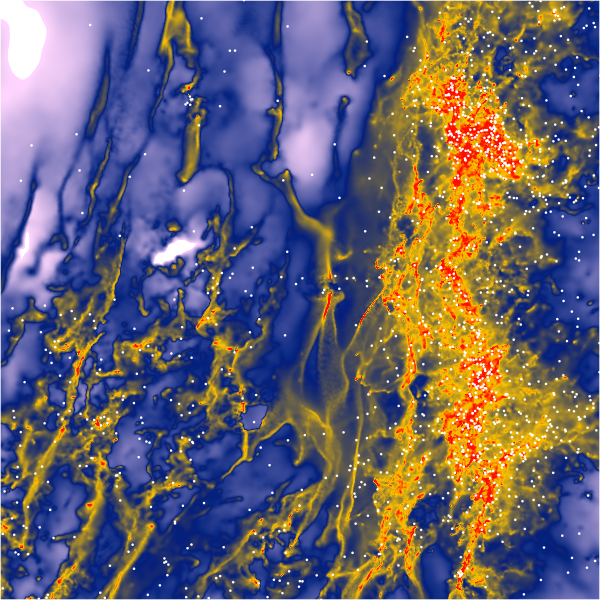
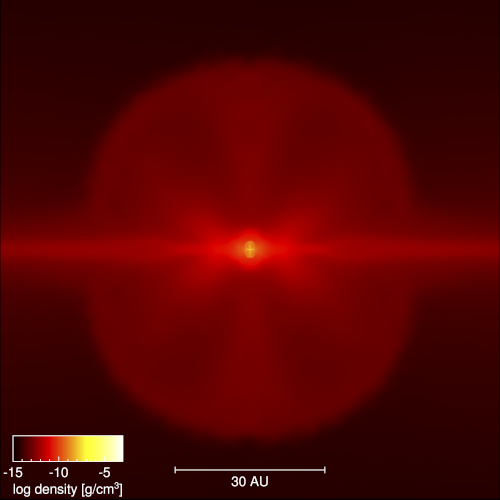
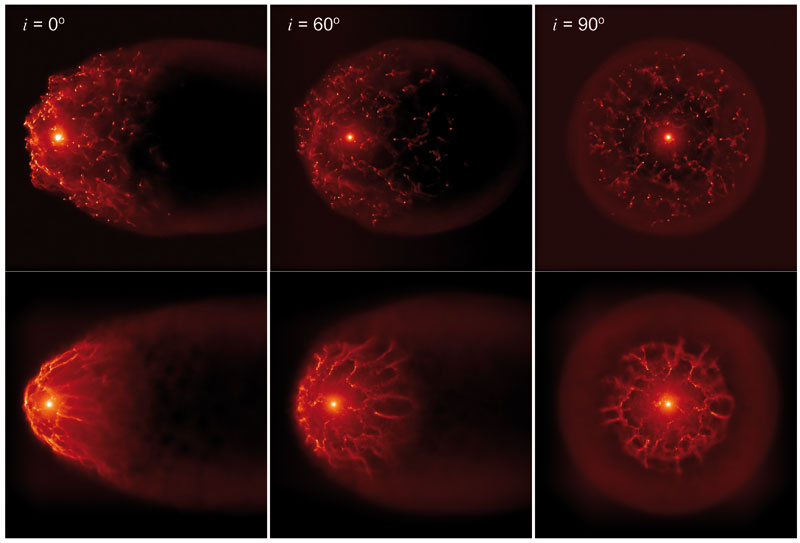
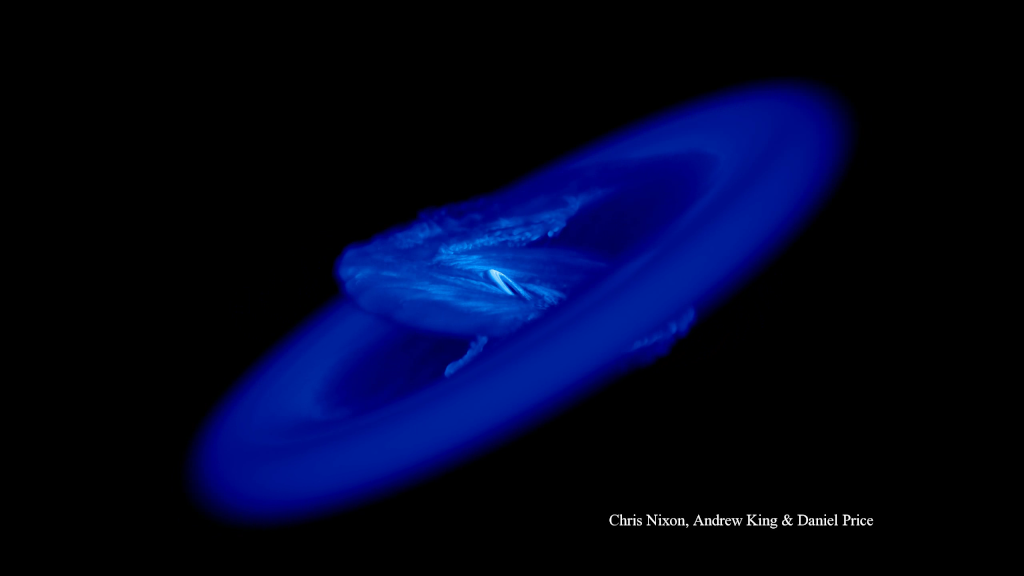
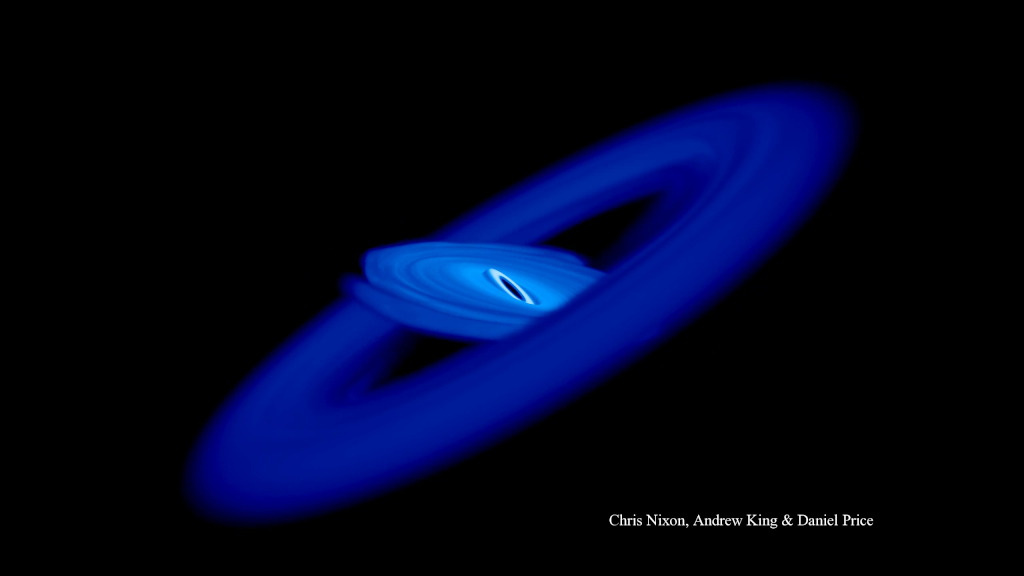
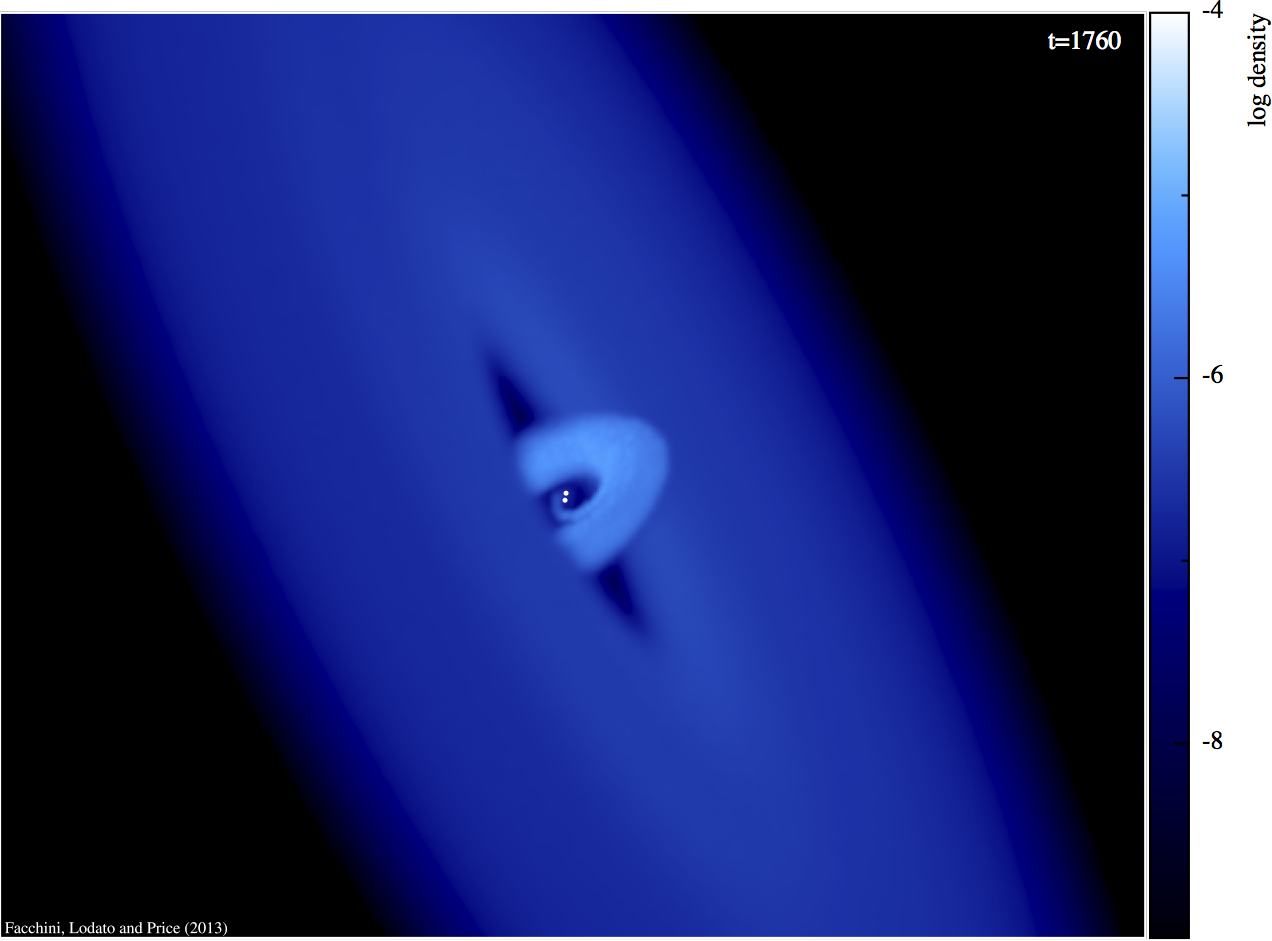
SPLASH uses the SPH kernel to render plots of density and other physical quantities, giving a smooth representation of the data. The goal is to produce beautiful plots and visualisations from SPH codes, instead of simple particle plots.
Features:
- Rendering of particle data using the SPH kernel
- Cross-sections through 2D and 3D data (as both particle plots and rendered images).
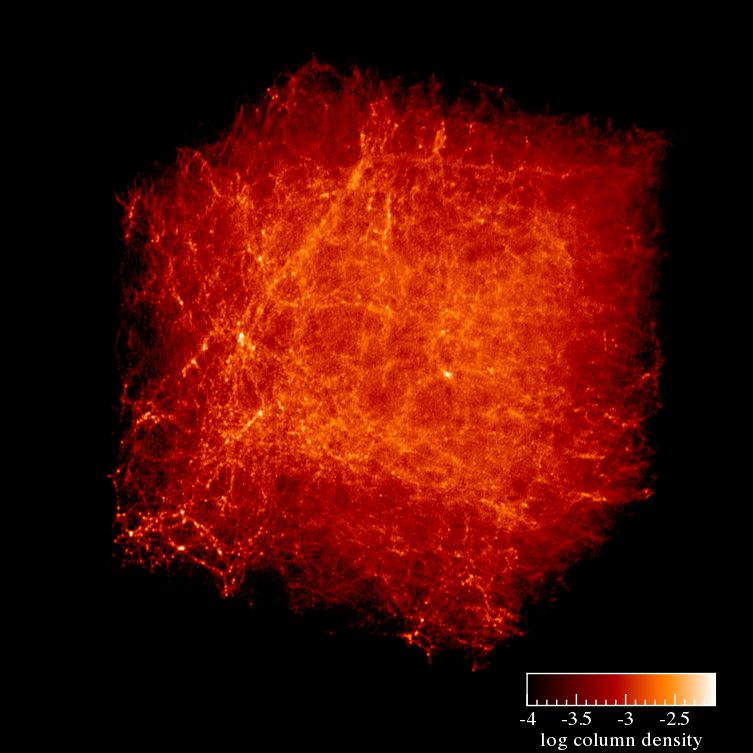
- Fast projections through 3D data (ie. column density plots, or integration of other quantities along the line of sight)
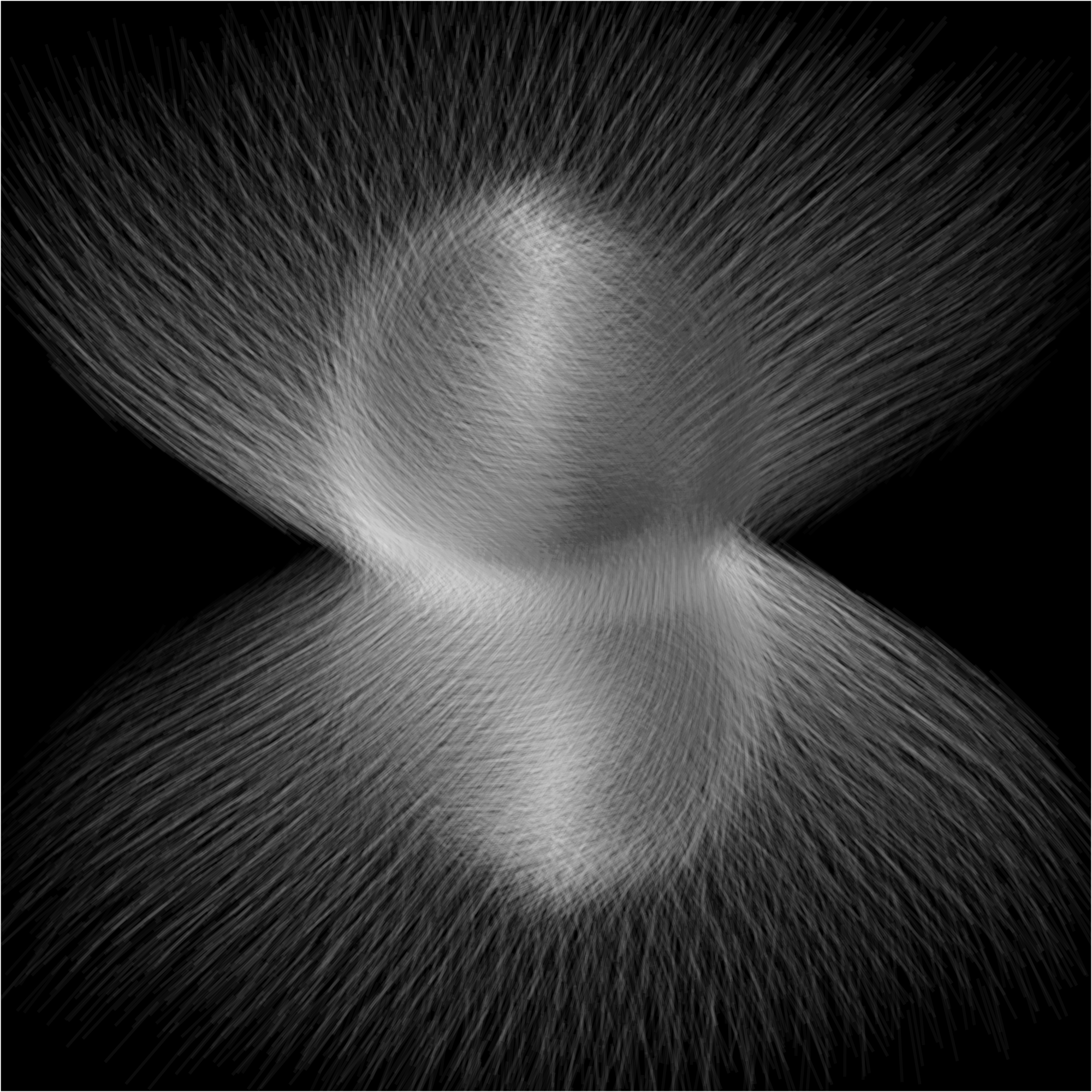
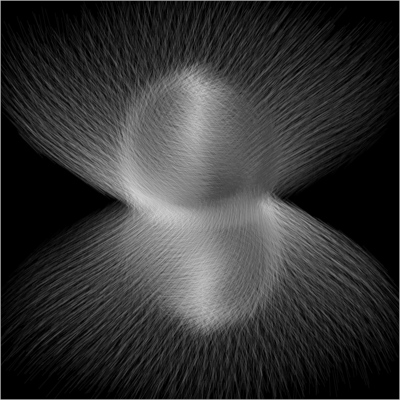
- Vector plots of the velocity (and other vector quantities), including vector plots in a cross section slice in 3D.
- Surface rendering of 3D data ("ray-trace through particles")
- Rotation and fly-throughs (animation sequences) of 3D data.
- Automatic stepping through timesteps, making animations simple to produce.
- Interactive mode (zoom, rotate, change limits, plot particle labels, find smoothing spheres, work out the gradient of a line, step forwards/backwards through timesteps)
- Multiple plots on page, including option to automatically tile plots if y and x limits are the same.
- Plot limits can be fixed, adaptive or particle tracking. Also simple to change axes to log, invert, square root or absolute of a quantity.
- Exact solutions for common SPH test problems (e.g. hydrodynamic shock tubes, polytropes).
- Calculation of quantities not dumped (e.g. pressure)
- Transformation to different co-ordinate systems.
- Straightforward production of png, eps and pdf images which can then be converted into animations or inserted in LaTeX documents.
- Reads from any ascii data format or direct from binary files. Data reads of dump files produced by most widely used SPH codes (e.g. the publicly available cosmological SPH code GADGET) are included.
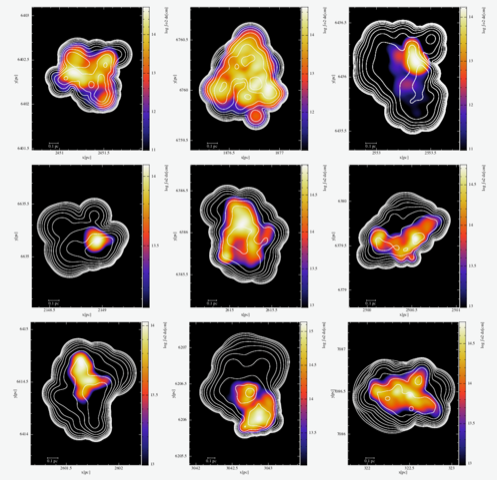
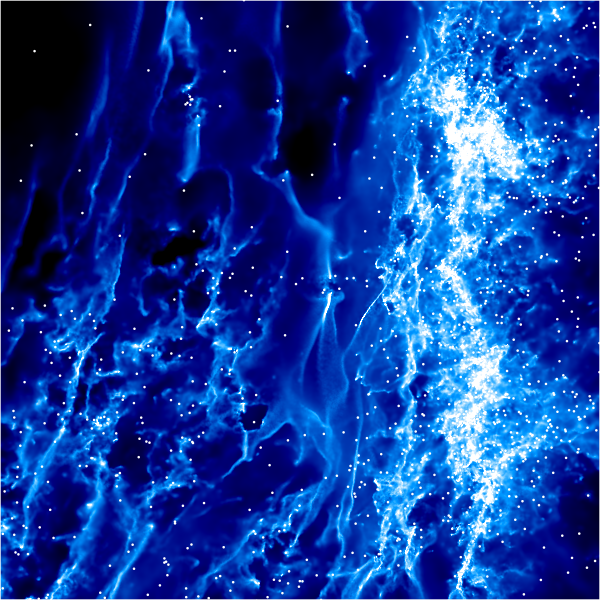
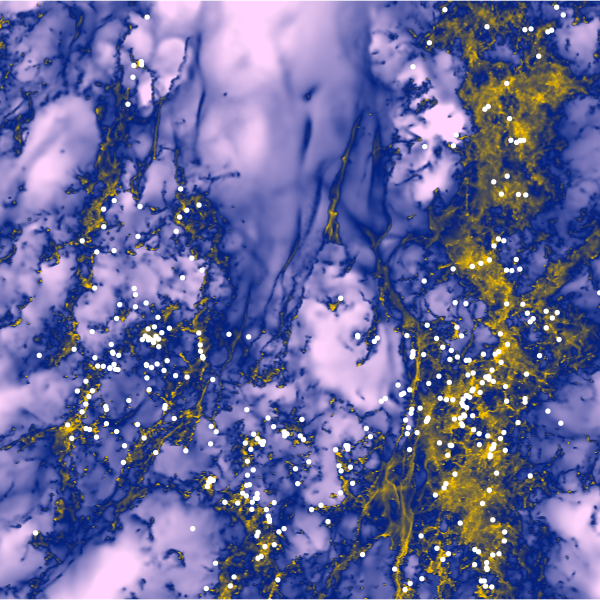
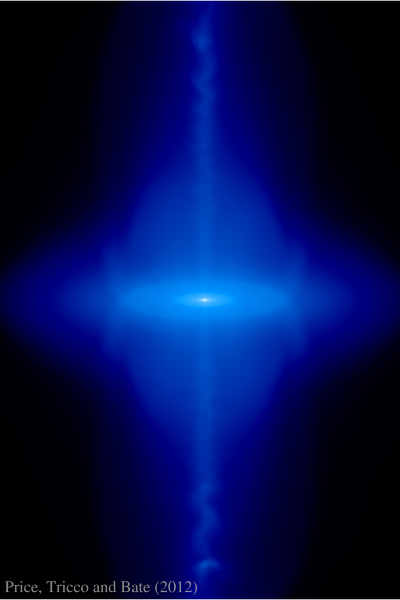
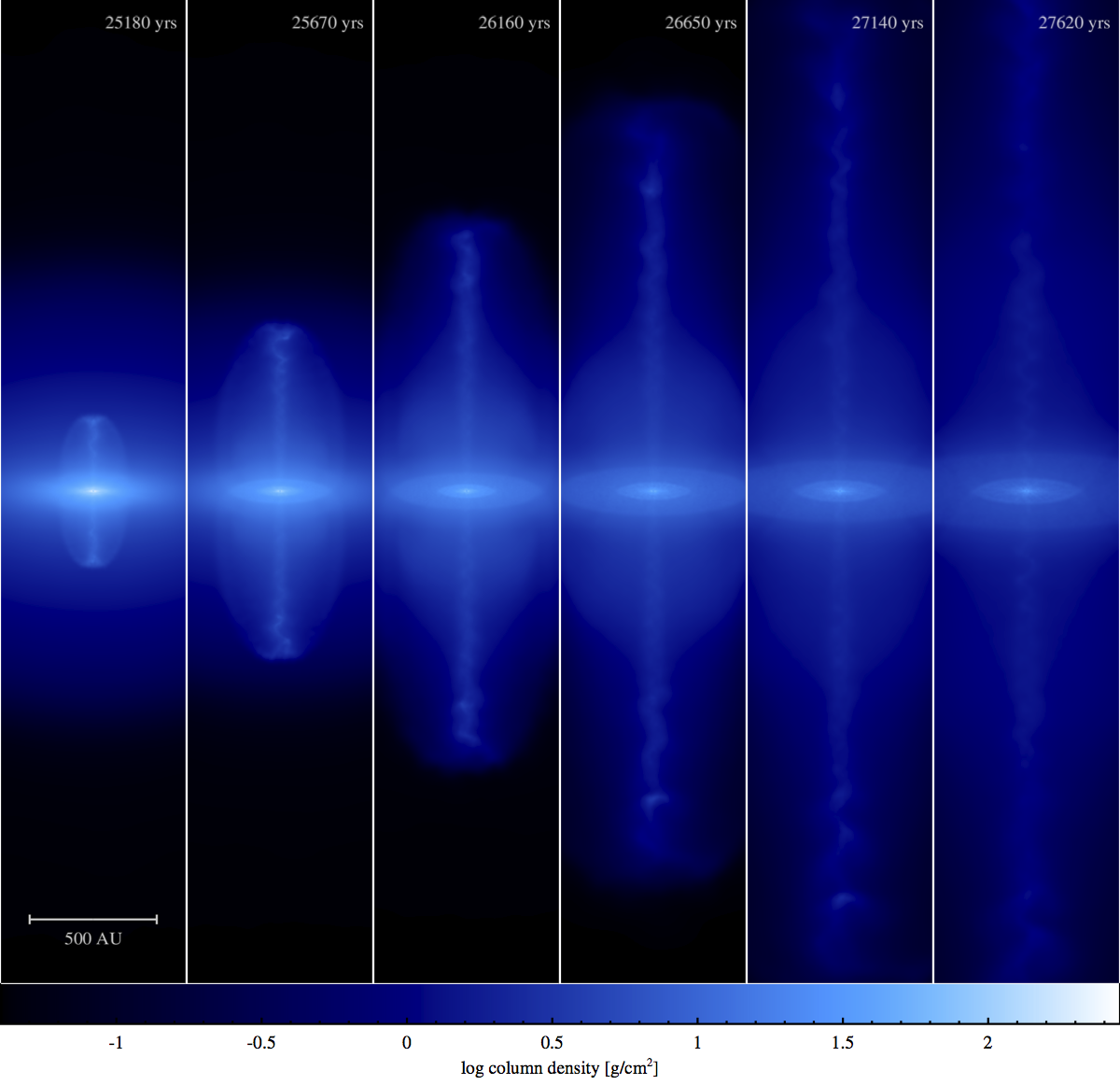
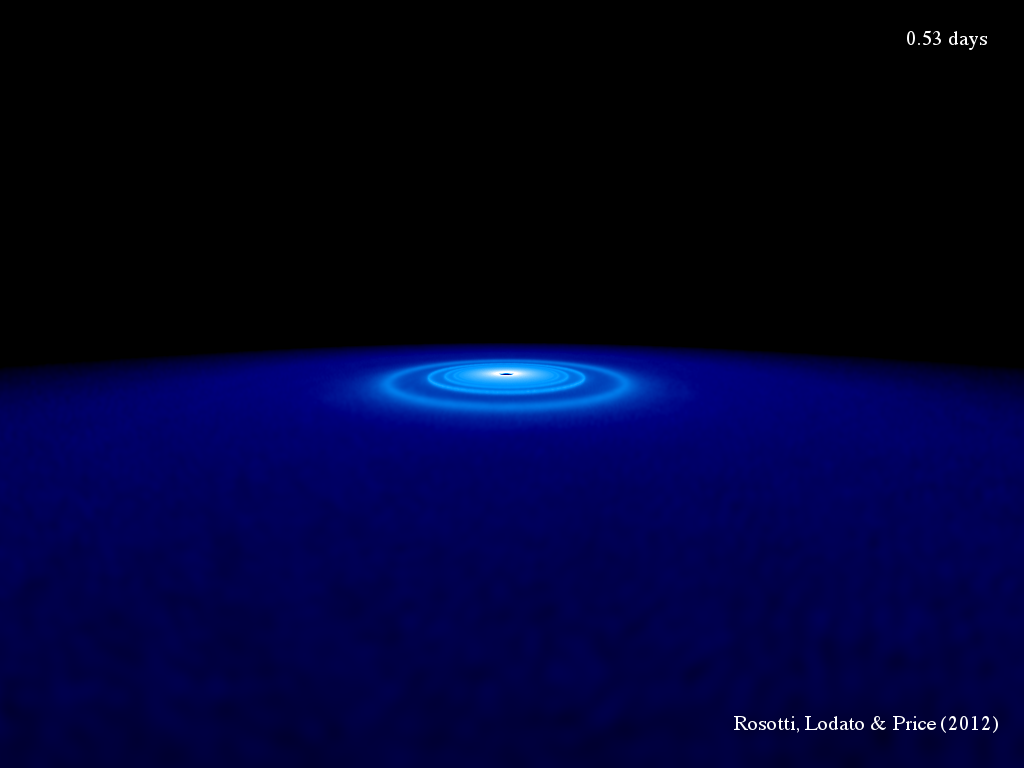
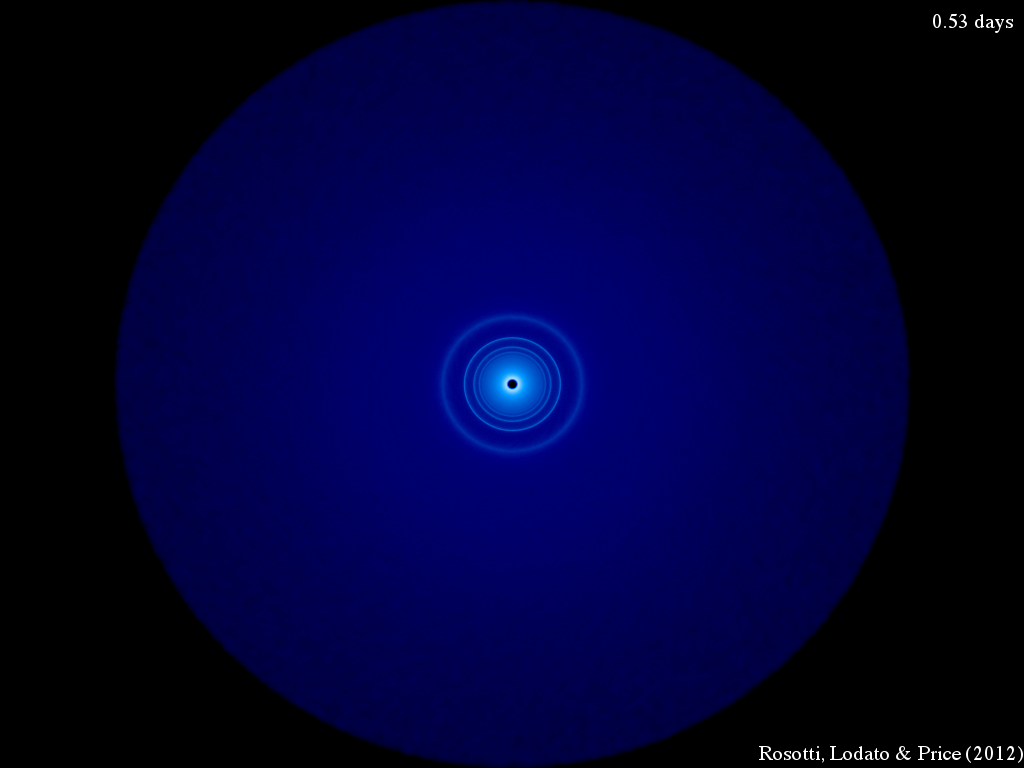
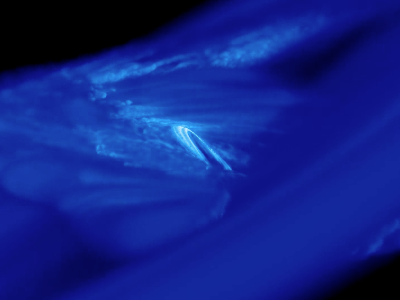
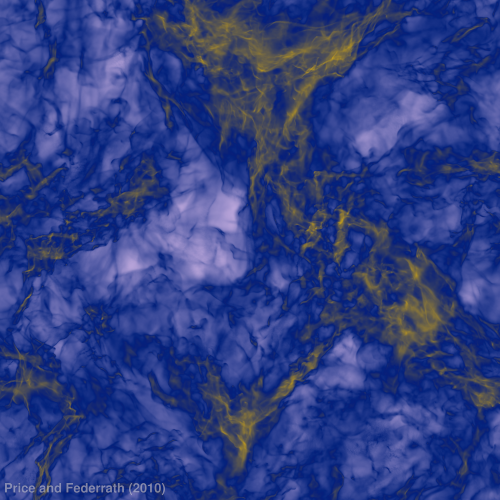
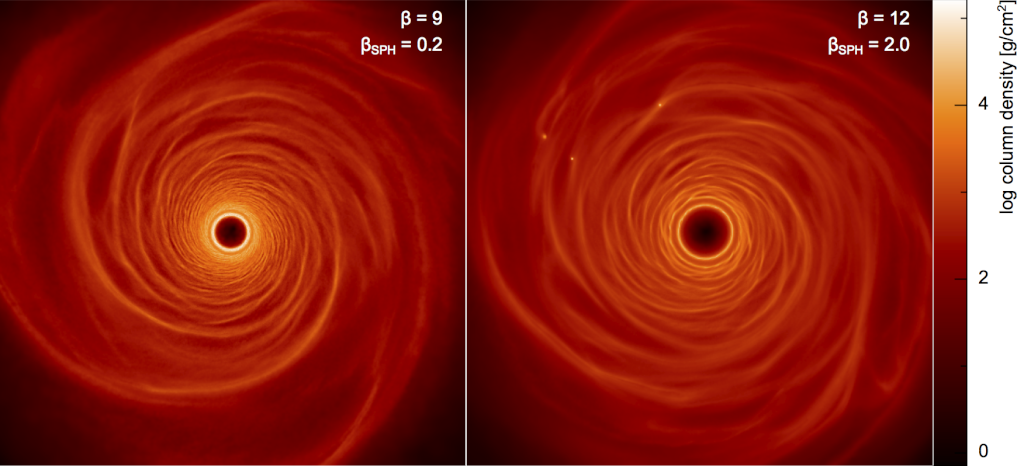
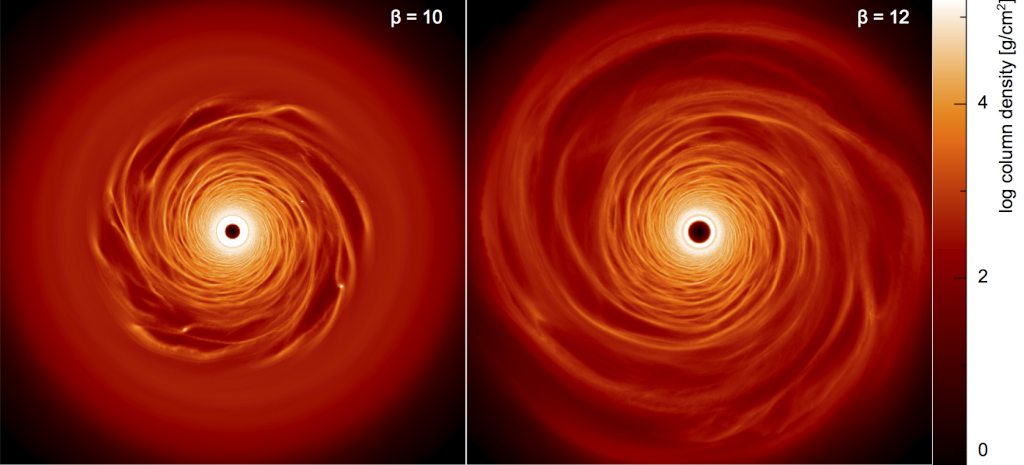
Examples of plots produced with SPLASH can be found in the gallery or by looking at papers with figures produced using splash.
Requirements
SPLASH is written in modern Fortran and comes packaged with the custom-built giza backend graphics library (written in C) which depends only on standard system libraries (cairo and X11).
The free and open source gfortran compiler can be used to compile SPLASH.
News:
Feb 2021:
v3.x Latest releases are now on Github.
Documentation now on readthedocs
The SPLASH userguide is now hosted at https://splash-viz.readthedocs.io
Documentation (user guide):
The SPLASH userguide is hosted at https://splash-viz.readthedocs.io
Current Status
The current release can be found here. For a complete list of changes since previous versions see the git log.
Paper
There is also a paper describing the basic algorithms implemented in SPLASH, which should be cited whenever you use SPLASH for scientific purposes (cite as Price, 2007, Publ. Astron. Soc. Aust., 24, 159-173).
Download
Current stable release:
See the github page for the latest stable release tarball.SPLASH Mailing Lists
There are two SPLASH mailing lists (Google Groups): splash-announce and splash-users.
SPLASH-announce is a read-only list for release announcements. Very low traffic:
Subscribe to SPLASH announcements
SPLASH-users is the user forum (you can also email me directly, but I will in general cc. my responses to the users list for posterity):