Model lightcurves for bursts from GS 1826-24
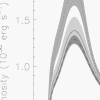 Alex's paper comparing the observed burst lightcurves from GS 1826-24 with time-dependent models of nuclear burning is finally out. The correspondence is really remarkable, and confirms the solar composition of the accreted fuel, as we suspected from the 2004 paper. However, in that paper we found that the drop in recurrence time with increased flux was more than predicted by Andrew's ignition models; this discrepancy is resolved with the new modelling, which indicates that thermal/compositional inertia play a role in setting the ignition column.
Read the paper (arXiv:0711.1195)
Labels: 2007, papers, thermonuclear bursts
posted at 3:08 PM

 I just got back from a month-long visit to Europe, spending most of my time working at the
 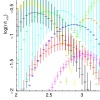 Norbert's paper on the faint-state observations of Cir X-1 has just been accepted to ApJ. While the P-Cygni lines (present in earlier observations when the source was brighter) were absent, we found evidence for complex absorption effects, including warm (moderately ionized) absorbers with varying column density. This Chandra observation has proved popular lately, with
 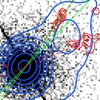 Sebastian did well to spot the X-ray jet in one of Norbert's 2005 zero-phase observations of the enigmatic X-ray binary Cir X-1. This source is thus the first neutron star for which an extended X-ray jet has been detected. Previously ultrarelativistic arcsecond-scale radio jets were detected by Rob Fender's group; see their
  I'm not sorry to be wrong about
 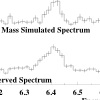 Aimee's paper on the Fe Kα line profiles from the accretion columns of magnetic CVs was accepted by MNRAS last month. The paper extends Jason Cullen's nonlinear Monte-Carlo code to predict the degree of broadening expected from lines arising from close to the white dwarf. We used a Chandra observation of GK Per in outburst for comparison, and while the relative line strengths in the model is not set by the physical conditions, the results were promising.
 For the last three weeks I've been teaching the Measurement Techniques unit of